A well-designed trade show booth can mean the difference between a stack of business cards and a pipeline full of qualified opportunities. At B2B expos, the stakes climb higher. Your booth competes with 150-plus exhibitors for the attention of 2,500-plus industry decision-makers. Each attendee is evaluating partners who may deliver their next major corporate event. Generic booth strategies that work at consumer shows fall short in this environment. The most effective trade show booth design ideas for B2B expos combine intentional layout planning, branded visual systems, and integrated technology to convert foot traffic into measurable ROI.
Secure Your Exhibitor Booth at The Event Planner Expo
This guide covers layout frameworks for every booth size, graphic strategies that earn recognition from the aisle, and technology setups that attract qualified leads. You will learn integrated lead-capture workflows that turn a 72-hour event into a quarter-long sales pipeline. You will also discover practical budget strategies that help mid-market exhibitors compete effectively. Whether you are preparing for your first exhibit at The Event Planner Expo or refining a display for another industry conference, these approaches give you a repeatable system for better results.
B2B Expo Layout: How Do You Design a Booth That Drives Traffic?
An optimized booth layout is the single highest-leverage design decision an exhibitor can make. A floor plan that channels foot traffic inward rather than deflecting it past your space directly determines how many conversations your team can hold over a three-day event. The most successful B2B exhibitors treat every square foot as a conversion asset, not just display real estate.
Maximizing Small and Medium Booth Spaces
For 10×10 or 10×20 spaces, an open layout is your most effective tool. Use floor planning to create clear sightlines from the aisle into your booth. Avoid placing obstructing furniture at the front of your space, which acts as a barrier and discourages entry. This principle is why vetting your trade show vendors for design experience is essential before committing to a build.
Booth height regulations vary by venue but typically restrict back-wall elevation to eight feet for inline booths. Confirming these specifications with show management before fabrication prevents costly last-minute redesigns. Incorporating these constraints early in the planning process preserves both your budget and your timeline.
Optimizing Island Booths for Maximum Visibility
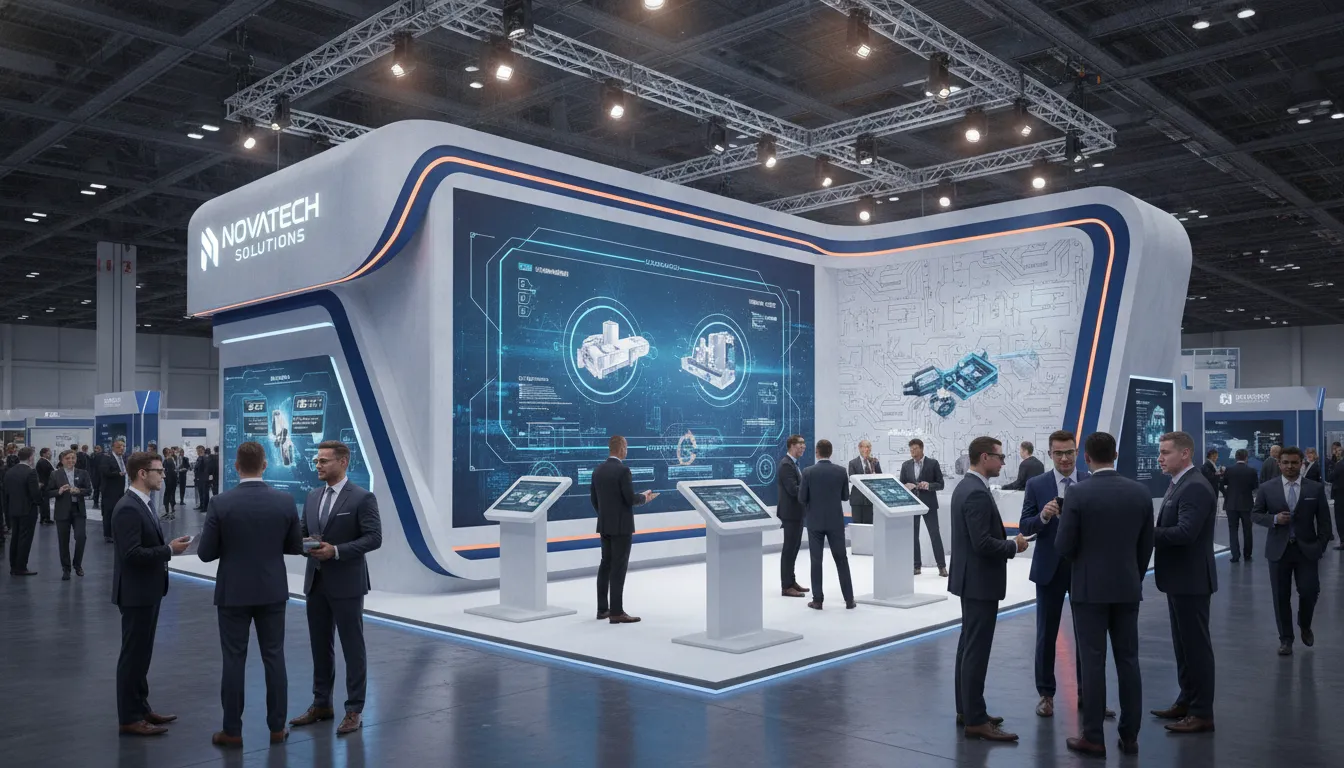
Island booths offer the advantage of 360-degree visibility, but that benefit only materializes with intentional vertical design. Suspended signage, hanging fabric structures, and branded overhead elements act as visual anchors that draw attendees from across the hall. Towers and two-story configurations, where venue clearance permits, create commanding presence. They also provide private consultation space for high-value prospect meetings.
Event attendee engagement strategy research demonstrates that multi-height booth designs capture attention 40 percent more effectively than single-plane displays. Computational layout tools can further optimize floor plans by modeling attendee traffic patterns and sightline data to maximize dwell time within your space.
Building Modular Systems for Multi-Event Programs
Exhibitors who participate in multiple shows each year benefit significantly from modular booth systems. A well-designed modular kit can function as a compact inline display at one event and expand into a peninsula or island configuration at another. This flexibility reduces per-event capital expenditure while maintaining brand consistency. Modular components are also lighter and more compact for shipping, lowering logistics costs and reducing setup complexity on site.
How Can Custom Graphics and Branding Earn Immediate Recognition?
In a crowded expo hall, your booth must compete with dozens of other brands for visual attention within seconds. High-quality graphics serve as your first and most efficient communication channel with passing attendees. Strategic visual design conveys your value proposition before a single conversation begins. It filters for the right prospects and creates pull toward your space. A well-executed conference sponsorship strategy extends your brand presence beyond the booth itself.
The 40 Percent Rule for Visual Breathing Room
The most common mistake in booth graphic design is visual overload. Exhibitors who attempt to communicate every product feature and service detail on their wall panels dilute their core message. A proven guideline is to reserve approximately 40 percent of your graphic surface as negative space. This breathing room allows the eye to land on your primary logo, key messaging, and call to action without cognitive friction.
Attendees decide whether to approach a booth within three seconds of visual contact. If your graphics require more than three seconds to parse, you have already lost the majority of passing traffic. Prioritize one dominant message, your value proposition, and support it with high-contrast imagery that reads clearly from twenty feet away.
Strategic Message Placement Above the Crowd
In a dense expo environment, the lower half of your booth is frequently obscured by furniture, displays, and other attendees. Critical branding elements, including your company name, logo, and primary value message, should be positioned above waist height. Elevating your core messaging ensures that attendees can identify your company from multiple vantage points and navigate toward your space intentionally.
Typography scale should follow a deliberate hierarchy. Large, bold fonts carry your primary message and should be readable from 20-30 feet. Medium-weight headers cover secondary offerings readable from 10-15 feet. Smaller detail text serves visitors already engaged inside your booth space. This tiered approach ensures effective communication at every stage of the attendee approach funnel.
Technology Setups That Draw Qualified Corporate Leads
B2B buyers expect technology-enhanced experiences that demonstrate capability rather than gimmickry. The right technology integration serves dual purposes. It attracts attention on the expo floor and pre-qualifies leads by drawing the specific audience segment you want to engage.
Interactive Displays That Replace Static Pitch Decks
Large touchscreen displays running interactive product demonstrations allow prospects to self-educate at their own pace. This approach respects the attendee’s autonomy while delivering more detailed information than a wall graphic can convey. Self-guided demonstration stations free your booth staff to focus on high-intent visitors rather than delivering the same introductory pitch repeatedly.
Leading trade show designers report that interactive elements increase average dwell time from 30 seconds to over three minutes. This dramatically expands the window for meaningful conversation. These extended interactions produce higher-quality leads because attendees have already engaged with your offering before the staff conversation begins.
Lead-Scanning Technology for Rapid Qualification
Badge-scanning technology has evolved significantly beyond simple contact capture. Modern systems integrate with CRM platforms to score leads in real time. They use attendee profile data, booth interaction history, and expressed interest level to calculate lead quality. This capability enables your sales team to prioritize follow-up based on lead quality rather than scanning order. The highest-potential opportunities receive attention first.
Integrated Lead-Capture Systems for the 72-Hour Sales Window
The true value of any trade show is determined not by what happens on the expo floor but by what happens in the weeks following the event. A disciplined lead-capture process, integrated with your CRM from the moment of first contact, transforms a three-day investment into sustained pipeline contribution.
Measuring event ROI begins with the quality of your lead data. A system that captures attendee intent signals, including which products they viewed, how long they engaged. And what questions they asked, provides your sales team with actionable context for every follow-up conversation.
Pre-Event Lead Generation Campaigns
The most successful exhibitors begin lead capture before the show floor opens. Pre-event email campaigns targeting registered attendees with booth previews, appointment scheduling links. And exclusive show-day offers can generate 20-30 percent of total show leads before badges are picked up. Promoting your booth location through event apps and social media channels further amplifies pre-show visibility. Professional development for event planners content that previews your booth experience or offers educational value aligned with the event theme can drive targeted traffic to your space.
Post-Event Follow-Up Sequencing
The data is unequivocal: leads contacted within 48 hours of a trade show close at significantly higher rates than those contacted after one week. A pre-built email sequence loaded into your CRM before the event enables same-day follow-up. Segment your leads by engagement tier. Hot leads completed a product demo. Warm leads had a meaningful conversation. General leads simply scanned their badge. Tailor your follow-up cadence to each tier.
Consider offering a post-event resource that extends the value of your booth interaction. A downloadable white paper or personalized consultation offer maintains momentum with leads not yet ready to purchase.
Budget-Smart Trade Show Booth Design Ideas That Still Impress
Compelling booth design does not require a Fortune 500 budget. Strategic resource allocation and intentional design choices enable mid-market exhibitors to compete effectively alongside much larger brands.
Invest in Graphics, Rent the Structure
The highest-impact investment for a limited budget is custom, high-resolution graphics. Fabric pop-up displays and tension fabric walls provide premium visual quality at a fraction of the cost of custom hard-walled structures. Renting booth infrastructure from show-approved vendors rather than purchasing allows you to allocate budget toward the visual elements that actually drive traffic. Compelling imagery, clear messaging, and professional lighting deliver the strongest ROI.
Lighting as a Low-Cost Differentiation Tool
Strategic lighting is one of the most underutilized and cost-effective design tools available to exhibitors. Track lighting, LED wash lights, and backlit graphic panels make your booth appear larger, more polished, and more inviting than unlit competitor booths. A lighting budget of as little as $500 to $1,000 can transform a standard inline booth into a standout presence on the expo floor.
Rental vs. Custom-Built Booth Economics
| Factor | Rental Booth | Custom-Built Booth |
|---|---|---|
| Upfront Cost | $3,000-$8,000 per show | $25,000-$80,000+ one-time |
| Best For | 2-4 shows per year | 10+ shows per year |
| Customization | Moderate (graphics and layout) | Full (every element) |
| Setup Time | 1-2 hours | 4-8 hours |
| Shipping Cost | Low (fabric, light crates) | High (heavy structures) |
| Brand Consistency | Good with custom graphics | Excellent, fully controlled |
| Long-Term ROI | Breaks even by show 3-4 | Breaks even by show 5-7 |
For exhibitors at regional or vertical-focused events like The Event Planner Expo, a rental structure with high-quality custom graphics typically delivers the strongest ROI profile.
Measuring Booth Design Impact on B2B Expo ROI
Quantifying the return on your booth design investment requires establishing baseline metrics before the event and tracking outcomes systematically afterward. Without measurement, design decisions remain subjective rather than data-driven.
Key Metrics Every Exhibitor Should Track
- Dwell time: Average duration of attendee engagement at your booth. Compare across different design elements and staff approaches.
- Lead volume and quality: Total contacts captured versus qualified opportunities identified. Track conversion rate from lead to meeting to closed deal.
- Foot traffic analysis: Estimated number of visitors to your booth versus total event attendance. Use this to calculate capture rate.
- Cost per lead: Total show investment divided by qualified leads generated. Compare against other marketing channels to assess efficiency.
- Pipeline value: Total revenue opportunity generated from show leads, tracked through to close.
Conference learning ROI frameworks can be adapted to measure booth-specific outcomes, helping you build a business case for increased investment in future events.
Conference sponsorship activation ideas that extend beyond the booth itself can amplify your ROI by creating touchpoints before, during, and after the event. Sponsorship of coffee stations, charging lounges, or session breaks positions your brand in high-traffic areas where attendees spend extended time.
Frequently Asked Questions
What is the most important element of trade show booth design?
The most important element is an open, inviting layout that removes barriers between attendees and your team. A booth that channels foot traffic inward rather than deflecting it past your space determines how many conversations your team can hold. Prioritize clear sightlines, elevated messaging, and a defined entry path.
How much should a small business budget for a trade show booth?
A small business can build an effective booth presence for $3,000 to $8,000 per show using a rental structure with custom fabric graphics. This budget covers booth rental ($1,500-$3,000), custom graphic printing ($800-$2,000), lighting ($500-$1,000), and shipping logistics ($500-$1,000). Investing in high-quality graphics and professional lighting delivers the strongest ROI at this price point.
What technology should every B2B trade show booth include?
Every B2B booth should include an integrated lead-capture system that connects directly to your CRM. A large-screen display for interactive product demonstrations, and handheld tablets for booth staff to record notes during conversations. Badge-scanning technology with real-time lead scoring has become essential for prioritizing follow-up after the event.
How do you measure trade show booth ROI?
Measure booth ROI by tracking cost per lead (total show investment divided by qualified leads), dwell time (average engagement duration), lead-to-meeting conversion rate, and total pipeline value generated. Compare these metrics against your other marketing channels to determine whether trade show investment is delivering competitive returns. Track outcomes through to closed deals, not just leads captured.
What is the 40 percent rule in booth design?
The 40 percent rule recommends reserving approximately 40 percent of your graphic surface as negative space. Attendees decide whether to approach a booth within three seconds of visual contact. Excessive text and imagery create cognitive noise that reduces engagement. Clean, intentional design with ample white space allows your core message to stand out and improves recall after the event.
Ready to Become an Exhibitor at The Event Planner Expo?
Your booth design is a direct investment in your pipeline. When you exhibit at The Event Planner Expo, you join 150-plus industry-leading vendors showcasing to 2,500-plus pre-qualified corporate decision-makers across a three-day concentrated format. The combination of intentional layout, branded graphics, and integrated technology creates a repeatable system for generating qualified leads at every event.