Why Conference Planning Best Practices Drive Your Event Success

Conference planning best practices are the foundation that separates forgettable events from those that create lasting impact. Whether you’re organizing your first professional gathering or your fiftieth, success depends on systematic planning, clear objectives, and meticulous execution across every stage.
Key Conference Planning Best Practices:
- Start Early – Begin planning 8-14 months in advance for professional conferences
- Set Clear Goals – Define measurable objectives using the SMART framework
- Budget Strategically – Include fixed costs, variable costs, and a 10-15% contingency fund
- Choose the Right Format – Select in-person, virtual, or hybrid based on audience and goals
- Curate Quality Content – Prioritize expert speakers and diverse, engaging programming
- Plan for Accessibility – Ensure physical and digital access for all attendees
- Market Consistently – Use multi-channel promotion starting 3-6 months out
- Gather Feedback – Collect and analyze data during and after the event
- Prepare Contingencies – Have backup plans for technical issues and speaker cancellations
- Focus on Experience – Prioritize attendee satisfaction from registration through follow-up
A well-organized conference improves your brand’s reputation and delivers a memorable experience for attendees. Success hinges on thorough preparation, from defining objectives and securing the perfect venue to curating compelling speakers and managing on-site logistics. Every detail matters.
As Jessica Stewart, Vice President of Marketing & Sales for EMRG Media and The Event Planner Expo, I’ve helped transform our B2B conference into the leading event in the US for the events and hospitality industry, attracting over 2,500 attendees from companies like Google, JP Morgan, and Estée Lauder by implementing these conference planning best practices. This comprehensive guide breaks down the entire process into four strategic phases to help you plan like a seasoned professional.
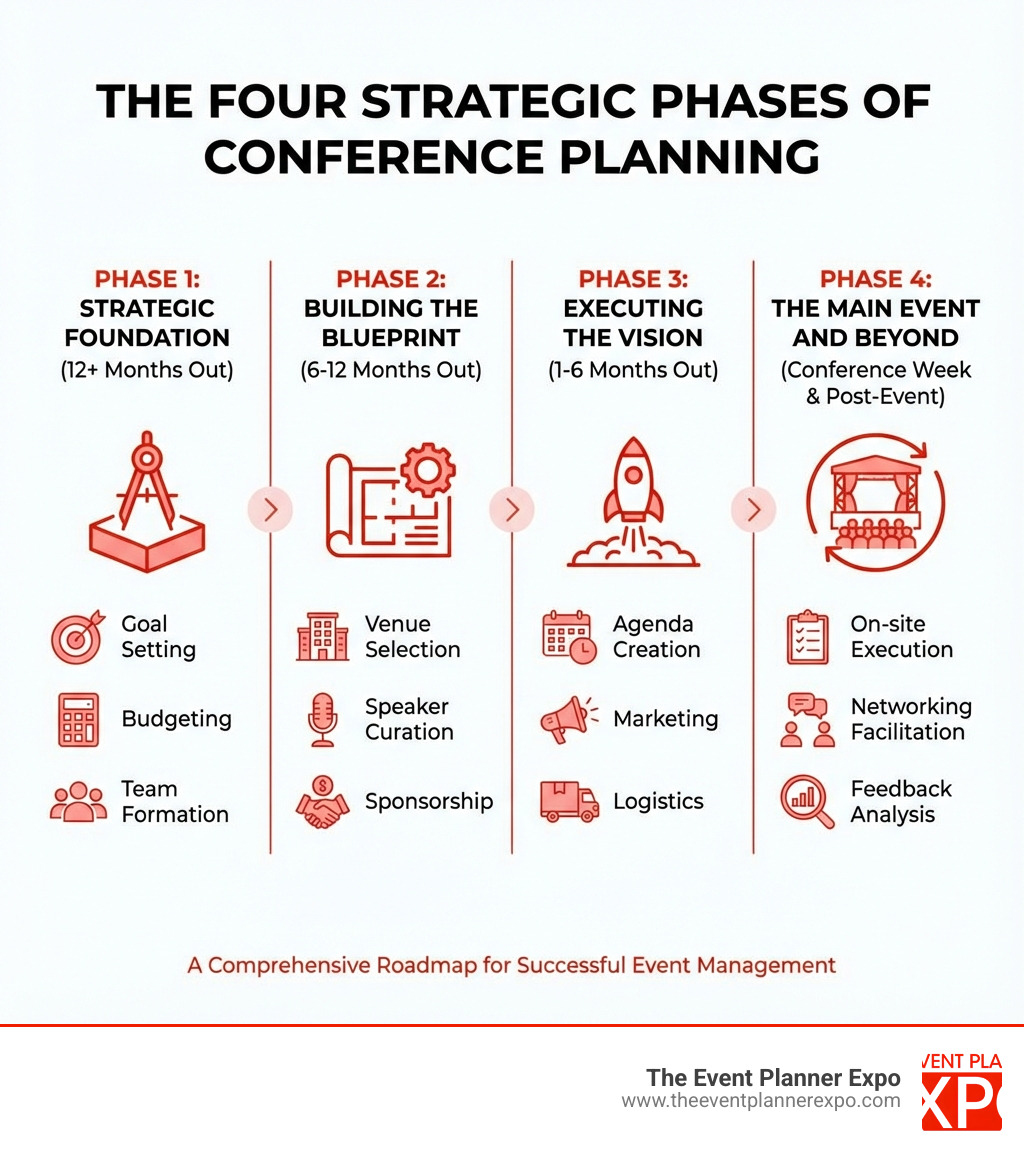
Phase 1: Building a Strong Strategic Base for Conference Planning (12+ Months Ahead)
The journey to a successful conference begins long before invitations are sent. This initial phase, starting 12-14 months out for large events or 6-8 months for most professional conferences, is about establishing a solid strategic foundation. This period allows you to define your purpose, set clear goals, analyze your audience, and build a robust financial framework.

Setting Clear Conference Goals and Objectives for Maximum Impact
Before we dive into the nitty-gritty, we must ask ourselves: what are we trying to achieve? The fundamental goals and objectives for planning a conference can vary widely, but they typically revolve around several key areas. Are we looking to educate our community on new industry trends, foster innovation through collaborative workshops, facilitate invaluable networking opportunities, or perhaps launch a groundbreaking new product or service?
Our primary goals might include professional development, community building, or growing our presence in the industry. For instance, a conference could aim to “educate attendees on the latest AI advancements,” “connect industry leaders for strategic partnerships,” or “showcase innovative solutions in sustainable event design.” Setting clear, measurable goals using the SMART (Specific, Measurable, Achievable, Relevant, Time-bound) framework is crucial. These objectives will dictate our theme, program content, audience targeting, and ultimately, how we measure success. A well-defined attendee value proposition, clearly communicating “what’s in it for them,” is essential to attract our target audience.
Mastering Budget Development in Conference Planning Best Practices
A solid budget is crucial in conference planning – it turns your vision into reality without financial headaches. Developing and managing our budget effectively is one of the most critical conference planning best practices. We start by outlining all potential expenses, categorizing them into fixed costs (like venue rental, core staff salaries) and variable costs (like catering, speaker travel, attendee materials). A good budget should include venue costs, accommodation, transportation, speaker fees, catering, marketing, on-site activities, and equipment rental.
It’s also wise to factor in a contingency fund, typically 10-15% of the total budget, for unforeseen issues—because, let’s be honest, something always comes up! We must research costs diligently and secure early quotes. Given recent trends, we’ve learned that increased costs for hotels, airfare, and general supplies are something to plan for. Negotiating food and beverage costs early and locking in current rates can save us a significant amount.
On the revenue side, we project income from ticket sales and crucially, sponsorships. The money we bring in from registrations alone often won’t cover all our costs, so sponsorship packages are vital. We also perform a break-even analysis: Break Even = Fixed Costs ÷ (Price — Variable Costs). This formula helps us determine the minimum number of attendees or sponsorship dollars needed to cover our expenses, informing our ticket pricing strategy.
Building and Inspiring Your Conference Planning Team Effectively
No one plans a conference alone. A dedicated organizing team is the backbone of a successful event. Structuring and motivating our team throughout the conference planning process involves clearly assigning roles and fostering a collaborative environment. We identify key positions such as a planning lead, finance manager, marketing coordinator, speaker liaison, and a volunteer manager. Each role comes with clear responsibilities and expectations.
To keep everyone engaged and on track, we leverage project management tools like Trello for visual task management and Slack for seamless communication. These tools help us stay organized and connected. Motivation is key, so we break down the monumental task into manageable mini-goals, celebrate small wins along the way, and consistently remind everyone of our shared mission and vision. Open communication is paramount; we encourage team members to voice concerns and ask for help when needed. As the saying goes, “Volunteers are awesome, but make sure you have trusted people working with you also.” A smooth-functioning team ensures a smooth-running conference.
Selecting the Ideal Format: In-Person, Virtual, or Hybrid Conference Planning Tips
The world of events has evolved, offering us more choices than ever when it comes to format. Deciding between an in-person, virtual, or hybrid conference is a critical early decision, impacting everything from budget to attendee engagement. We consider our audience’s preferences and geographic spread, our budget implications, and our primary engagement goals.
| Format | Pros | Cons | Key Considerations – Strong engagement: Direct interaction and networking. – Immersive experience: Access to content and speakers. – Brand building: Strong brand promotion. – Community building: Fosters relationships. | – Geographic limitations: Limited reach. – High costs: Venue, travel, and logistics. – Complex logistics: Detailed planning required. – Safety concerns: Health and safety protocols needed. | – Venue selection: Capacity, location, accessibility. – Engagement strategy: Interactive sessions and networking. – Health and safety: Implement necessary protocols. – Budget management: Factor in all costs. |
| Virtual | – Global reach: No geographical barriers. – Cost-effective: Lower overhead and travel costs. – Flexibility: Attend from anywhere. – Data collection: Easy to track engagement. | – Engagement challenges: Harder to maintain attention. – Technical issues: Relies on stable internet/software. – Networking limitations: Less organic interaction. – Screen fatigue: Can cause attendee burnout. | – Platform selection: Choose a reliable platform. – Content delivery: Create engaging virtual sessions. – Technical support: Provide robust support. – Networking: Use virtual networking tools. |
| Hybrid | – Wider reach: Combines global and in-person audiences. – Flexibility: Caters to different preferences. – Increased engagement: Blends physical and virtual elements. – Resilience: Adaptable to changing circumstances. | – Complex logistics: Managing two events at once. – Higher costs: Requires dual infrastructure. – Equity of experience: Hard to balance for both audiences. – Technical demands: Needs robust AV and streaming. | – Technology integration: Seamlessly connect both experiences. – Content strategy: Adapt content for dual delivery. – Dedicated teams: Separate teams for in-person and virtual. – Budget allocation: Allocate resources for both formats. |
While virtual and hybrid events offer tremendous flexibility and reach, we’ve observed that 78% of organizers identify in-person events as their organization’s most impactful marketing channel. This statistic highlights the undeniable power of face-to-face interaction for certain objectives. Our choice of format will ultimately depend on our conference’s specific goals, target audience, and available resources.
Phase 2: Crafting the Core Blueprint for Conference Planning (6-12 Months Ahead)
With the strategic foundation in place, this phase is about building the conference blueprint. We’ll focus on the big picture: the venue, the speakers, and the resources. This involves meticulous venue selection, content curation, a robust sponsorship strategy, and planning our technology stack. We also begin early negotiations, as things often take longer than expected. At The Event Planner Expo, we connect you with the right partners to make this blueprint a reality, acting as a hub for innovation and connection.
Choosing the Best Venue or Platform for Your Conference Success
Choosing the right venue is like picking the perfect stage for our show – it significantly impacts the overall conference experience and logistics.

When selecting a venue for an in-person or hybrid conference, we consider several key factors:
- Capacity and Layout: Does it comfortably accommodate our expected attendance, offering flexible spaces for keynotes, breakouts, and networking?
- Location and Accessibility: Is it central and easily accessible via public transport for our attendees in New York City, or other key locations like Philadelphia or Boston? We prioritize venues with adequate parking and clear directions. Accessibility for all is paramount, meaning ramps, elevators, accessible restrooms, and clear routes. We must consult ADA requirements and ensure the venue meets these standards.
- A/V and Wi-Fi Capabilities: Does the venue have robust audio-visual equipment and reliable, high-speed Wi-Fi to support our presentations, streaming needs, and attendee connectivity?
- Catering Options: Can they accommodate diverse dietary needs and preferences, crucial for attendee satisfaction?
- Contract Negotiation: We carefully review contracts, anticipating current trends of increased costs and less generous concessions. Being specific about our needs during negotiations is key.
For a virtual platform, we focus on features that improve attendee engagement, such as interactive Q&A, polling, virtual breakout rooms, and seamless streaming capabilities. For hybrid events, the venue and platform must integrate flawlessly to ensure an equitable experience for both in-person and remote participants.
Selecting Top Speakers and Content for Engaging Conference Planning
The quality of our speakers can significantly impact the success of our conference. Our strategies for curating speakers and ensuring high-quality content are designed to bring the best minds to our stage. We start by identifying industry experts whose insights align perfectly with our conference theme and objectives.
We might use a call for proposals to find new voices or opt for an invite-only approach, especially if our event is highly specialized or community-driven. For example, some conferences prefer invite-only to avoid the overhead of a submission system and ensure a curated lineup. The Speaker Series at The Event Planner Expo 2025 showcases our commitment to bringing top-tier talent and content to our audience.
Our speaker management process is meticulous, from initial confirmation to their on-stage presence. This includes clear communication of expectations, compensation (if applicable), and providing guidelines for presentations. “Chasing speakers is the single most time-consuming aspect of the job,” so we plan for consistent follow-up. We also ensure content relevance, encouraging speakers to tailor their presentations to our audience’s needs and incorporate diverse perspectives to create a rich and engaging program. Confirming speakers early is vital, as their presence is a major draw for attendees and can significantly boost registration numbers.
Attracting Sponsors and Exhibitors for Mutual Conference Benefits
Sponsors and exhibitors are more than just financial contributors; they are partners who can improve the attendee experience and expand our conference’s reach. Effectively engaging them is a critical conference planning best practice. We create tiered sponsorship packages, offering various levels of visibility and benefits to suit different budgets and marketing goals. This could include branding on event materials, speaking slots, or dedicated booth space.
It’s crucial to demonstrate a clear return on investment (ROI) to our sponsors, showcasing how their participation will connect them with their target audience and generate leads. Exhibitor Spotlight: Why Top Brands Showcase at The Event Planner Expo highlights how leading companies leverage our platform for unparalleled exposure.
While sponsorships are essential, we ensure they integrate naturally into the conference experience. We avoid “sponsored talks or workshops which are thinly veiled sales pitches,” as attendees dislike these. Instead, we offer sponsors space to showcase their products and services in engaging ways that add value to the attendees, such as interactive demos or networking lounges. Our attendees’ experience trumps our sponsors’ goals, but a well-designed partnership benefits everyone.
Phase 3: Implementing Conference Planning Best Practices (1-6 Months Ahead)
With the foundation laid and blueprint drawn, this phase brings the vision to life. It involves crafting the agenda, launching marketing, managing registrations, and coordinating logistics. It’s a busy time, but adhering to conference planning best practices ensures a smooth path to success. We know attending industry conferences offers significant ROI, and we apply that same strategic thinking to our own planning.
Designing a Compelling Agenda for Conference Planning Success
A detailed and balanced conference agenda is the roadmap for our attendees, designed to maximize engagement and learning. We aim to craft a narrative throughout the day, ensuring sessions flow logically and build upon each other rather than feeling like a random collection of talks.
Our agenda typically includes a mix of:
- Keynote Sessions: Inspiring talks from industry leaders.
- Breakout Tracks: Specialized sessions allowing attendees to deep-dive into specific topics.
- Panel Discussions: Engaging conversations offering diverse perspectives.
- Workshops: Interactive, hands-on learning experiences.
- Networking Breaks: Crucial time for attendees to connect informally.
- Social Events: Evening receptions or themed gatherings to foster meaningful connections.
Pacing is critical; as seasoned planners, we know attendees need time to breathe, grab coffee, check emails, and yes, even use the restroom! We intentionally build in ample downtime for informal mingling and processing new ideas. Over-stuffing the program can lead to attendee fatigue. Our goal is to create multiple layers of experience, making it easy for attendees to transition between learning, discussion, and networking. Using the Power of Networking at Corporate Events: Strategies for Success is a testament to the importance we place on these informal interactions.
Effective Marketing and Attendee Strategies in Conference Planning
Effective marketing and communication are what bring our attendees through the door. This begins with building a compelling, accessible conference website that serves as the central hub for all information. We then launch multi-channel marketing campaigns, including email marketing, social media promotion, and targeted advertising, starting 3-6 months out.
Our early-bird registration push is a key strategy, not only for generating early interest but also for gauging attendee numbers, which helps with budget planning. The registration process itself must be streamlined for a positive attendee experience. We keep forms concise, offer social media login options, and integrate our registration system with email management tools to send automated reminders and essential pre-event communications. This ensures attendees receive timely updates on accommodations, travel, and what to expect, making their journey to the conference as smooth as possible. We also remain mindful of GDPR compliance, especially when handling personal data for our attendees in regions like London.
Incorporating Sustainability and Accessibility into Conference Planning
As event professionals, we have a responsibility to plan conferences that are not only engaging but also environmentally conscious and inclusive for all. Integrating sustainability practices and addressing accessibility needs are core conference planning best practices.
For sustainability, we focus on:
- Reducing Waste: Opting for digital materials over printed programs, encouraging attendees to bring reusable water bottles.
- Eco-Friendly Vendors: Partnering with caterers who source local, seasonal ingredients and venues with strong recycling programs.
- Energy Efficiency: Choosing venues that prioritize energy conservation and renewable energy.
For accessibility, we ensure an inclusive experience by:
- Physical Accessibility: Selecting venues with ramps, elevators, wide doorways (at least 32 inches), and accessible restrooms.
- Digital Accessibility: Ensuring our conference website meets WCAG guidelines and providing accessible PDFs for all materials.
- Sensory Accommodations: Offering quiet rooms for attendees who need to decompress or are sensitive to noise and crowds. “Lack of accessibility also hinders the benefits delegates get from attending your event.”
- Communication Support: Budgeting for captioning services and sign language interpretation (approximately $1500 per day for each).
- Dietary Needs: Asking for detailed dietary requirements during registration and ensuring caterers can accommodate allergies and preferences.
We also consider options like telepresence robots for remote attendees who cannot physically join us, further extending our reach and inclusivity.
Phase 4: Executing and Evaluating Your Conference (Event Week and Beyond)
The big week is here! All our meticulous planning culminates in these crucial days. This phase is about flawless execution, anticipating challenges, and creating an environment where every attendee feels valued. After the event, post-event analysis is vital for capturing lessons learned and ensuring future success.
Expert Tips for Seamless On-Site and Virtual Conference Execution
The day-of execution is where all our conference planning best practices truly shine. A seamless check-in process is our first impression; we ensure our registration desk is well-staffed, knowledgeable, and equipped with mobile check-in options for efficiency. Volunteers are invaluable here, helping with wayfinding and answering questions. “Volunteers are awesome, but make sure you have trusted people working with you also.”
We conduct thorough A/V checks in every session room, ensuring all technology is functioning perfectly. Smooth transitions between conference sessions and activities are crucial for maintaining momentum and attendee flow. This means clear signage, well-timed breaks, and a dedicated team managing the schedule. For hybrid events, we have tech-savvy session chairs who can manage both physical presenters and virtual audience engagement.
Contingency planning is our secret weapon. We have backup plans for everything from tech failures and speaker no-shows to catering mishaps. We walk through the event from the perspective of different stakeholders – attendees, speakers, sponsors – to anticipate potential issues. Our team is equipped to provide real-time support for attendees, whether they’re navigating the venue or troubleshooting a virtual connection.
Creating Memorable Networking Experiences in Conference Planning
Networking is often cited as a top reason for attending conferences. We go beyond simply hoping people connect by actively facilitating incredible networking opportunities. Our strategies include:
- Dedicated Networking Zones: Clearly designated areas for informal conversations.
- Icebreaker Activities: Structured activities during breaks or receptions to encourage interaction.
- Event Mobile App: Featuring attendee profiles, direct messaging, and meeting scheduling.
- Themed Lunches and Receptions: Creating relaxed environments with good food and drinks where attendees can mingle informally. “I think attendees need time to breathe and mingle together informally. Give them good food and drinks, and they’ll do the rest.”
- Evening Social Events: Providing less formal settings for deeper connections.
We believe the best conferences focus on creating and cultivating a community first, then throwing events to bring them together. Our goal is to create an atmosphere where connections happen organically and meaningfully. We’re proud that incredible networking opportunities are a hallmark of The Event Planner Expo 2025.
Gathering and Using Feedback for Better Conference Planning Best Practices
The conference might be over, but our work isn’t. Gathering and analyzing feedback is a vital conference planning best practice that informs future events and ensures continuous improvement. We design systems to capture feedback effectively, both during and after the conference.
During the event, we monitor social media for real-time sentiment and use in-session polling or quick digital surveys. After the event, we send a comprehensive post-event survey to all attendees, speakers, and sponsors, thanking them for their participation and inviting their honest input.
Our team then conducts a thorough debrief meeting (a “post-mortem”) to discuss what went well, what could be improved, and any unexpected challenges. We analyze key performance indicators (KPIs) against our initial goals, reviewing attendance numbers, revenue, engagement rates, and sponsor outcomes. Interestingly, we’ve found that “creating a way for speakers to give anonymous feedback has been the most revelatory” for identifying operational issues.
Finally, we compile a detailed post-event report, including data analysis, key findings, and actionable recommendations. This report is shared with stakeholders and becomes an invaluable resource for planning our next successful event.
Frequently Asked Questions about Conference Planning
How far in advance should you plan a conference?
For most professional conferences, planning should begin 8-12 months in advance. Academic or large-scale international conferences, due to their complex submission processes and need to secure top-tier speakers, often require a longer lead time of 12-14 months. Starting early provides a buffer for unforeseen delays, allows for better negotiation power with venues and vendors, and gives ample time for comprehensive marketing.
What is the most critical element of a successful conference?
While many elements are vital, the attendee experience is paramount. This encompasses everything from the quality of the content and speakers to the ease of registration, networking opportunities, and on-site logistics. A positive experience ensures attendees feel their time and money were well-spent, leading to repeat attendance and positive word-of-mouth. A well-organized conference that prioritizes attendee needs creates a memorable and impactful event.
How do you create a conference budget?
To create a conference budget, start by listing all potential expenses, distinguishing between fixed costs (e.g., venue rental, core staff) and variable costs (e.g., catering per person, attendee materials). Include categories like venue, catering, A/V, speaker fees, marketing, technology, staffing, and insurance. Research costs thoroughly and get multiple quotes. Then, project your revenue from ticket sales, sponsorships, and any other funding sources. Use a detailed spreadsheet to track actual spending against your budget. Crucially, always include a 10-15% contingency fund to cover unexpected costs or emergencies.
Master Conference Planning Best Practices for Unforgettable Events
Embracing conference planning best practices transforms ordinary gatherings into powerhouse experiences that boost your brand and foster lasting connections. From strategic budgeting and venue selection to seamless execution and post-event insights, these tips—adaptable for corporate meeting planning, sports event planning, or holiday party planning—ensure every detail drives success. At The Event Planner Expo, immerse yourself in real-world applications with industry leaders, gaining actionable strategies to elevate your game.
If you want to plan events that feel current, confident, and commercially smart, you need more than inspiration. You need access.
Get your tickets locked in now to The Event Planner Expo and learn directly from the people driving NYC’s event scene forward.