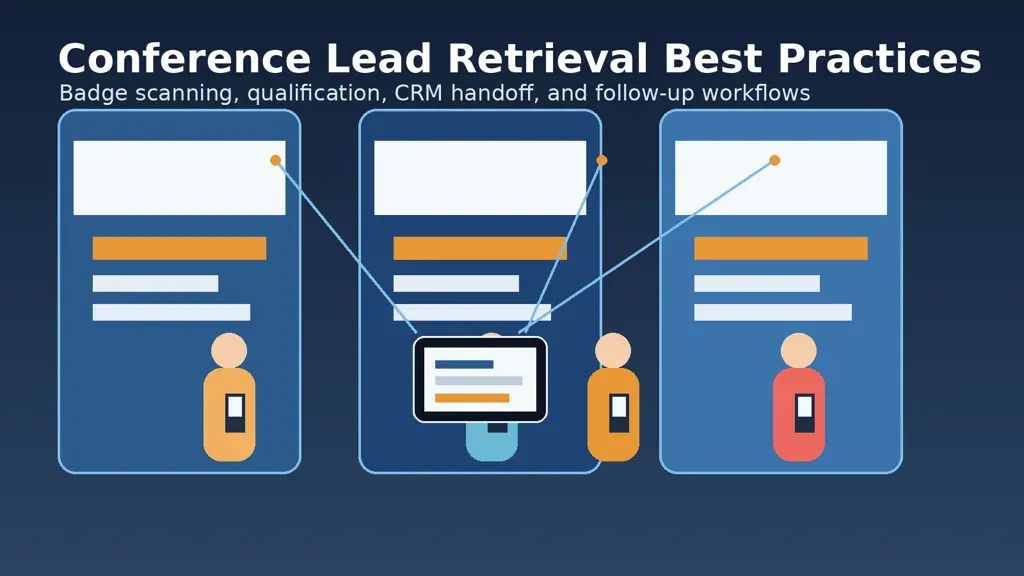
Conference lead retrieval best practices help exhibitors turn booth traffic into qualified opportunities instead of a pile of badge scans. The strongest teams plan the workflow before the show, train staff to qualify quickly, capture notes while conversations are fresh, and hand leads to sales or marketing fast enough to keep momentum alive.
Teams ready to turn booth conversations into stronger pipeline can exhibit at The Event Planner Expo to meet qualified planners and corporate buyers in person.
Lead retrieval is more than a scanner. It is the complete process for identifying visitors, understanding fit, recording interest, syncing data, and assigning the next step. If your booth team scans everyone the same way, your best conversations can disappear into the same spreadsheet as casual visitors, students, media contacts, and low-fit entries. A better system separates real buying intent from general traffic.
This guide covers the practical lead retrieval workflow exhibitors need before, during, and after a trade show or expo. Use it to build a booth staffing plan, choose qualification questions, improve badge scanning, connect CRM handoff, create follow-up cadences, and score leads with enough context to support revenue.
What Is Conference Lead Retrieval?
Conference lead retrieval is the process exhibitors use to collect attendee information, qualify booth conversations, and route each prospect into the right follow-up path after an event. It often includes badge scanning, QR codes, mobile forms, tablets, meeting notes, consent fields, CRM integrations, and automated tasks for sales or marketing teams.
The best lead retrieval systems answer five questions:
- Who did the team meet?
- What company, role, or buyer type does that person represent?
- Why did the conversation matter?
- How qualified is the lead?
- What should happen next?
That final question is where many exhibitors lose ROI. A badge scan without a next step is just a record. A badge scan with interest area, urgency, lead score, notes, and an owner is a business opportunity.
Start With the Outcome Before You Choose the Tool
Before comparing lead retrieval apps or scanning devices, define what a valuable lead looks like for your booth. An event technology company may want demo requests from corporate event planners. A venue may want site tour inquiries. A production partner may want RFP conversations. A sponsor may want meetings with marketing executives, agency leaders, or high-volume buyers.
Write one primary goal for the show and two supporting goals. For example: book 20 qualified demos, identify 50 warm planning contacts, and create 10 partner conversations. This helps your team decide which fields to capture, which questions to ask, and which follow-up path each contact should enter.
If your team is preparing for an event technology focused show, review this guide to event tech trade show exhibitor registration so your planning, booth goals, and lead capture process are aligned before the event opens.
Build a Booth Staffing Plan Around Lead Quality
A booth can look busy and still underperform if everyone on staff plays the same role. Strong lead retrieval starts with clear booth roles, especially during high-traffic hours. Each person should know when to greet, qualify, scan, demo, schedule, or hand off a visitor to a specialist.
Use a simple staffing model:
- Greeter: Welcomes attendees, starts short conversations, and identifies whether the visitor is worth deeper engagement.
- Qualifier: Asks priority questions, confirms buyer type, and decides whether the person is hot, warm, nurture, partner, media, or not a fit.
- Product or service specialist: Handles detailed questions, demos, package discussions, and objections.
- Meeting scheduler: Books post-show calls or same-day meetings while interest is high.
- Data owner: Checks that scans, notes, tags, and next steps are complete before each shift ends.
Smaller teams can combine roles, but the responsibilities should still be assigned. Without role clarity, staff members either over-talk with low-fit visitors or rush through high-fit prospects without capturing enough detail.
Which Qualification Questions Should Exhibitors Ask?
The right qualification questions help booth staff separate serious prospects from general interest without turning the conversation into an interrogation. Keep the questions short, practical, and connected to the reason the attendee stopped.
Use these questions as a starting point:
- What type of events are you planning, sponsoring, or supporting this year?
- Are you researching options now, or are you gathering ideas for later?
- What problem are you trying to solve before your next event?
- Who else is involved in choosing a partner or solution?
- What timeline are you working with?
- Would a demo, consultation, proposal, or resource be most useful after the show?
These questions work because they reveal role, need, urgency, decision process, and next step. They also give staff enough context to add useful notes after scanning the badge.
For more ideas on turning expo conversations into qualified opportunities, see this related guide to event lead capture strategies that convert.
Use Badge Scanning for Speed, Then Add Context Immediately
Badge scanning is valuable because it keeps the line moving. It is especially useful at busy conferences where booth staff need to collect information quickly without asking attendees to type contact details into a form. But speed can create a false sense of success. A long scan list does not prove lead quality.
The best badge scanning workflow is scan, tag, note, and route. After each scan, staff should add an interest category, select a lead tier, record one conversation note, and choose a next action. That next action might be book demo, send pricing, invite to a meeting, share a case study, add to nurture, or disqualify.
Keep picklists short so staff actually use them. Three to five fields are often enough: buyer type, interest area, timeline, lead rating, and next step. If the app allows free-text notes, train the team to write one sentence that a sales rep can understand later. For example: “Corporate planner evaluating registration tech for 2026 conference, wants demo next week.”
Create a Backup Workflow Before the Show Floor Gets Busy
Even good tools fail in live environments. Wi-Fi can slow down, batteries die, devices log out, QR codes get covered, and badge scans can miss fields. A backup workflow protects your lead retrieval process when the booth gets crowded.
Before the show, prepare:
- Charged devices and backup chargers for every shift.
- A test badge to confirm scanning and field mapping.
- Offline capture instructions in case the app loses connection.
- A short paper form or spreadsheet template for emergency capture.
- QR codes that point to a dedicated landing page or meeting scheduler.
- A naming convention for notes, tags, and campaign source fields.
Test the full workflow with at least five sample leads. Scan, tag, add notes, sync to the CRM, assign the owner, and confirm the follow-up task. If the test takes too long or data lands in the wrong field, fix it before attendees arrive.
Connect Lead Retrieval to CRM Handoff Before the Event
CRM handoff should not begin after the expo closes. It should be built before the team arrives. Every event lead should enter the CRM with the correct campaign, source, owner, status, and follow-up task. Hot leads should not wait for someone to clean a spreadsheet three days later.
Map the lead retrieval fields to your CRM before the event. Confirm how duplicates are handled, which fields update existing records, and who owns each type of lead. If your sales team uses territories or product lines, route hot leads accordingly. If marketing owns nurture contacts, make sure those contacts enter the right segmented sequence.
Useful CRM fields include event name, booth location, scan date, lead tier, interest category, timeline, next step, meeting status, staff owner, and consent status. This helps with reporting after the show, especially when leadership wants to compare conversations, meetings, opportunities, and revenue influence.
If sponsor reporting is part of your event strategy, this guide to using data and metrics to prove sponsor ROI offers a helpful framework for connecting event activity to measurable outcomes.
Use Lead Scoring to Prioritize Follow-Up
Lead scoring does not need to be complicated. Exhibitors need a clear way to decide which contacts require immediate outreach and which should enter nurture. The model should be simple enough for booth staff to apply quickly and specific enough for sales to trust.
| Lead Tier | Signals | Best Next Step |
|---|---|---|
| Hot | Decision-maker or strong influencer, clear need, near-term timeline, asks about pricing, availability, package details, or demo. | Same-day personal follow-up, meeting link, CRM task, and sales owner assignment. |
| Warm | Good fit, active research, relevant role, possible project this year, requests examples or resources. | Personalized email within 48 hours, targeted resource, and nurture path. |
| Nurture | Right audience but no current project, early research, or future interest. | Segmented email sequence, event recap, and future invitation. |
| Partner or Media | Referral source, association contact, journalist, vendor partner, speaker, or community connection. | Relationship follow-up from marketing, partnerships, or leadership. |
| Disqualified | Competitor, student, unrelated visitor, or no relevant business need. | No sales task, optional suppression or general newsletter only if consent is clear. |
If your brand wants higher-quality conversations with event professionals, sponsors, planners, and corporate buyers, review sponsorship opportunities at The Event Planner Expo and explore ways to increase visibility before, during, and after the show.
How Fast Should Exhibitors Follow Up After a Conference?
Hot leads should receive personal follow-up the same day or within 24 hours. Warm leads should hear from your team within 48 hours. Nurture contacts can enter a segmented email sequence, but the first message should still arrive while the event is fresh.
A practical follow-up cadence can look like this:
- Same day: Send a personal note to hot leads with the promised resource, meeting link, or next-step confirmation.
- Day 1: Assign sales tasks, confirm demos, and send warm leads a message tied to the booth conversation.
- Day 2 to 3: Share a helpful resource, checklist, recap, or case example based on interest category.
- Day 5 to 7: Follow up with non-responders using a specific question or alternate meeting time.
- Week 2 and beyond: Move longer-term prospects into a relevant nurture sequence.
The message should reference the conversation, not just the event. “Thanks for stopping by our booth” is generic. “You mentioned you are comparing registration platforms for a 2026 leadership conference” proves that the team listened and captured useful context.
Featured Snippet Checklist: Lead Retrieval Setup
- Define what counts as a qualified conference lead.
- Assign booth roles for greeting, qualifying, scanning, demos, scheduling, and data checks.
- Prepare three to five qualification fields for fast booth conversations.
- Test badge scanners, QR codes, forms, devices, chargers, and offline backup capture.
- Map lead retrieval fields to CRM campaign, owner, status, and follow-up tasks.
- Train staff to scan, tag, note, score, and route every meaningful conversation.
- Separate hot, warm, nurture, partner, media, and disqualified contacts.
- Send hot-lead follow-up within 24 hours and warm-lead follow-up within 48 hours.
- Report qualified leads, meetings booked, opportunities created, pipeline influenced, and revenue.
Measure Lead Retrieval ROI After the Show
After the conference, do not stop at total scans. Total scans can reward volume over quality. A better report shows how many contacts were qualified, how many meetings were booked, how fast follow-up happened, and how many opportunities entered the pipeline.
Track these metrics after each show:
- Total scans and unique contacts.
- Qualified leads by tier.
- Meetings booked during or after the event.
- Follow-up completion rate within 24 and 48 hours.
- Opportunities created.
- Pipeline influenced.
- Revenue closed from event-sourced contacts.
- Top-performing booth offers, QR placements, or staff shifts.
Use the report to improve the next event. If many scans lack notes, retrain staff. If hot leads are not followed up quickly, fix ownership. If one offer converts better than others, make it more visible. For a broader look at exhibitor planning, read these event technology trade show tips.
FAQ: Conference Lead Retrieval Best Practices
What is the best way to retrieve leads at a conference?
The best way to retrieve leads at a conference is to combine badge scanning or QR capture with qualification fields, staff notes, lead scoring, CRM routing, and fast follow-up. The goal is to capture context, not just contact information.
What should exhibitors record after scanning a badge?
Exhibitors should record buyer type, company, role, interest area, timeline, lead tier, next step, and one useful conversation note. These details help sales and marketing personalize follow-up.
How do you qualify trade show leads quickly?
Qualify trade show leads quickly by asking short questions about role, event plans, current challenge, timeline, decision process, and preferred next step. Then tag the lead as hot, warm, nurture, partner, media, or disqualified.
How soon should conference leads be entered into CRM?
Conference leads should reach the CRM within minutes when possible. At minimum, hot leads should be synced, assigned, and queued for follow-up before the end of the event day.
How can exhibitors improve lead retrieval ROI?
Exhibitors can improve lead retrieval ROI by defining qualified leads before the event, training booth staff, testing scanning workflows, adding lead scores, following up within 24 to 48 hours, and measuring meetings, pipeline, and revenue.
Turn Booth Conversations Into Measurable Opportunities
Strong lead retrieval is the difference between a crowded booth and a productive event investment. When your team knows what to ask, how to scan, what to record, where each lead goes, and when follow-up happens, every conversation has a better chance of becoming a real business outcome.
The exhibitors that win at conferences do not rely on memory, luck, or a spreadsheet cleanup after the show. They build a system before the event starts. Use these conference lead retrieval best practices to collect better data, prioritize the right prospects, and give your sales and marketing teams the context they need to convert.
Ready to reach event professionals and corporate buyers who are actively looking for new partners, venues, technology, and services? Visit The Event Planner Expo’s event marketing hub and start planning your next opportunity to stand out.
One great event can fuel a year of business. One smart booth can fuel your pipeline even longer. If you’re ready to be seen, remembered, and booked by NYC’s most active planners, it starts here.
Reserve your booth while spaces are available at The Event Planner Expo and put your brand where decisions are made.
If you are planning your next event season, start with a clear conference networking strategy so each promising lead has a purpose and a next step.