Your calendar doesn’t manage itself. And in a city like New York, where the event industry runs hotter and faster than anywhere else in the country, the gap between planners who stay booked year-round and those who ride peaks and crashes comes down to systems. If you’ve been studying The Ultimate Guide to Growing Your Event Business in NYC, you already know the big-picture framework. This is where that framework gets sharp: the pipeline structure, the corporate contract plays, the lead-generation timing, and the pre-booking strategies that separate professionals running a business from those hoping for referrals. Whether you’re a seasoned event planner, a vendor building a client base, or a brand evaluating where to put your experiential marketing budget in 2026, the dynamics shaping NYC’s event calendar right now are worth your full attention.
The Real Cost of Seasonal Thinking in NYC Event Planning
Event planning slow seasons don’t come out of nowhere. They get built by professionals who plan around social calendars instead of corporate ones. January goes quiet. Late August feels like a ghost town. February sits there looking apologetic. And for NYC event planners who haven’t structured their business to deliberately fill those gaps, slow seasons turn into revenue crises.
Overcoming seasonality in event planning isn’t about grinding harder during peak months. It’s about refusing to let the calendar dictate your income. Corporate budgets don’t take holidays. Financial services firms in Midtown are booking Q1 strategy sessions in October. Tech companies in Hudson Yards are planning product launches for February and March. The pharmaceutical sector, the media companies, the law firms operating throughout Manhattan’s business corridors: they run on fiscal quarters, not on wedding seasons.
The professionals who’ve cracked overcoming seasonality in event planning share a common approach: they stopped chasing what’s available and started building demand into the quieter windows. That means off-season booking discounts structured as added value, not as desperation pricing. It means pitching corporate clients on February team events that double as morale investments. It means treating event planning slow seasons as a market opportunity that your competitors are leaving on the table.
Industry data backs this up. According to a 2026 global events report from Eventplanner.net, 85% of event professionals enter the year with optimism about growth, the highest that sentiment has been in five years. The planners catching that growth aren’t the ones waiting for busy season to save them.
Event Planning Pipeline Management Is the Infrastructure Behind a Full Calendar
What a Real Pipeline Looks Like for NYC Event Professionals
Event planning pipeline management is not a list of leads in your inbox. It’s a structured, stage-based view of where every potential client sits in your business development process, what moves them forward, and when action needs to happen to keep revenue flowing consistently.
For most event planners in NYC, a functional pipeline operates across three layers:
- Awareness contacts: Referrals who haven’t reached out yet, past clients who went quiet, venue partners who’ve mentioned referral opportunities
- Active conversations: Prospects currently in dialogue, reviewing your portfolio, or requesting proposals
- Committed revenue: Signed contracts, collected deposits, events on the calendar
The breakdown happens in layers one and two. Most event professionals concentrate almost exclusively on committed revenue, which means the moment those events close, there’s nothing behind them. That’s the pipeline problem. That’s where event planning slow seasons are actually created.
Build Your Pipeline 90 Days Out, Minimum
Lead generation for NYC event planners isn’t just about volume. It’s about timing. Corporate buyers operate on procurement timelines that extend 90 to 180 days before an event date. If you’re pitching a corporate holiday event in November, the conversation should have started in June. Budget allocations, vendor approvals, and venue holds for Q4 events are locked months before the invitations go out.
Effective lead generation for event planners means running three timelines simultaneously:
- Closing current events with precision
- Nurturing warm prospects for next quarter
- Building brand awareness for the quarter after that
That third layer is the one most planners skip, and it’s exactly the layer that determines whether your business can stay booked year-round or whether you’re starting from scratch every few months.
The best CRM tools for event planner pipeline management, platforms like HoneyBook, Dubsado, or Salesforce for larger operations, give you visibility across every stage and automate follow-up sequences before warm leads go cold. Sales funnel optimization through a CRM isn’t optional infrastructure anymore. For NYC event professionals competing in this market, it’s the difference between a reactive business and a predictable one.
Corporate Event Planning Contracts Are Your Best Hedge Against an Unpredictable Calendar
Why Corporate Clients Change the Revenue Equation
Corporate event planning contracts operate differently from social bookings, and that difference is worth understanding at a business level. A corporate client doesn’t book you for one event. They book you for a recurring series: quarterly off-sites, monthly client dinners, annual conferences, and concurrent sessions tied to internal milestones. That relationship structure converts single transactions into long-term revenue streams.
Event revenue diversification through corporate work also smooths cash flow in ways that social bookings never will. Corporate invoicing cycles, retainer structures, and multi-event agreements mean you’re not restarting from zero every January. You’re building account equity that compounds as the relationship deepens.
For event planners working in New York City, the corporate market density is unmatched. Financial firms are clustered in the Financial District and Midtown. Tech and media companies across lower Manhattan and the Hudson Yards corridor. Professional services organizations from the Upper East Side to Tribeca. According to a 2026 industry spending report from Momencio, corporate event spend is rising, with cost-per-attendee investment climbing as companies prioritize measurable, high-quality experiences. That budget is looking for skilled vendors and planners who can deliver.
How to Win Corporate Event Planning Contracts in NYC
Corporate buyers don’t respond to vendor pitches. They respond to business outcomes. When you’re walking into a conversation with a brand manager or marketing director, the framing can’t be “here’s what I do.” It has to be “here’s what your team will get.”
Winning corporate event planning contracts in this market comes down to a few concrete moves:
- Lead with objectives, not services: Ask what the event needs to accomplish before you pitch anything. Sales kickoff momentum? Client retention? Brand visibility at a product launch?
- Quantify your track record: Attendance numbers, logistics performance, client renewal rates, production metrics. Corporate procurement teams want proof of operational reliability.
- Handle procurement requirements proactively: Insurance certificates, W-9s, vendor onboarding documentation, and your Request for Proposal (RFP) response process should all be airtight before you pitch.
- Position as a strategic partner: Vendors get replaced at renewal. Partners get renewed because removing them creates risk.
Account-Based Marketing (ABM) principles apply directly to event business development here. Instead of broadcasting to everyone, you identify high-value corporate accounts, build relationships with internal champions, and work the relationship horizontally across departments. One HR contact becomes an introduction to marketing. The marketing team’s events lead to a procurement conversation with the C-suite. That’s how a single corporate account turns into a year’s worth of stable revenue.
B2B event marketing strategies built on account relationships, rather than cold outreach volume, are what allow event professionals to stay booked year-round without constantly chasing new clients from scratch.
Pre-Booking Strategies That Lock In Revenue Months Before the Season Hits
Pre-booking event strategies remain one of the most underused tools in event business development. The idea is straightforward: give clients a compelling reason to commit early, and you capture availability and revenue before your peak windows fill with competitors.
In practice, pre-booking event strategies for NYC event professionals look like this:
- Early commitment packages: Added value (upgraded production elements, extended planning support, priority vendor access) for clients who confirm more than 90 days out, structured as a benefit rather than a discount
- Annual planning contracts: A single agreement covering all of a corporate client’s recurring events for the year, a growing model among planners who’ve built trusted corporate relationships
- Retainer agreements: Monthly fees for priority access and a guaranteed block of planning hours, regardless of specific event volume in any given month
- Off-season booking discounts tied to real value: If you work with venue partners, positioning off-season booking discounts as an access play (better availability, faster response times, dedicated attention) lands differently than a straight price cut
These pre-booking event strategies also give you leverage with your own vendor network. When you’re committing to dates well in advance, you unlock pricing and availability that reactive competitors won’t get. Your margins improve while your calendar fills. That’s what event revenue diversification looks like when it’s working.
Why Brands and Sponsors Are Paying More Attention to NYC Event Planners in 2026
Here’s what most event professionals underestimate: brands need direct access to the people in this room. And NYC event planners are exactly that room.
The shift in B2B event marketing strategies over the past two years has been significant. Corporate sponsors aren’t looking for logo placement on a banner. They’re looking for integrated brand moments, curated audience access, product sampling opportunities with high-purchase-intent guests, and measurable Return on Event (ROE) data. Event marketing specialists who can speak that language have a substantial competitive edge when approaching potential sponsors.
This creates two revenue opportunities for planners. First, sponsorship as an offset: pitching corporate sponsors to participate in your events reduces your own cost exposure while adding value for attendees. Second, event professionals can increasingly serve as a Destination Management Company (DMC)-style partner for brands running experiential campaigns across New York City, managing the full vendor network for a brand activation in Midtown or a product experience in SoHo.
The event planners who understand Account-Based Marketing (ABM) principles, and who can offer sponsors a targeted, high-engagement audience, are the ones getting multi-event sponsorship commitments instead of one-off checks. Corporate event venue marketing through strategic partnerships and sponsor integration is now a legitimate revenue line, not just a nice-to-have.
According to research from Marketing Profs, 89% of businesses report that events are essential to achieving key business objectives. Brands know this. The event professionals who can connect that priority to measurable outcomes are building sponsor relationships that recur year over year.
The Event Planner Expo: Where NYC’s Top Event Professionals and Sponsors Connect
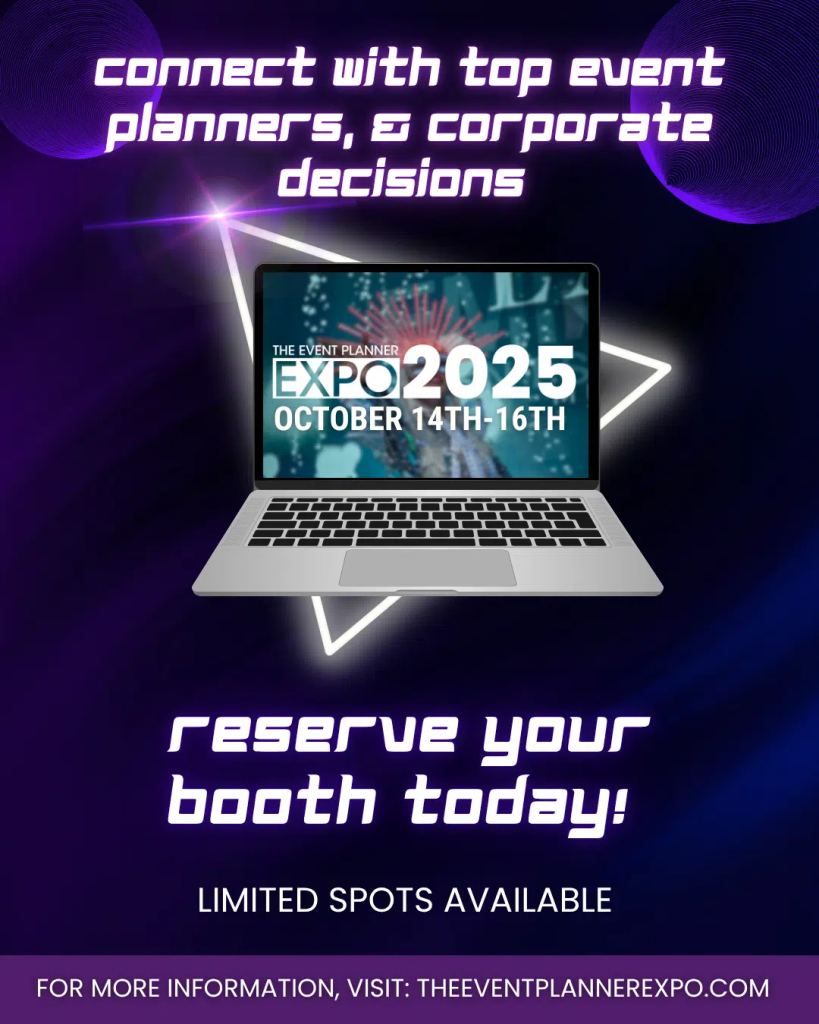
For event planners committed to staying booked year-round and building corporate relationships that generate consistent revenue, The Event Planner Expo is the highest-concentration ROI opportunity in New York City’s event industry calendar.
This is not a generalist trade show. The Event Planner Expo is built specifically around the professionals and decision-makers driving NYC’s event economy: experienced planners, production companies, caterers, florists, DJs, corporate buyers, and high-value sponsors with real marketing budgets and real authority to commit.
For exhibitors, the Expo delivers direct access to qualified buyers who came specifically to discover and build vendor relationships. You’re not interrupting someone’s day. You’re showing up in a room where the audience is already prepared to engage, evaluate, and buy.
For brand managers, marketing directors, and corporate sponsors evaluating where to invest their experiential and event marketing budgets in 2026, the business case is direct. A room full of NYC event planners is a room full of gatekeepers. Each of those planners influences dozens of client decisions every year, from venue selection and catering to production vendors, branded activations, and experiential partners. Sponsoring The Event Planner Expo means embedding your brand into those decisions at the source level, before the RFP is even written.
Corporate event venue marketing through live industry channels like the Expo delivers audience quality that paid digital simply can’t replicate. These are active buyers, not passive scrollers. The engagement you build at a live event converts at a fundamentally different rate than an impression served on a screen.
Explore exhibitor and sponsorship opportunities at The Event Planner Expo and get specific about what a strategic presence in this room means for your revenue and visibility in 2026.
Frequently Asked Questions for NYC Event Planners Who Want to Stay Booked Year-Round
How do I get corporate event planning contracts as a smaller event company?
Specialize. Generalist pitches don’t win corporate accounts in a market this competitive. If your portfolio is focused on a specific vertical, such as financial services events, tech product launches, luxury hospitality, or professional association conferences, you’re speaking directly to corporate buyers’ specific needs instead of asking them to figure out the fit themselves. From there, build your pipeline through industry organizations, attend B2B-focused industry events like The Event Planner Expo, and make sure your RFP response process is fast, professional, and complete. Corporate procurement teams eliminate vendors quickly on process, before they even evaluate quality.
What’s the best way to manage event planning slow seasons without cutting prices?
Compete on value, not cost. Slow seasons are the right time to pitch retainer agreements, push pre-booking event strategies with real added value, and deepen relationships with corporate clients who have year-round recurring needs. Use the slower period to audit your pipeline, implement a proper CRM, and build the outreach infrastructure that makes future slow seasons structurally impossible. Dropping your rates signals desperation and trains clients to wait for a discount. Adding value signals confidence and builds loyalty.
How far in advance should event planners start lead generation for the next busy season?
Minimum 90 days. For major corporate events, decisions often happen 4 to 6 months before the event date. Budget approvals, vendor selections, and venue holds for corporate events are made well before the event appears on anyone’s calendar. Structure your lead generation calendar around corporate fiscal quarters, not the event calendar, and you’ll find yourself consistently in conversations before competitors even know a budget exists.
What does event planning pipeline management actually look like day-to-day?
Every contact, inquiry, and prospect gets logged in your CRM with a stage designation and a next-action date. You review your pipeline weekly, identify conversations that have gone cold, and trigger outreach before leads disappear entirely. Sales funnel optimization for NYC event planners isn’t complicated. It requires consistency that most professionals don’t build until a slow season forces the issue. Build the habit before you need it.
Why should a brand sponsor The Event Planner Expo instead of other marketing channels?
Because this audience doesn’t exist at this concentration anywhere else. The Event Planner Expo puts your brand in front of NYC’s working event professionals during two full days of active, high-engagement industry interaction. These are decision-makers who directly influence client spending across catering, production, florals, venues, branded activations, corporate gifting, and experiential partnerships. The Return on Event (ROE) from a well-executed sponsorship at the Expo consistently outperforms equivalent spend on digital advertising or broad-market trade shows, because the audience quality and purchase intent are simply different.
Reserve Your Spot Before the Calendar Fills Without You
The event planners who stay booked year-round in New York City aren’t operating on hope and referrals. They’ve built pipeline management systems that generate leads 90 days ahead. They’ve secured corporate event planning contracts that deliver recurring revenue regardless of season. They’ve implemented pre-booking event strategies that lock in commitment before peak windows close. And they show up in the rooms where the right relationships get built.
The Event Planner Expo is one of those rooms. Whether you’re an event planner ready to grow your corporate client base and keep your calendar genuinely full year-round, or a brand looking to reach NYC’s most active event decision-makers through a channel that delivers real ROI, this is where the investment pays off.
Reserve your booth or explore sponsorship opportunities at The Event Planner Expo. The professionals who commit early are the ones who close out the year with the revenue to prove it.