A vague RFP turns vendor selection into a costly round of follow-up questions. The right document gives every venue and vendor the same clear brief, so proposals arrive complete, comparable, and ready for a confident decision.
Ready to find your next event vendor? Explore The Event Planner Expo 2026 exhibitors.
An event RFP template gives every venue and vendor the same brief, questions, deadline, and response format. Include event goals, date options, guest count, budget guidance, service scope, technical needs, evaluation criteria, insurance requirements, and contract expectations so your team can compare complete proposals on equal terms.
First, answer the practical starting question: What is an event RFP, and when should you use one? With that decision made, you can write a focused brief that attracts serious bidders and supports a clear choice. The path begins with
What is an event RFP, and when should you use one?
An event request for proposal, or RFP, is a document that asks venues or vendors to bid on defined event work. It gives each bidder the same core details, questions, deadlines, and response rules. For corporate and large-scale events, an event RFP template creates a clear starting point for sourcing.
Event RFP versus event proposal
The planner or buyer writes the RFP before choosing a partner. A venue, caterer, production firm, or other vendor then responds with its proposal. In simple terms, the RFP asks for a solution, while the proposal explains what the vendor can deliver and at what cost.
This distinction keeps the sourcing process focused. An RFP should define the event, required work, limits, and scoring method without telling vendors exactly how to solve every need. The response should show the vendor’s plan, team, fees, terms, and proof that it can handle the work.
A useful RFP gives bidders enough detail to prepare comparable responses. Academic proposal guidance lists a project summary, statement of work, budget, and supporting details among the core proposal components. Event planners can adapt that structure to venue and vendor sourcing.
When an RFP makes sense
Use an RFP when the event has several stakeholders, a large budget, or complex service needs. It also helps when several qualified vendors could do the work. A shared document reduces gaps between conversations and gives decision-makers a consistent record.
An RFP is especially useful when the team must compare more than price. Service scope, staffing, capacity, past work, production needs, risk plans, and contract terms may all affect the choice. Before sending one, review this guide to choosing event vendors and set the team’s priorities.
- Send a venue RFP when comparing spaces, dates, room blocks, catering, access, and on-site support.
- Send a vendor RFP when production, technology, decor, security, transport, or staffing needs require a tailored plan.
- Send a full-service RFP when an agency or management partner will own several connected parts of the event.
When a simpler request works
Not every purchase needs a formal RFP. A short quote request may work for a repeat order, a standard rental, or a service with few variables. Use the lighter approach when the scope is clear, the risk is low, and the team does not need a scored review.
Before choosing either route, define the budget range and approval limits. An event budget template can help the team map likely costs before bids arrive. Then the RFP can focus on real needs instead of asking vendors to guess.
The key test is simple: will several bidders need the same detailed brief to produce useful, fair responses? If yes, an RFP is the right tool. If no, a clear quote request or direct vendor conversation may save time without weakening the decision.
How to write an event RFP step by step
A strong event RFP gives each venue or vendor the same clear brief. That makes responses easier to compare and cuts down on avoidable questions. Use an event RFP template as a working document, then tailor it to the event and service category.
Requirements before outreach
Start by aligning the planning team on the event goals, guest needs, budget range, and decision process. If the budget is still in progress, build an event budget template before asking suppliers to price the work.
Separate firm requirements from preferences. A fixed event date is a requirement, while a preferred neighborhood may allow room for a stronger offer. This distinction helps qualified suppliers decide whether to bid.
The RFP drafting sequence
Follow one process for every bidder. The sequence below keeps the request focused while giving suppliers enough detail to prepare useful, comparable proposals.
- Define the event and its goals. State the event type, purpose, target audience, and desired guest experience. Add the expected attendance, dates, hours, location needs, and any flexible options.
- Describe the full scope. List every service the supplier must provide, such as space, catering, rentals, production, staffing, security, or transport. Note setup and breakdown times, accessibility needs, technical specs, and service standards.
- Share budget and pricing rules. Give a budget range when possible, plus taxes, fees, gratuities, and contingency expectations. Ask bidders to itemize costs, state minimums, flag exclusions, and explain optional upgrades.
- Set response requirements. Request a company profile, relevant event examples, references, insurance details, staff plan, availability, and proposed timeline. Ask for one clear pricing format so the bids can be compared fairly.
- Explain how bids will be reviewed. Name the decision factors and any required interviews, tours, tastings, or demos. The federal proposal guidance in FAR Part 15 separates proposal instructions from evaluation factors. This model can also make an event RFP easier to follow.
- Issue the RFP and manage questions. Provide the submission deadline, file format, contact person, and expected award date. Set one question deadline, then send the same written answers to every invited bidder.
Submission control and fair review
Before release, ask someone outside the core team to read the RFP. They should be able to explain the scope, required response, and schedule without extra context. Fix unclear terms before they reach vendors.
Track invited suppliers, questions, addenda, and submissions in one shared log. Do not give one bidder extra scope details in a private exchange. If a requirement changes, issue a written update and allow enough time for every bidder to adjust.
After the deadline, check each response for required items before scoring it. Keep clarifying questions factual and consistent. A disciplined review process supports sound event vendor selection without letting presentation style hide missing details.
A copyable event RFP template for venues and vendors
Copy this event RFP template into a shared document, then replace each bracketed prompt with confirmed details. Keep the same headings when sending it to venues and vendors. A fixed structure makes each response easier to review side by side.
Want more qualified connections? Explore event exhibitor opportunities at The Event Planner Expo.
Organization and event brief
Start with the business case and the people involved. Give bidders enough context to shape a useful response, but keep private information out of the first draft.
- Organization: [Name, website, industry, and short description]
- RFP contact: [Name, role, email, phone, and preferred contact method]
- Event overview: [Event name, format, purpose, audience, and key goals]
- Program: [Draft agenda, session types, entertainment, and guest flow]
- Dates: [Preferred event date, alternate dates, setup window, and breakdown deadline]
- Location: [City, preferred area, transit needs, parking needs, and venue type]
- Attendance: [Expected guests, minimum count, maximum count, and staff count]
- Decision team: [Approvers, users, and legal or procurement contacts]
State which details are firm and which are open to advice. This helps a bidder avoid building a quote around a weak guess. It also gives your team a clean record before choosing event vendors.
Scope, service, and guest needs
Define the full scope in plain terms. Ask each bidder to list what is included, excluded, handled by a partner, or supplied by your team.
- Spaces: [Room names, capacities, layouts, green room, storage, offices, and outdoor areas]
- Production and AV: [Stage, sound, lighting, screens, power, internet, streaming, and technical crew]
- Catering: [Meal periods, service style, menu goals, beverages, dietary needs, and estimated counts]
- Accessibility: [Step-free routes, seating, restrooms, captioning, interpretation, and other guest support]
- Sustainability: [Waste, reusable serviceware, local sourcing, energy, transport, and reporting requests]
- Operations: [Security, registration, permits, cleaning, loading access, insurance, and emergency plans]
Ask bidders to explain how they will meet each access request. Refer them to relevant official guidance, such as ADA.gov, when the event is in the United States. Require written notes on any limit, added cost, or task that needs another supplier.
Commercial terms and response format
Set one pricing format so bids can be compared without rebuilding every quote. Use your event budget template to define categories and approval limits before sending the RFP.
- Budget: [Target range, hard cap, taxes, service charges, and contingency rules]
- Pricing format: [Line-item fees, quantities, rates, minimums, markups, options, and exclusions]
- Payment terms: [Deposit, payment dates, accepted methods, and late fees]
- Contract terms: [Cancellation, attrition, force majeure, insurance, indemnity, and data terms]
- References: [Two relevant clients, event type, event scale, contact details, and work samples]
- Response instructions: [File format, page limit, naming rule, submission email, and deadline]
- Selection process: [Review criteria, interview dates, decision date, and expected contract date]
- Questions: [Deadline, contact, and date when shared answers will be issued]
Close with a required response checklist. Ask bidders to confirm availability, scope, staffing, pricing, references, and contract exceptions. Tell them to flag assumptions in one section, rather than hiding them across the proposal.
What timeline should an event RFP follow?
A useful event RFP template works backward from the date when a signed vendor agreement is needed. It gives vendors enough time to study the brief, ask questions, and build accurate proposals. It also protects time for a fair review, finalist talks, and contract changes.
Set the key dates first
Start by naming the issue date, question deadline, proposal due date, finalist period, decision date, and target contract date. Put every date in the RFP and state the time zone. Vendors can then plan their work, while your review team can reserve time before proposals arrive.
Keep the question period early enough to share answers before the response date. Send the same answers to every bidder, unless a question contains private business details. This keeps the process clear and helps vendors submit proposals based on the same facts.
Match response time to complexity
A simple rental request may need a short response window. A multi-day event with production, staffing, catering, security, and venue needs will take longer. Vendors may need site details, partner quotes, or availability checks before they can give firm terms.
The Federal Acquisition Regulation offers a sound scheduling rule: response time should reflect the work’s complexity and commercial nature. Avoid setting a fast deadline only to speed up procurement. Rushed bids often rely on broad estimates, open assumptions, or missing details.
Leave room for review and contracting
After proposals arrive, give the review team time to score each response against the published criteria. Schedule finalist conversations or site visits next. These meetings should test unclear points, confirm team fit, and check whether the proposed plan works in the event space.
Do not treat the decision date as the finish line. Leave a separate window for references, insurance checks, legal review, revisions, and signatures. When choosing event vendors, build in extra time for negotiation rather than forcing a rushed agreement.
Add a small buffer before the contract deadline. If a finalist withdraws or terms change, the team can respond without delaying planning. Share any schedule update with every active bidder, and state whether the proposal deadline will also move.
How should you compare venue and vendor proposals?
Screen every proposal against nonnegotiable requirements first, then apply the same weighted scorecard to each qualified bid. Compare price, scope, experience, service, risk, and contract terms. Record evaluator notes and resolve major scoring differences before creating a shortlist or inviting finalists to a walkthrough.
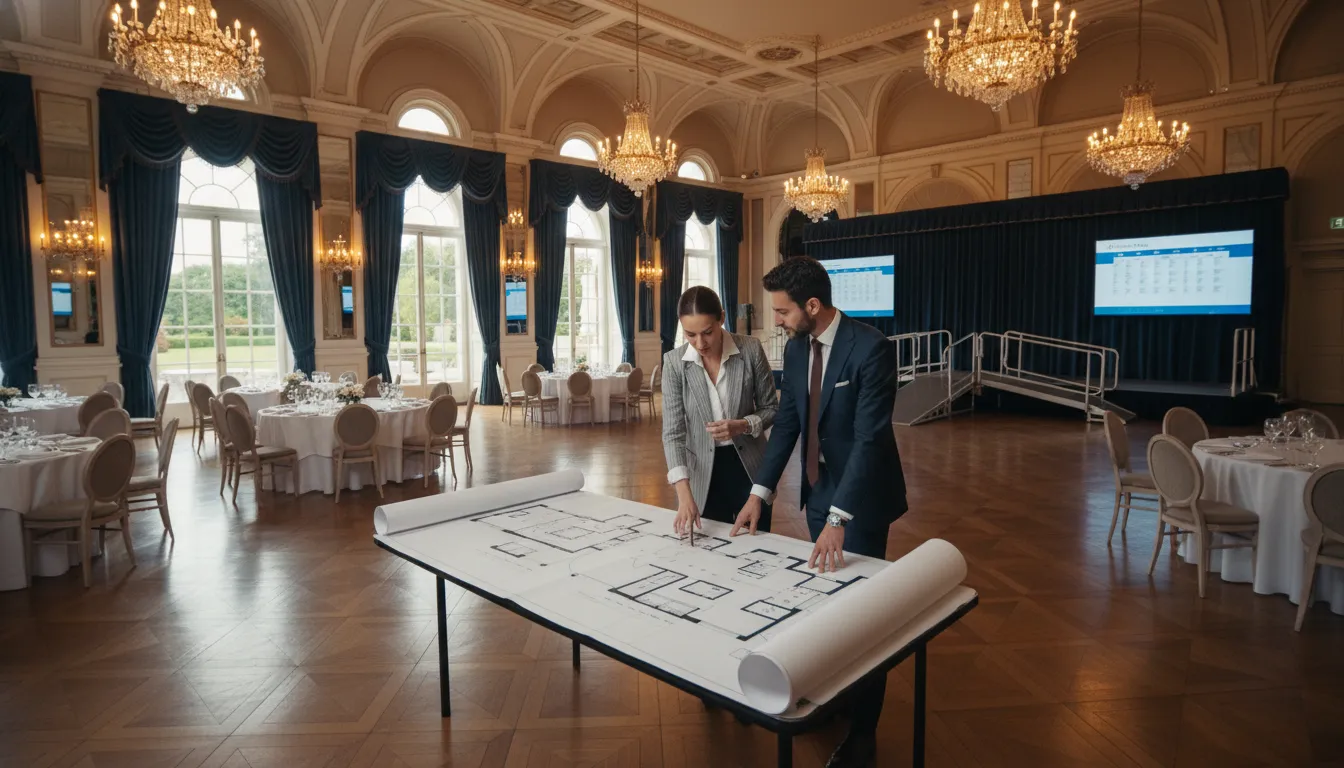
Start by screening each proposal against your nonnegotiable needs before assigning any score. Remove bids that miss the event date, required capacity, insurance terms, accessibility needs, or core scope. This first pass keeps an attractive price from masking a deal-breaking gap.
A weighted scorecard
Next, build one scorecard from the evaluation criteria in your event RFP template. Score every qualified bid on the same scale, then multiply each score by its assigned weight. The weights should reflect the event’s real risks and goals, not a generic procurement formula.
| Criterion | Suggested weight | What to evaluate |
|---|---|---|
| Scope and service fit | 25% | Coverage of requirements, staffing, timeline, and deliverables |
| Total cost | 25% | Comparable full cost, payment terms, and possible extra fees |
| Experience and reliability | 20% | Similar events, team skills, references, and backup plans |
| Creative and strategic value | 15% | Useful ideas, guest experience, and fit with event goals |
| Communication and contract terms | 15% | Response quality, lead contact, cancellation terms, and flexibility |
Adjust the weights before opening bids, so the team cannot favor a preferred vendor after seeing prices. Ask stakeholders to score proposals on their own first. Then compare scores as a group and document why any score changes.
Comparable costs and evidence
Normalize fees before judging value. Put taxes, service charges, labor minimums, rentals, overtime, travel, and optional upgrades into one cost sheet. A practical event budget template can help expose gaps between a base quote and the likely final bill.
Check whether each cost is tied to the proposed scope and follows the same assumptions. California State University Channel Islands advises that proposal costs should be allowable, allocable, reasonable, and consistent. Use that test when a fee looks vague, bundled, or hard to compare.
Do not score polished claims without proof. Request work samples, safety plans, staffing details, and references from events with a similar size or format. SUNY New Paltz lists competence, experience, and resources as parts of organizational capability, which makes a useful reference-check guide.
Final review and negotiation
Call references with the same short question set. Ask about deadline control, communication, surprise charges, issue handling, and whether the client would hire the vendor again. Record answers beside the scorecard instead of relying on general praise.
Use the final scores to create a shortlist, not an automatic winner. Review the highest-scoring bids for contract risk, team fit, and unanswered questions. Then negotiate from a clear comparison: ask vendors to clarify exclusions, confirm assumptions, and revise specific terms without changing the core scope.
Common event RFP mistakes that weaken proposals
Weak RFPs make strong vendors guess, while planners receive bids that are hard to compare. Most problems begin with unclear needs, uneven instructions, or a process that values speed over useful detail. A practical event RFP template should prevent those gaps before the document reaches vendors.
Unclear scope and uneven questions
Vague scope is one of the fastest ways to get mismatched proposals. State the event goals, dates, guest count, venue limits, deliverables, service levels, and approval roles. Ask every vendor the same core questions, then add only the few questions needed for each service category.
Long requirement lists can cause the same problem. Vendors may miss the priorities when every item appears equally important. Separate required items from preferences and optional ideas. Academic proposal guidance also recommends a clear summary, statement of work, budget, and evaluation criteria as core proposal components.
- Fix vague requests: Define outputs, owners, deadlines, and what successful delivery looks like.
- Fix inconsistent questions: Use one scoring sheet and one set of required response fields.
- Fix excess detail: Move background material to an appendix and keep decision points in the main RFP.
Missing costs and rushed timelines
Leaving out budget guidance does not create better competition. It often produces bids built around different assumptions. Give vendors a target range or spending ceiling, then request itemized fees, taxes, labor, travel, rentals, overtime, and cancellation terms. An event budget template can help planners map those cost lines before sending the RFP.
Hidden costs also weaken a low initial bid. Ask vendors to list exclusions, optional charges, and the conditions that trigger added fees. Set a timeline that allows site visits, partner quotes, and careful review. An unrealistic deadline rewards the fastest response, not the best event plan.
Weak communication and price-only selection
Plans change during sourcing, but silence creates risk. Send every update, answer, and deadline change to all invited vendors at the same time. Keep a shared question log so no bidder gains an unfair information edge. If a major requirement changes, extend the deadline when needed.
Selecting only on price can overlook staffing depth, relevant work, service quality, and delivery risk. Score cost beside fit, experience, approach, and responsiveness. When choosing event vendors, review the full value of each bid against the same criteria. This gives decision-makers a clear record of why the selected partner earned the work.
Frequently Asked Questions
What should be included in an event RFP template?
An event RFP template should cover the event overview, goals, dates, location, audience, required services, budget range, proposal deadline, and evaluation criteria. Ask vendors to explain their approach, pricing, availability, relevant experience, staffing, and contract terms. The California State University Channel Islands proposal guidance also identifies the project summary, statement of work, budget, and evaluation criteria as core proposal elements.
Where can I download a free event RFP template?
Free event RFP templates are available from industry associations and business template providers. The Events Industry Council offers event industry templates, including RFP forms. Choose an editable Word or Google Docs version when possible. An editable file makes it easier to remove irrelevant questions and add requirements for venues, catering, audiovisual services, or other vendors.
Why use a standardized event management RFP template?
A standardized event management RFP template gives every vendor the same requirements, questions, deadlines, and pricing format. That consistency makes proposals easier to compare and reduces the chance of missing important details. It also supports a fair review process because the selection team can score each response against the same criteria instead of relying on different sales presentations.
How long does it take to write an event RFP using a template?
Writing time depends on the event’s complexity, the number of services requested, and how much information is already confirmed. A template speeds the process by providing a clear structure, but planners still need time to verify requirements and align stakeholders. Complex events may require input from operations, finance, marketing, technology, security, and legal teams before the RFP is ready to issue.
Ready to Build a Stronger Event Vendor Shortlist?
Waiting to clarify your event needs can lead to rushed outreach, uneven proposals, and harder choices when decision time arrives. Starting your RFP now gives venues and vendors more time to prepare useful responses that match your priorities. Acting early also leaves room to ask follow-up questions, resolve gaps, and choose partners without avoidable last-minute pressure.
Ready to build a stronger event vendor shortlist? Learn more about The Event Planner Expo.
Explore 2026 exhibitors to find potential partners or review event exhibitor opportunities. Contact promising venues and vendors early, ask focused questions, and use your RFP to compare their answers on equal terms. A clear first step today can help you move from a long list of options to a confident shortlist sooner.