Experiential Marketing Events: How to Create Immersive Brand Experiences
Experiential marketing events work because people remember what they participate in. A strong brand activation does not just put a logo in front of attendees. It pulls them into a story, gives them something to do, and makes the message feel personal enough to talk about after the event ends.
Want to see what high-performing activations look like in person? Explore The Event Planner Expo tickets and walk the trade show floor with 150+ exhibitors, corporate planners, marketing leaders, and event innovators in New York City.
For corporate event planners, conference producers, sponsors, and exhibitors, that shift matters. Attendees are no longer impressed by passive booths, static backdrops, or branded giveaways that never leave the tote bag. They expect moments that feel useful, sensory, shareable, and connected to the reason they showed up. The brands that win attention at trade shows and conferences are the ones that design experiences with intention.
This guide breaks down what experiential marketing means at events, why it performs especially well in trade show and conference environments, and how to build immersive brand experiences that move people from curiosity to conversation to conversion.
What Are Experiential Marketing Events?
Experiential marketing events are live, interactive brand experiences designed to help audiences engage with a company through participation instead of passive viewing. The format can include product demos, sensory installations, pop-ups, interactive booths, VIP lounges, technology-driven activations, live entertainment, workshops, personalized giveaways, or guided journeys through a branded environment.
The key word is intentional. Experiential marketing is not the same as adding a photo wall or renting a flashy LED tunnel. Those elements can support the experience, but they are not the strategy. The strategy is the emotional and behavioral outcome you want from the attendee.
Ask these questions before any creative concept gets approved:
- What should attendees feel when they enter the activation?
- What should they learn, try, customize, taste, touch, or decide?
- What should they remember about the brand after they leave?
- What next step should feel natural, not forced?
When those answers are clear, every design decision becomes sharper. The booth layout, staff script, lighting, scent, tech layer, takeaway, and CTA all support one brand story.
Why Experiential Marketing Works at Trade Shows and Conferences
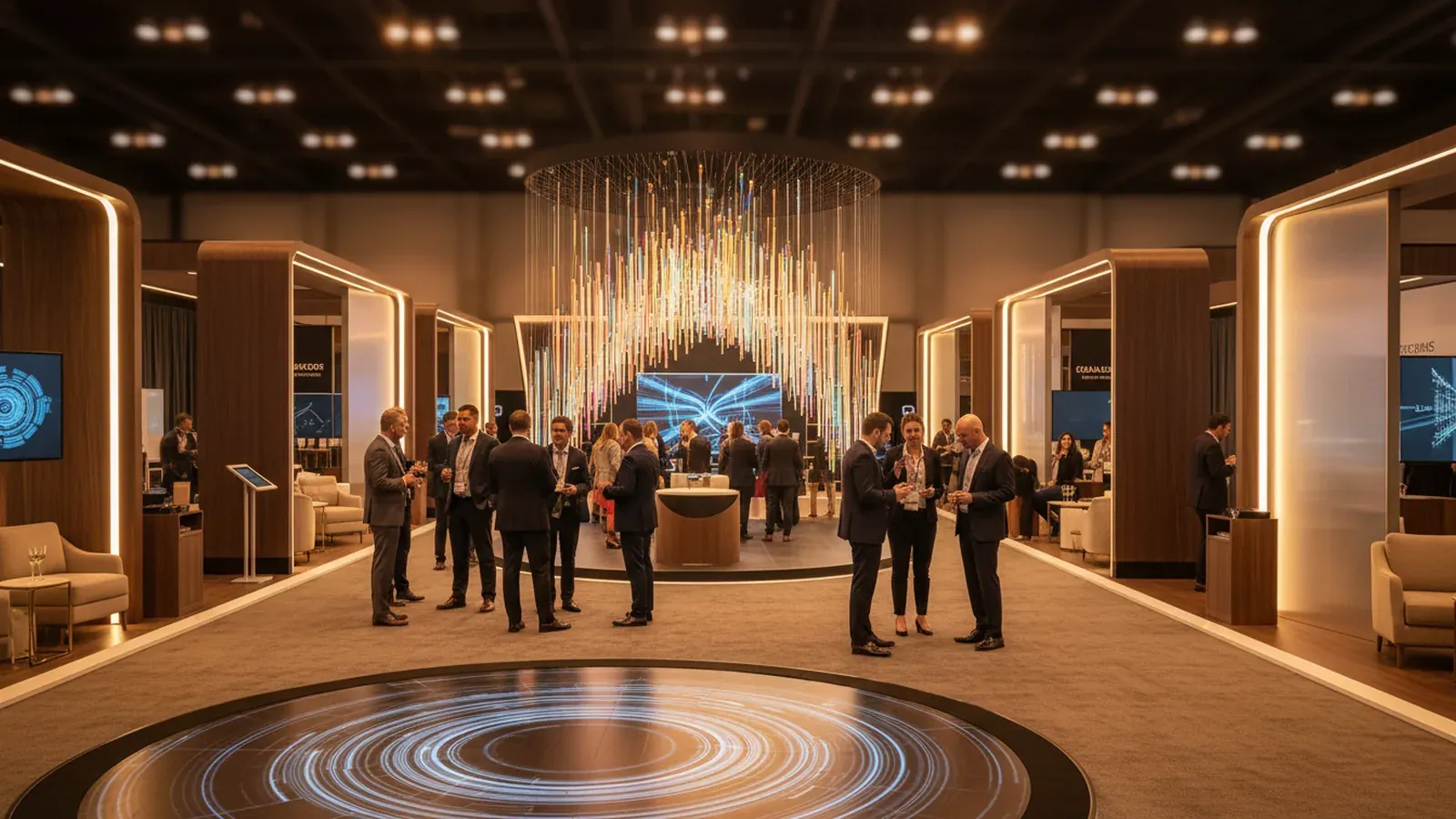
Trade shows and conferences create ideal conditions for experiential marketing because the audience is already gathered with intent. They came to discover vendors, compare solutions, find partners, learn what is changing, and build relationships. A well-built activation gives them a reason to stop, engage, and remember one brand inside a crowded environment.
Research from Event Marketer’s EventTrack 2026 report reinforces the business case. The report notes that events are becoming a strategic centerpiece of the marketing mix, with 57% of B2B and B2C audiences increasing event attendance and 85% of B2B attendees feeling more educated after an event. That education component is exactly where immersive experiences shine. They make the value easier to understand because the attendee experiences it firsthand.
At a conference, experiential marketing can also shorten the trust-building curve. Instead of explaining your value proposition for five minutes, you can let attendees test it, personalize it, compare it, or see it in motion. That creates a different level of recall than a brochure or pitch deck.
It Creates Emotional Memory
People remember emotion before they remember messaging. A luxury gifting station where attendees monogram an item in real time feels more memorable than a table stacked with identical giveaways. A product demo that lets guests solve a problem themselves feels more credible than a sales rep saying the product is easy to use.
It Drives Better Conversations
Interactive activations give booth teams a natural opening. Instead of asking, “Can I tell you about our company?” staff can ask, “Do you want to try this?” or “Which version fits your event style?” That small shift lowers resistance and makes the interaction feel more like discovery than selling.
It Produces Measurable Behavior
Good experiential marketing events generate signals. Dwell time, scans, survey responses, social posts, sample requests, demo completions, content downloads, and booked meetings all reveal what attendees cared about. Those data points help marketers prove ROI after the event.
Real-World NYC Examples of Immersive Brand Experiences
New York City consistently raises the bar for experiential marketing because audiences here are exposed to premium launches, major sports events, cultural moments, and production-heavy conferences. A few recent examples show how brands are using physical space to turn a message into a memory.
Tiffany & Co. at the US Open
For the 2025 US Open, Tiffany & Co. created an immersive pop-up at the USTA Billie Jean King National Tennis Center. The experience featured an oversized Tiffany Blue tennis ball, trophy storytelling, a high-jewelry tennis racket display, and a Tiffany & Co. and Meta AI experience that gave guests a personalized digital takeaway. The activation worked because it connected the brand’s heritage, craft, and cultural relevance to the energy of the tournament.
illy at Hudson Yards
illy’s 2025 Hudson Yards pop-up turned coffee quality into a sensory journey. According to the brand’s launch announcement, visitors explored aroma notes, interacted with a Cube Wall, learned the story behind the coffee, and finished with a complimentary beverage. The experience did not just hand out samples. It taught people why the product mattered through smell, touch, story, and taste.
Walmart at New York Comic Con
At New York Comic Con 2025, Walmart used its booth to position the brand as a destination for collectibles. industry coverage reported that the activation included themed realms, interactive quests, collectible rewards, exclusive comic book giveaways, livestreams, and fan-focused experiences. The lesson for event marketers is simple: when the activation fits the audience’s passion, participation feels natural.
These examples all have different budgets and audiences, but the structure is similar. Each one creates a world, invites participation, connects the activity to a clear brand message, and gives attendees something to remember or share.
How to Build Immersive Brand Activations Step by Step
The best experiential marketing events are built from strategy outward. Start with the business goal, then shape the creative. If you begin with the prop, screen, game, or giveaway, you risk creating something beautiful that does not move the brand forward.
1. Define the Business Outcome
Decide what success means before the activation is designed. Are you trying to generate qualified leads, book sales meetings, educate buyers, launch a product, increase sponsor visibility, collect first-party data, strengthen customer loyalty, or create social reach?
One activation cannot do everything equally well. A lead generation booth needs a different flow than a VIP hospitality experience. A product launch needs a different content strategy than a recruiting activation. Make the primary outcome clear, then build secondary goals around it.
2. Map the Audience Mindset
At a trade show, attendees are moving quickly. They are comparing vendors, scanning for relevance, and protecting their time. At a leadership conference, they may be more open to strategic conversations. At a consumer pop-up, they may want entertainment, discovery, and social currency.
Design for the mindset in the room. Corporate planners may value efficiency, ROI, risk reduction, and premium execution. Brand marketers may respond to creativity, data capture, content potential, and cultural relevance. Sponsors may care about visibility, dwell time, and lead quality. The same concept should flex depending on who needs to be moved.
3. Create a Simple Story Arc
An immersive activation should have a beginning, middle, and end. The beginning pulls people in. The middle gives them something to experience. The end delivers a payoff and next step.
- Beginning: A clear invitation, strong visual cue, or staff prompt tells attendees why they should stop.
- Middle: The attendee participates through a demo, quiz, tasting, customization, challenge, or guided interaction.
- End: The attendee receives a takeaway, insight, recommendation, meeting invitation, sample, or shareable asset.
Keep the story simple enough to understand in seconds. Complexity kills booth traffic.
4. Design for Participation, Not Observation
Passive viewing is forgettable. Participation creates ownership. Even small interactive moments can make an activation stronger: choosing a path, answering a prompt, scanning a QR code for a custom result, voting on a live display, building a collective installation, or personalizing a gift.
This is where experiential marketing events outperform traditional sponsorship signage. A logo tells people who paid for the space. An interaction gives them a reason to care.
Planning to exhibit in front of event buyers and corporate decision-makers? Review The Event Planner Expo exhibitor opportunities and position your brand where planners are actively looking for partners, venues, production teams, entertainment, technology, and fresh ideas.
5. Use Technology Only When It Improves the Moment
Technology can make an activation feel personal, modern, and measurable. RFID badges can trigger custom content. AR filters can extend the experience beyond the booth. AI tools can generate personalized recommendations. Projection mapping can transform a plain space into a brand world. Live social walls can turn attendee content into part of the environment.
But technology should never be added just to look advanced. If it slows the line, confuses attendees, or distracts from the message, it weakens the experience. The right test is simple: does this make the interaction easier, more personal, more memorable, or more measurable?
6. Train Staff Like Experience Hosts
Staff can make or break the activation. A stunning booth with disengaged staff feels cold. A simple booth with excellent hosts can outperform it because people feel welcomed and guided.
Train the team on three things: the opening line, the transition into the brand message, and the next-step handoff. They should know how to invite people in without pressure, explain the experience quickly, qualify interest naturally, and capture the lead without killing the energy.
Experiential Marketing Ideas for Conferences and Trade Shows
If you are building a brand activation for an event floor, start with the attendee’s reason for being there. They want ideas, connections, solutions, and proof that a vendor can deliver. The following formats work because they combine value with engagement.
Interactive Product Demos
Let attendees test the product or service in a guided, low-friction format. For software, create a two-minute challenge that solves a real pain point. For event technology, show how the attendee journey improves from check-in to post-event reporting. For catering, entertainment, gifting, AV, or production services, create a sensory demo that makes quality obvious.
Personalization Stations
Customization turns a giveaway into a keepsake. Monogramming, engraved items, custom scent blends, personalized content audits, event style recommendations, and AI-generated recap assets give attendees something that feels made for them. The more personal the output, the stronger the recall.
Expert Mini-Sessions
Short, high-value sessions can draw serious buyers. A 10-minute workshop on sponsorship ROI, event tech selection, attendee engagement, or luxury corporate event design can position the brand as an authority while creating a natural path into follow-up conversations.
Immersive Lounges
A lounge can be more than seating. Build it around a theme, mood, or problem the audience cares about. A recharge lounge for planners, a creative strategy bar for marketers, or a VIP hospitality suite for executives can become a relationship-building environment when the design supports conversation.
Content Capture Moments
Give attendees a reason to create and share content without making the activation feel like a forced selfie station. A branded interview booth, live podcast corner, expert quote wall, or personalized video takeaway can extend the reach of the event while giving participants something useful.
How to Measure Experiential Marketing ROI
ROI should be built into the activation from the beginning. If measurement is added after the event, you will end up with soft anecdotes instead of useful performance data.
Track metrics that connect to your business goal:
- Awareness: booth traffic, impressions, social reach, earned media, influencer content, photo shares.
- Engagement: dwell time, participation rate, repeat visits, session attendance, QR scans, content interactions.
- Lead generation: badge scans, form fills, qualified conversations, demo requests, meeting bookings.
- Sales pipeline: post-event follow-ups, opportunities created, proposal requests, closed revenue.
- Brand lift: surveys, sentiment, recall, preference, attendee feedback.
Do not measure everything equally. A sponsor activation may prioritize reach and dwell time. An exhibitor selling enterprise software may care more about qualified meetings. A product launch may need press, social content, and sample trials. The right metrics depend on the job the activation was hired to do.
Where The Event Planner Expo Fits In
The Event Planner Expo is built for exactly this kind of discovery. Across three days in New York City, attendees move from VIP networking to education to a trade show floor filled with 150+ exhibitors. Corporate planners, event business owners, marketing executives, sponsors, venues, entertainers, caterers, technology providers, and production teams gather in one environment where experience design is not theoretical. It is visible, practical, and competitive.
For attendees, the Expo is a chance to see how brands are using immersive experiences to attract attention and build relationships. For exhibitors and sponsors, it is an opportunity to turn a booth presence into a live demonstration of creativity, service quality, and market relevance. For corporate event planners, it is a concentrated way to evaluate partners who understand what modern audiences expect.
If you are serious about experiential marketing events, walking the floor matters. You can compare activations in real time, watch what draws traffic, see how attendees respond, and leave with ideas you can apply to your own conferences, product launches, galas, and corporate experiences.
Common Mistakes to Avoid
Even strong brands miss opportunities when they treat experiential marketing as decoration instead of strategy. Watch for these mistakes before the event goes live.
Making the Activation Too Complicated
If attendees need a long explanation, they will keep walking. The concept should be clear from the aisle and easy to enter within seconds.
Prioritizing Photos Over Substance
Visual appeal matters, especially in New York. But a photogenic booth without a message, interaction, or next step rarely delivers meaningful ROI.
Ignoring the Follow-Up Plan
The experience does not end when the attendee leaves the booth. Segment leads based on behavior, personalize follow-up, and reference what they did during the activation. That detail makes outreach feel relevant.
Understaffing the Experience
Interactive activations need people who can guide traffic, answer questions, reset materials, capture leads, and keep energy high. Build staffing into the budget early.
FAQ: Experiential Marketing Events
What is experiential marketing at events?
Experiential marketing at events is a strategy that invites attendees to interact with a brand through live participation, such as demos, sensory experiences, personalization, immersive environments, workshops, or guided activations.
Why is experiential marketing effective at trade shows?
It is effective because trade show attendees are already looking for solutions and partners. Interactive activations help brands stand out, create stronger recall, start better conversations, and capture measurable engagement data.
What makes a brand activation immersive?
An immersive brand activation uses story, environment, interaction, sensory details, and a clear payoff to make attendees feel part of the brand experience instead of simply watching it.
How do you measure experiential marketing success?
Measure success through metrics tied to the activation goal, including dwell time, participation, badge scans, QR scans, qualified leads, meetings booked, social shares, survey feedback, pipeline created, and revenue influenced.
Bring Better Brand Experiences to Your Next Event
Experiential marketing events are not about being loudest on the floor. They are about being the most relevant, memorable, and useful to the people you want to reach. When the story is clear, the participation is simple, and the follow-up is intentional, an activation becomes more than a booth. It becomes a business development engine.
See immersive event strategy in action at The Event Planner Expo. Visit the official Expo website to learn more about attending, exhibiting, sponsoring, and connecting with the event professionals shaping the next generation of brand experiences in New York City.