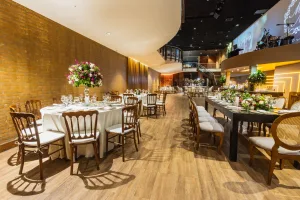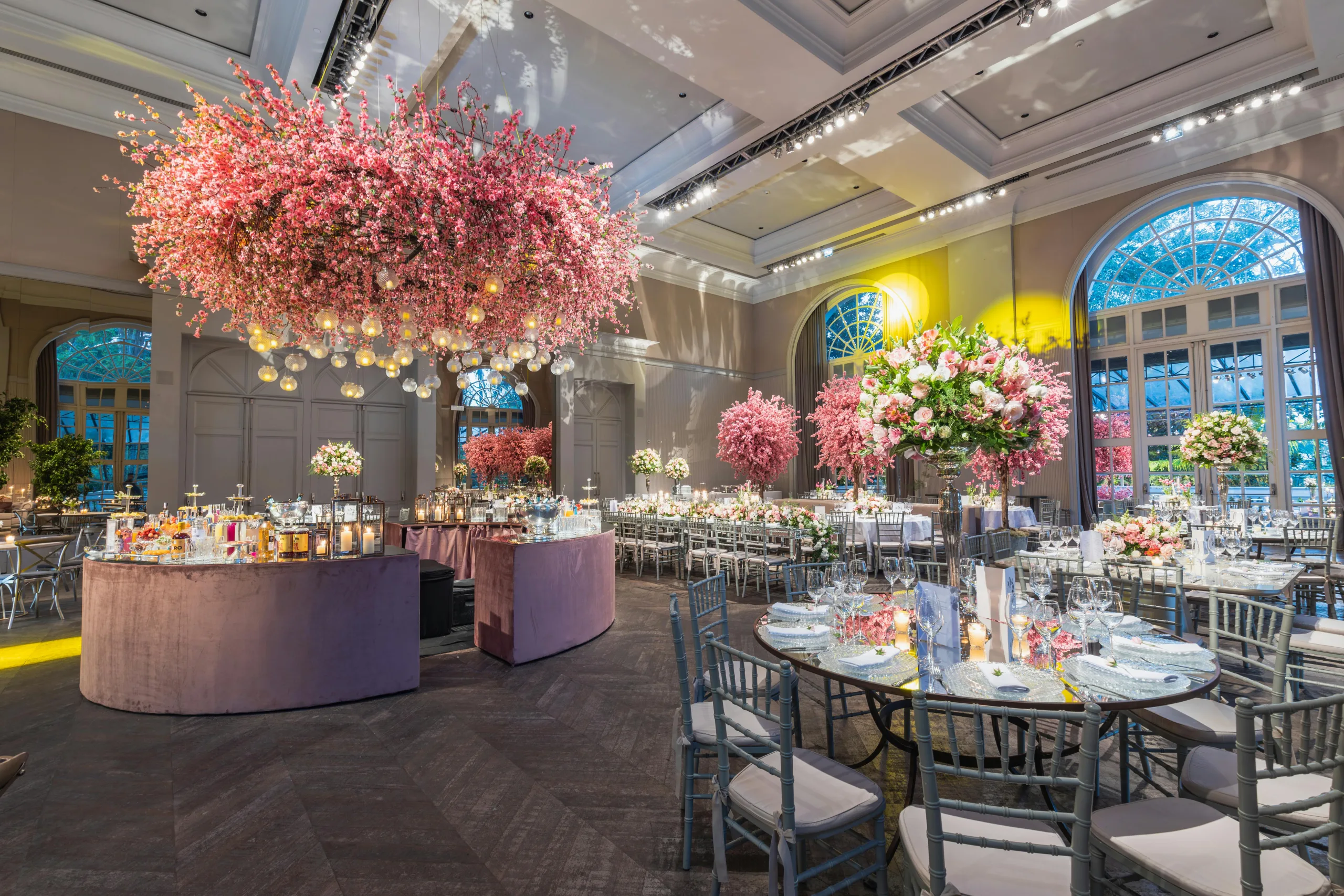
The best themes don’t ever really disappear. They get diluted or evolve. When a theme gets overused and the industry gets saturated, intention goes out the window. At that point, event planners are just following a predictable formula. This is when people label the theme as “overdone” and played out. The problem isn’t the theme; it’s the execution. Take a new approach to these top-tier themes and breathe life into your events.
1. Garden Party
There’s a traditional elegance to a garden party. From the Victorians to today, flowers will always be beautiful. At its peak, over-saturation ruined the theme. There were the oversized florals packed into small venues. The more color, the more variation, the more visuals, the better. Overabundance meant luxury. The problem with this type of competition is that it overwhelms guests and pulls attention in too many directions.
Abundance without control can skip over luxury and read as excessive and disorganized. Guests will experience visual fatigue and begin tuning out.
A fresh approach is to practice restraint. Give the room space to breathe by carefully placing florals strategically. Use a few select oversized florals instead of filling the room.
2. Black Tie
There will always be a place for black-tie events in our industry. They don’t ever really fall out of favor. However, they have become automatic and a bit formulaic. This approach has become less desirable. Clients don’t want to feel like their event is just a cookie-cutter stamp and repeat of a hundred other events.
Event planners are looking for ways to create new experiences at black-tie events. This could be with the color palette choice, the materials used, or the lighting style. There are no longer literal black-and-white events in large ballrooms.
3. Seasonal Themes
Seasonal themes became too literal.
Obvious references, predictable elements, and direct visual cues that removed any sense of interpretation.
They told the guest what the theme was instead of letting them experience it.
Now they are being translated.
Fall becomes warmth and depth. Winter becomes contrast and stillness. Spring becomes lightness and movement. Summer becomes ease and openness.
4. Coastal
Coastal became a theme instead of an atmosphere.
It relied too heavily on visual shorthand. Obvious blues, stripes, literal references that told the guest what the theme was instead of letting them feel it.
That is where it lost credibility.
What is working now is restraint.
Color is being reduced. Texture is doing more of the work. Materials feel weathered, softened, lived-in. Lighting creates movement instead of pattern.
5. Rustic
Rustic never stopped working.
It became heavy.
Too many raw materials stacked together. Too much wood, too much metal, too much visual weight across every surface. The room stopped feeling grounded and started feeling dense.
That density is what made it feel dated.
Now it is being refined.
Fewer materials. Cleaner lines. Better spacing. Raw elements are still present, but they are balanced with negative space and softer finishes.
6. Minimalist
Minimalism failed because it was misunderstood.
It was interpreted as removing instead of refining.
Rooms were stripped down without being designed to support that absence. No focal points, no structure, no hierarchy. Just less.
That is not minimalism.
That is an underdeveloped design.
What is working now is structure.
Fewer elements, but each one carries weight. Placement is precise. Lighting defines the space instead of flattening it. Every decision is visible, which means every decision has to be correct.
7. Industrial
Industrial became over-applied.
Too many exposed elements. Too much metal. Too much darkness without contrast. The room stopped feeling like a space and started feeling like a concept being pushed too hard.
That is where it lost balance.
Now it is being moderated.
Raw materials are still present, but they are paired with warmth. Softer lighting, controlled textiles, more selective use of industrial elements instead of full saturation.
The contrast is what makes it work.
Industrial is no longer about exposure.
It is about balance.
8. Tropical
There’s a fine line between classy and kischky tropical. When the design is over the top, the theme collapses under the excess. All of the bright colors, large patterns, and numerous focal points compete with each other. The room doesn’t feel controlled or organized anymore.
That lack of control means the event no longer feels elevated. Savvy event planners are scaling things back. Greens are richer. There is more shadow. Less color variation. More layering instead of volume. The room feels immersive instead of loud.
9. Vintage
A vintage theme sounds good in theory. However, it usually ends up looking cluttered and messy. Without really knowing anything about vintage themes, it’s easy for event planners to get lost. The room feels stuffed instead of curated.
High-end event planners are bringing the impact back. They take an edited approach. There are fewer vintage pieces. The ones that are used make a strong impact.
10. Futuristic
There is so much pressure that comes with planning a futuristic event. Clients want something that feels innovative and new. It used to mean planning an event to the extreme. Cold lighting, sharp edges, and materials. Overly conceptual and sculptural designs. The problem with all of this is that these design elements are not connecting for humans. It makes guests feel disconnected from the space and, quite frankly, unwelcome. That’s not what you want at an event.
Creative event planners are taking a more grounded approach to futuristic-themed events. More controlled lighting. Subtle integration of technology instead of obvious statements. Materials that still feel livable, not just visual.
11. Boho
There was a time when boho was everywhere you looked. Neutral shades and pampas grass took over. However, it lost its structure and identity along the way. More and more layers were added. Too many textiles were used. The multiple neutral tones became muddled and unclear.
The theme stopped feeling fluid and relaxed and started feeling scattered and disorganized. Event planners who are bringing boho back are taking a tiger approach. Fewer materials are being used. The design is less cluttered, with space for the room to breathe.
What Most Planners Still Get Wrong
Most event planners try to revive a theme by just redoing it. They should rethink the theme and try a new point of view. Recalibrating the theme instead of redoing it can make it feel fresh and new.
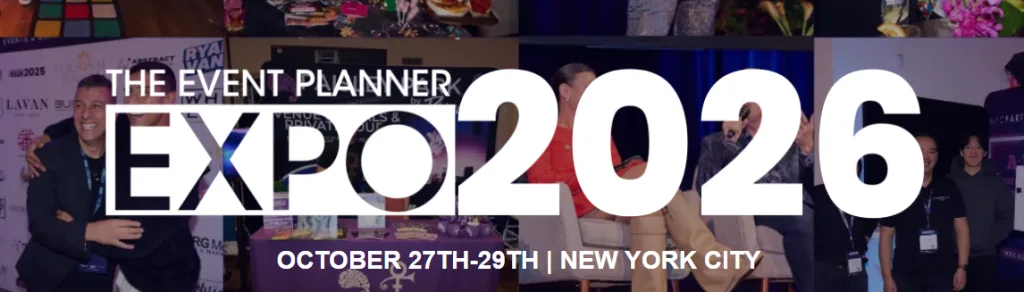
Learn More About Event Themes at The Event Planner Expo
Everything is cyclical, and event themes are no different. You don’t need new themes, just refresh the ones that have worked the best. Familiar themes feel comfortable. Giving them a fresh take makes them feel different.
Be in the room at The Event Planner Expo 2026, with NYC planners and producers who are not bringing themes back for the sake of familiarity. They are redefining how those themes actually work inside a live event environment. Get tickets to The Event Planner Expo 2026.