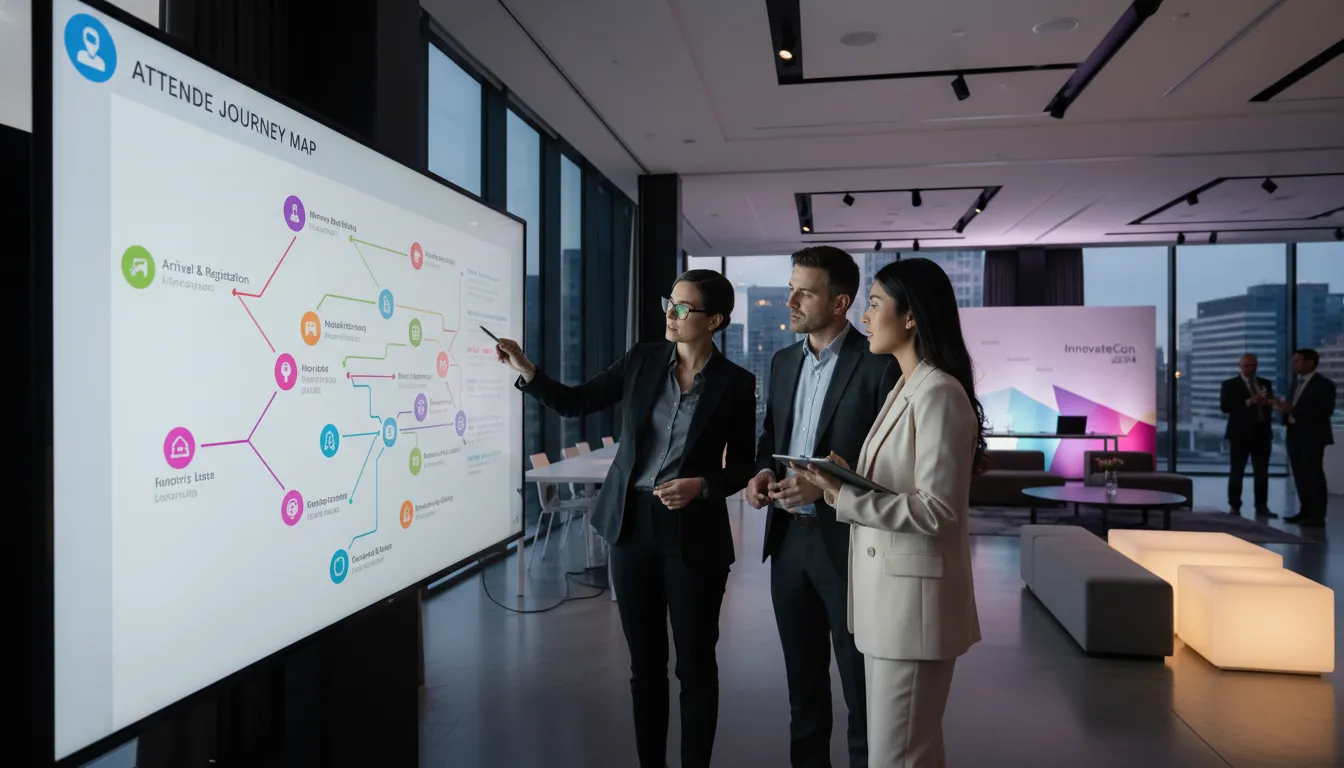
A conference can look polished on paper and still feel difficult to attend. The gap often appears between departments, where a strong marketing campaign hands people to a confusing registration form or an inspiring session ends without a clear next step.
Attendee journey mapping shows how a person discovers, evaluates, joins, experiences, and remembers an event. It connects attendee goals with touchpoints, emotions, friction, metrics, and team owners. For conference teams, the map turns scattered tasks into one connected plan that reveals where to remove friction and strengthen loyalty.
The process starts by seeing the full journey rather than optimizing isolated moments. Use the framework below to align marketing, registration, operations, programming, networking, and follow-up around what attendees need next.
What does attendee journey mapping reveal?
Attendee journey mapping reveals where an event experience supports attendee goals and where friction interrupts progress. It connects each stage with the attendee’s questions, emotions, touchpoints, useful metrics, and accountable team owner so planners can prioritize improvements that matter.
A useful journey map is more than a timeline. It is a shared view of the event from an attendee’s perspective, with enough detail to guide decisions. At each stage, it records what attendees want to accomplish, what they encounter, how they may feel, and what could keep them from moving forward.
Goals, touchpoints, and emotions
Start with a clear attendee segment, such as a first-time buyer, returning executive, sponsor guest, or emerging event professional. Then state that person’s main goal at each stage. A first-time attendee may need proof that the event is relevant before buying, while a returning attendee may focus on who will be there and what is new.
List every meaningful touchpoint, including search results, social posts, emails, ticket pages, arrival signs, sessions, lounges, surveys, and follow-up messages. Add the likely emotion beside each one. Confidence, uncertainty, excitement, and fatigue often reveal issues that a simple task list misses.
Friction and moments that matter
Not every touchpoint deserves equal effort. Mark moments that strongly affect whether someone registers, participates, recommends the event, or returns. These may include the first visit to the ticket page, the arrival experience, the opening session, a key introduction, and the first message after the event.
For each moment, identify likely friction and assign an owner. If a confusing price tier causes doubt, marketing and registration may share the fix. If attendees cannot find the right room, operations owns the response. Clear ownership keeps the map from becoming a workshop artifact that nobody uses.
A shared operating plan
The map helps teams see dependencies. Programming choices affect marketing messages. Registration questions can power better networking matches. Session attendance data can shape follow-up content. When these connections are visible, teams can improve the whole journey instead of shifting a problem from one department to another.
How do you map discovery, registration, and pre-event momentum?
Map the pre-event journey from first impression through registration and arrival preparation. At every touchpoint, document the attendee’s goal, likely question, potential friction, measurable behavior, and responsible team. This reveals where unclear value, difficult forms, or weak communication may reduce attendance before the event begins.
The attendee journey starts long before people walk through the doors. Planners must map every touchpoint from the first time a person sees an ad to the moment they finish their event sign up. This pre-event phase is key because it sets the tone for the whole show. Research shows that attendee journey mapping helps you see the event through the eyes of your guests. By mapping these early steps, you can find spots where people might get stuck and fix them before they lose interest.
Discovery and first touchpoints
Your journey map should start with how people find your event. This might happen through social media, email, or web searches. You need to know what message gets them to click. Planners often use data to find what their audience wants to see on the event agenda before they commit. Collecting this info early through polls helps you build a schedule that fits your crowd. Studies from NIH show that using feedback to guide event design makes the whole program more helpful to your guests.
Smooth sign up and tickets
Once a person decides to come, the sign up process must be fast and easy. Any friction during this step can cause people to quit before they buy event tickets. Check your map for too many form fields or confusing price tiers. You should also look at how you group your guests. Different groups have different reasons for coming, like networking or learning. Knowing these goals helps you send the right info to the right people as soon as they sign up.
Building pre-event momentum
The time between sign up and the event day is a prime chance to build hype. Use this gap to send tips on how to prep for the show. You can share speaker bios, venue maps, or networking guides to keep guests active. This phase is about moving away from passive sharing toward more hands-on models. According to researchers at PMC, this type of journey mapping can improve the overall experience. Keeping the talk going ensures that your guests arrive excited and ready to join in from the start.
How do you design a smoother on-site conference experience?
A smoother on-site experience anticipates what attendees need from arrival through departure. Map check-in, wayfinding, room transitions, sessions, breaks, and support as connected moments. Then assign owners and contingency plans to priority touchpoints so attendees spend less time solving problems and more time learning and connecting.
The on-site experience is where your plan meets the real world. It is the heart of the attendee journey mapping process. You must look at each step through the eyes of a guest. This helps you find and fix friction points before they cause stress. A smooth flow keeps people focused on your content and networking. It turns a simple visit into a lasting memory for every person who walks through the door.
Simplify the check-in and arrival process
Arrival is the first real test of your hard work. Long lines or bad signs can ruin the mood for the whole day. To start strong, set clear goals before the doors even open. Send emails with maps and digital tickets to reduce guest worry and help them feel ready. Use enough staff to keep the line moving fast and avoid a crowd at the entrance.
On-site staff should greet people with a smile and offer quick help. Digital kiosks can speed up badge printing for those who are ready to go. If there is a wait, offer water or a seat to make the stay better. This stage sets the tone for the rest of the event. When you map this step, think about how it feels to walk in for the first time. Small touches like a bag drop or a clear “Start Here” sign make a huge difference.
Enhance paths and easy access
Finding your way should be easy and clear. Large signs and digital maps help people find rooms without asking for help. You should also ensure the venue is open to everyone. Access is a key part of the guest journey and needs open planning to include all guests. Check that ramps and lifts are easy to find and use for those with needs.
Clear paths and signs make the event feel safe and skilled. Think about guests with different needs as you plan the room layout and flow. A good map shows more than just room names and session halls. It should show bathrooms, food, and quiet areas for rest. You can view the full event schedule to see where the biggest crowds will be at each hour. This helps you place signs and staff where they are needed most.
Refine sessions and real-time fixes
Sessions are the main reason people come to your event. Use a mix of ways to keep people keen and active. Some guests like to listen to a talk, while others want to join a group and solve problems. Check our list of expert speakers to plan your room sizes and seating. Make sure the sound and lights are right for every talk so no one misses a word.
Even the best plans can face issues on-site. You must watch for feedback in real time to fix problems fast. If a room is too cold or a speaker is late, act quickly to fix the issue. Use a team chat to stay in touch and handle the work before guests notice. A smart networking plan also helps by giving people spaces to connect when talks end. This keeps the energy high and the guests happy until the final hour.
How can you make networking a designed attendee journey?
Effective conference networking is deliberately designed, not left to chance. Give attendees clear reasons, formats, and places to connect before, during, and after the event. Journey mapping helps planners identify moments of hesitation and add introductions, conversation prompts, facilitated sessions, or follow-up tools that make valuable meetings easier.
Networking is often the main reason people go to events. But many planners leave it to chance. They hope that if they put people in a room with food, talk will happen. To get better results, you must use attendee journey mapping to plan every step. This tool helps you see the event through the eyes of a guest. It lets you find spots where you can help people meet. Research shows that networking should be designed as a key part of the event. It is not just a break between talks. It is a core path that helps people solve problems together.
Design the start of every bond
The first step in your plan should be the first contact. Do not wait for the on-site mixer to start the flow. Use data to help with matchmaking before the doors open. You can ask guests about their goals when they sign up. This helps you suggest the right people for them to meet. When you use attendee journey mapping, you can see how to bridge gaps. You can set up “hosted talks” where a leader helps small groups chat. This removes the fear of starting a talk with a stranger. It turns a large hall into a set of small, safe spaces. You can also use apps to let guests book time with each other early on.
Build lounges that drive action
Your floor plan should do more than just hold chairs. It should guide how people move and talk. Lounges should be more than just quiet zones. They can be active hubs for niche groups. For example, you can set up lounges based on job titles or goals. This makes it easy for people to find others like them. Planners are moving away from old, passive models. They now use a hands-on attendee journey to help guests. In these hubs, you can provide prompts or “ice breakers.” These small tools help guests start deep talks fast. It makes the path feel smooth and natural for every person there.
Track and improve the network flow
You cannot improve what you do not track. Use your map to find ways to measure success at every turn. You might track how many people use a matchmaking app. You could also count how many attend the hosted talks or stay in the lounges. After the event, use surveys to ask guests if they met their goals. Did they find the people they needed to meet? This data helps you fix the plan for next time. It also helps you create follow-up steps that keep the bonds alive. When networking is a designed path, it leads to real value for every guest. It turns a one-time meeting into a long-term bond that grows over time.
What does a sample attendee journey map include?
A practical attendee journey map pairs every event stage with an attendee goal, priority touchpoint, likely friction point, metric, and accountable owner. Keeping these fields together helps cross-functional teams compare decisions, find handoff gaps, and agree on which improvements will have the greatest effect on the attendee experience.
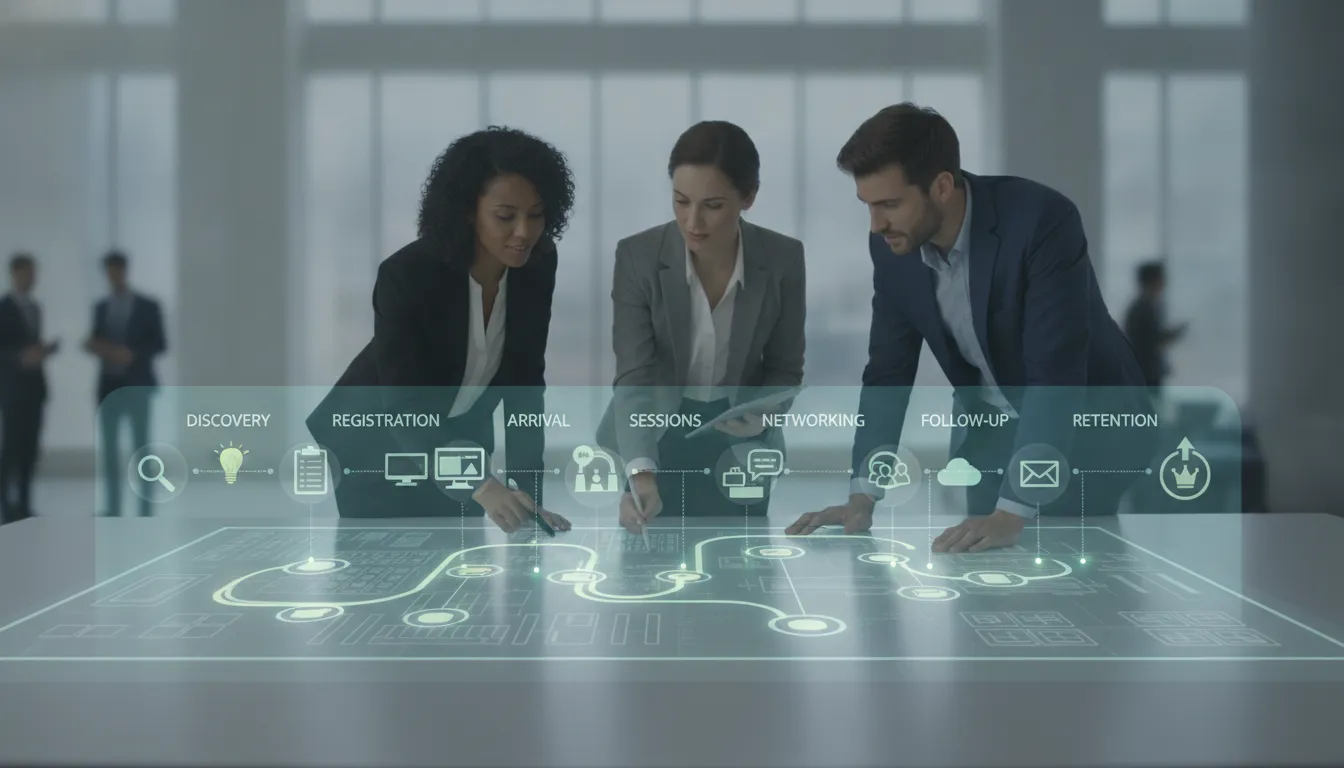
A simple map can fit on one page while still directing action. The example below shows the core fields event teams can review during planning meetings. Add separate rows for key attendee segments when their goals or barriers differ.
| Stage | Attendee goal | Priority touchpoint | Likely friction | Metric | Owner |
|---|---|---|---|---|---|
| Discovery | Decide whether the event is relevant | Search result or social post | Unclear value | Qualified page visits | Marketing |
| Registration | Choose a ticket and commit | Ticket page and form | Confusing tiers or long form | Conversion and abandonment | Marketing and registration |
| Pre-event | Plan time and meetings | Email, app, and agenda | Too much information | Agenda saves and meeting requests | Content and community |
| Arrival | Enter quickly and feel welcome | Venue signs and check-in | Lines or poor wayfinding | Average check-in time | Operations |
| Sessions | Gain useful ideas | Rooms, speakers, and materials | Capacity or relevance gaps | Attendance and session rating | Programming |
| Networking | Meet the right people | Matchmaking and lounges | Unclear way to start | Meetings and goal attainment | Community |
| Follow-up | Apply learning and stay connected | Recap and next-step email | Generic or late message | Engagement and return intent | Marketing and sales |
Turn observations into decisions
During a cross-team review, focus first on stages with high friction and high business impact. Assign one owner, one improvement, one metric, and one review date to each priority. This makes the journey map an operating tool rather than a decorative diagram.
Map important segments separately
A sponsor, speaker, buyer, and first-time attendee may follow the same broad stages but need different support. Create separate lanes for segments that have distinct goals. Compare them to find shared fixes and moments that require a tailored experience.
How do you extend the attendee journey through retention?
The attendee journey continues after the venue closes. Timely, personalized follow-up helps attendees apply what they learned, continue new relationships, and decide whether to return. Plan post-event resources, community touchpoints, feedback requests, and next actions before the event so momentum does not disappear after departure.
The attendee journey does not end when the venue closes. The first days after a conference determine whether useful ideas become action and whether new relationships continue. Build the post-event stage before the event begins, with clear content, community, and conversion paths.
Follow up while the experience is fresh
Send a useful recap promptly. Segment it by the sessions, topics, or networking goals attendees selected. Include promised resources, recordings when available, and a short next-step list. A focused message is more valuable than a broad email filled with every asset from the event.
Ask for feedback at moments when people can give a clear answer. A brief session rating can arrive after a session, while a broader survey can ask whether attendees met their event goals. Keep questions tied to decisions the team is prepared to make.
Keep learning and relationships moving
Create reasons for attendees to reconnect after the event. Share a speaker takeaway, host a small online discussion, or invite people to continue a topic with peers. These touchpoints should help attendees apply what they learned, not simply remind them that the event happened.
Networking follow-up deserves its own plan. Offer prompts that make it easy to restart a conversation. When appropriate, remind attendees of saved contacts or meeting notes and give them a clear way to stay involved in the community.
Build the next journey from real behavior
Measure resource views, survey completion, community participation, referral activity, and intent to return. Compare these signals by attendee segment and by the experiences people had on-site. The results show which moments created lasting value and where the next event should improve.
Event professionals who want to see how a major industry event connects education and relationships can learn more about The Event Planner Expo. Use the strongest lessons from each event to make the next attendee journey clearer, more useful, and easier to recommend.
How do you build an attendee journey map your team will use?
Build a useful journey map by choosing one attendee segment, gathering real evidence, documenting stages and friction, assigning owners, and prioritizing a small number of improvements. Review it with every team responsible for a touchpoint. A focused map that guides decisions is more valuable than a complex diagram nobody updates.
The strongest maps combine attendee evidence with the knowledge of teams that deliver the event. Keep the first version focused. A clear map of the main journey is easier to test and improve than a complex diagram built on assumptions.
- Choose a segment and outcome. Define whose journey you are mapping and what success means for that person and the event.
- Gather real evidence. Review analytics, registration questions, service logs, surveys, interviews, and staff observations.
- List stages and touchpoints. Trace the journey from discovery through retention, including handoffs between teams and tools.
- Add goals, emotions, and friction. Describe what attendees need, how each moment may feel, and what can prevent progress.
- Mark the moments that matter. Prioritize touchpoints that strongly influence registration, engagement, satisfaction, or return intent.
- Assign owners and measures. Give every priority improvement a responsible owner, metric, baseline, and review date.
- Test and update the map. Run small improvements, watch results, and revise the journey after each event cycle.
Bring the right teams into the room
Include people from marketing, sales, registration, operations, programming, community, and support. Each team sees a different part of the experience. Together, they can uncover handoffs where attendees receive mixed messages or lose momentum.
Prioritize instead of fixing everything
Score friction by attendee impact, business impact, frequency, and effort to resolve. Start with a small set of high-value changes. A faster registration form or clearer arrival email may improve the experience more than a costly feature that few people use.
Keep the map visible
Review the journey map during planning meetings and event debriefs. Update it when evidence changes. When the map guides budgets, briefs, and team goals, it becomes a practical source of truth for the full event experience.
Measure the moments that shape attendee experience
Measure attendee journeys with a focused mix of behavioral and feedback signals. Behavioral data shows what attendees did, while feedback explains why they did it and how the experience felt. Match each priority touchpoint with an owner, baseline, target, segment, and next action so measurement consistently drives improvement.
A journey map becomes more useful when each priority touchpoint has a measure. Use both behavior and feedback. Behavior shows what people did, while feedback helps explain why they did it and how the experience felt.
Match metrics to each stage
For discovery, watch qualified traffic, message engagement, and visits to key event pages. At registration, measure conversion, abandonment, support questions, and the time needed to complete the form. Before the event, track agenda saves, app activation, email engagement, and planned meetings.
On-site measures can include check-in time, session attendance, room capacity, help requests, networking participation, and quick satisfaction ratings. Afterward, review survey results, resource use, referrals, return intent, and future registrations.
Use leading and lagging signals
Leading measures help teams act before the journey ends. A rise in registration questions may signal confusing information. Low agenda saves may show that attendees need stronger session guidance. Lagging measures, such as overall satisfaction and return rate, confirm whether the full experience delivered value.
Build a compact journey dashboard
Choose a few measures for the most important moments. Show the current result, baseline, target, segment, owner, and next action. Avoid a dashboard full of numbers that nobody can connect to a decision.
Review results by attendee type, not only as one average. First-time attendees may struggle with wayfinding while returning guests want deeper networking. Segment-level data turns a broad experience score into clear priorities for the next event.
Meet The Event Planner Expo speakers and plan the learning moments that matter most to your journey.
What should you know about attendee journey mapping?
Attendee journey mapping questions often focus on the stages to include, the metrics to track, and the teams to involve. The answers below provide a practical starting point for building a shared map that reflects attendee needs, reveals friction, assigns ownership, and guides measurable event improvements.
What is attendee journey mapping?
Attendee journey mapping is the process of documenting how a person discovers, considers, joins, experiences, and remembers an event. It connects attendee goals and emotions with touchpoints, friction, metrics, and team ownership.
What stages should an attendee journey map include?
Most conference maps include discovery, consideration, registration, pre-event communication, arrival, sessions, networking, departure, follow-up, and retention. Teams can add or divide stages to match their format and audience.
How do you measure the attendee journey?
Use behavioral data and direct feedback at important touchpoints. Useful measures include ticket-page conversion, form abandonment, agenda saves, check-in time, session attendance, networking participation, satisfaction, referrals, and return intent.
Who should help create the journey map?
Include representatives from marketing, registration, operations, programming, sales, community, and support. Attendee interviews and surveys should also shape the map so it reflects real needs rather than internal assumptions.
Put attendee journey mapping into action
Put attendee journey mapping into action by selecting one priority segment and one high-impact friction point. Assign an owner, baseline, target, and review date, then test a focused improvement. Share the result across teams and update the map so each event cycle creates a clearer, more valuable attendee experience.
Learn more about The Event Planner Expo and explore an event built to connect event professionals with ideas, partners, and opportunities.