Event Attendee Journey: A Stage-by-Stage Guide
A polished keynote cannot rescue a confusing registration process, a stressful arrival, or a follow-up that never comes. The strongest events feel intentional at every turn because planners design the complete event attendee journey, not just the hours guests spend inside the venue.
Get tickets to The Event Planner Expo and experience how a professional event connects education, networking, and discovery across the attendee journey.
An attendee journey map turns that big experience into a practical operating tool. It shows what guests are trying to accomplish, where they may hesitate, how they feel, and which team owns the next move. Use the stage-by-stage framework below to find weak transitions, protect high-value moments, and give every touchpoint a clear purpose.
What is an event attendee journey?
An event attendee journey is the complete sequence of interactions a person has with an event. It begins with discovery, continues through registration and preparation, becomes tangible onsite, and extends into post-event follow-up. Journey mapping helps planners connect those interactions into one coherent experience.
The most useful map is built around a specific attendee, not an imaginary average guest. A corporate buyer who wants qualified vendor meetings has a different definition of success than an emerging planner seeking education and peer connections. Start by choosing one priority attendee segment and documenting five items at every stage:
- Attendee goal: What is the person trying to accomplish right now?
- Touchpoint: Where does the interaction happen?
- Question or emotion: What might the attendee think or feel?
- Friction and opportunity: What could stall progress, and what would add value?
- Owner and signal: Who improves the moment, and how will the team know it worked?
This structure prevents a journey map from becoming a decorative diagram. It turns each observation into an accountable planning decision.
How do you build an attendee journey map?
Build an attendee journey map by choosing an attendee segment, plotting its stages and touchpoints, and recording goals, emotions, friction, owners, and success signals. Then prioritize the transitions that carry the greatest consequence for the guest, such as purchasing a ticket, arriving onsite, or making the first useful connection.
Start with evidence, not assumptions
Bring together the people who see different parts of the experience: marketing, registration, operations, programming, sponsorship, and guest services. Review support questions, registration patterns, staff observations, and post-event feedback. Look for repeated questions and moments where guests stop, wait, or ask for help.
Then compare the team’s assumptions with the attendee’s perspective. A planner may see a reminder email as complete because it was sent on time. An attendee may still see it as incomplete if the message does not explain arrival, access, or what to do first. That distinction is where journey mapping becomes useful.
Map transitions as carefully as destinations
Many experience failures happen between major moments. The agenda may be excellent, but guests cannot find the next room. The networking lounge may be inviting, but first-time attendees do not know how to start a conversation. Review the handoff before and after every important touchpoint.
For each transition, ask one clear question: “Can the attendee confidently identify the next best action?” If not, add guidance or simplify the choice. You can also assign a person to help.
Prioritize changes with a simple filter
Score each opportunity by attendee impact, frequency, and effort. Fix high-impact, frequent problems first. A small wording change in the confirmation email may prevent hundreds of arrival questions. A complex app feature used by a few people may be less urgent. This filter keeps the team focused on improvements that guests will actually notice.
Stage 1: Turn discovery into confident registration
During discovery and registration, attendees decide whether an event is relevant, credible, and worth their time. The goal is to connect a clear promise with a low-friction path to the right ticket. Every page and message should help the visitor understand who the event serves and what they can accomplish there.
Match the message to attendee intent
A prospect rarely begins by asking for every event detail. They ask whether the event can help solve a specific problem. Lead with outcomes that matter to the target segment, then support the promise with concrete programming, speaker, exhibitor, and networking information. Prospects evaluating The Event Planner Expo can explore the speaker lineup and event schedule before choosing how to participate.
Remove decision friction
Review the registration path as a first-time visitor. Ticket differences, inclusions, dates, and next steps should be understandable without opening multiple tabs or contacting support. Keep forms focused on information the team will use. If a question does not improve the attendee experience or support operations, consider removing it.
Design the confirmation as a handoff
The confirmation page and email are the bridge into the next stage. They should confirm the purchase, explain what happens next, and provide one useful action, such as reviewing the schedule or saving essential information. A strong confirmation replaces purchase anxiety with anticipation.
| Stage | Attendee question | Useful optimization | Success signal |
|---|---|---|---|
| Discovery | Is this event for someone like me? | Lead with segment-specific outcomes and proof | Relevant page engagement |
| Registration | Which option fits my goals? | Clarify ticket differences and inclusions | Completed registrations and fewer support questions |
| Confirmation | What should I do next? | Provide one clear preparation action | Schedule views or saved-event actions |
Stage 2: Make pre-event communication useful
Pre-event communication should transform anticipation into readiness. Rather than sending repetitive reminders, use each message to answer the next likely question. Guests should arrive knowing where to go, what to prioritize, and how to get value from the people and programming around them.
Create a communication sequence around decisions
Plan messages according to the decisions attendees need to make. An early note can help them review programming. A later note can support travel and arrival. A final note can explain check-in and the first onsite action. Keep each email centered on one primary goal so important guidance is not buried.
Help guests build a personal plan
Invite attendees to choose sessions, identify exhibitors, and reserve time for networking before the event begins. Sharing the latest schedule gives them a practical planning tool. For a deeper approach, see how planners can use attendee archetypes to design relevant moments.
Prepare for exceptions
Do not design only for the ideal path. Consider a late registrant, a first-time attendee, a guest with accessibility needs, and someone arriving after the opening session. Useful communication makes alternative paths visible and explains where to get help. This reduces uncertainty without overwhelming every guest.
Review The Event Planner Expo schedule to see how distinct event moments can support different attendee goals.
Stage 3: Design an onsite experience that flows
The onsite stage converts every promise into a lived experience. Guests assess the event through dozens of small signals, from the welcome at the door to the ease of finding a session. Clear wayfinding, prepared staff, intentional pacing, and accessible support let attendees focus on learning and connection.
Treat arrival as a decisive moment
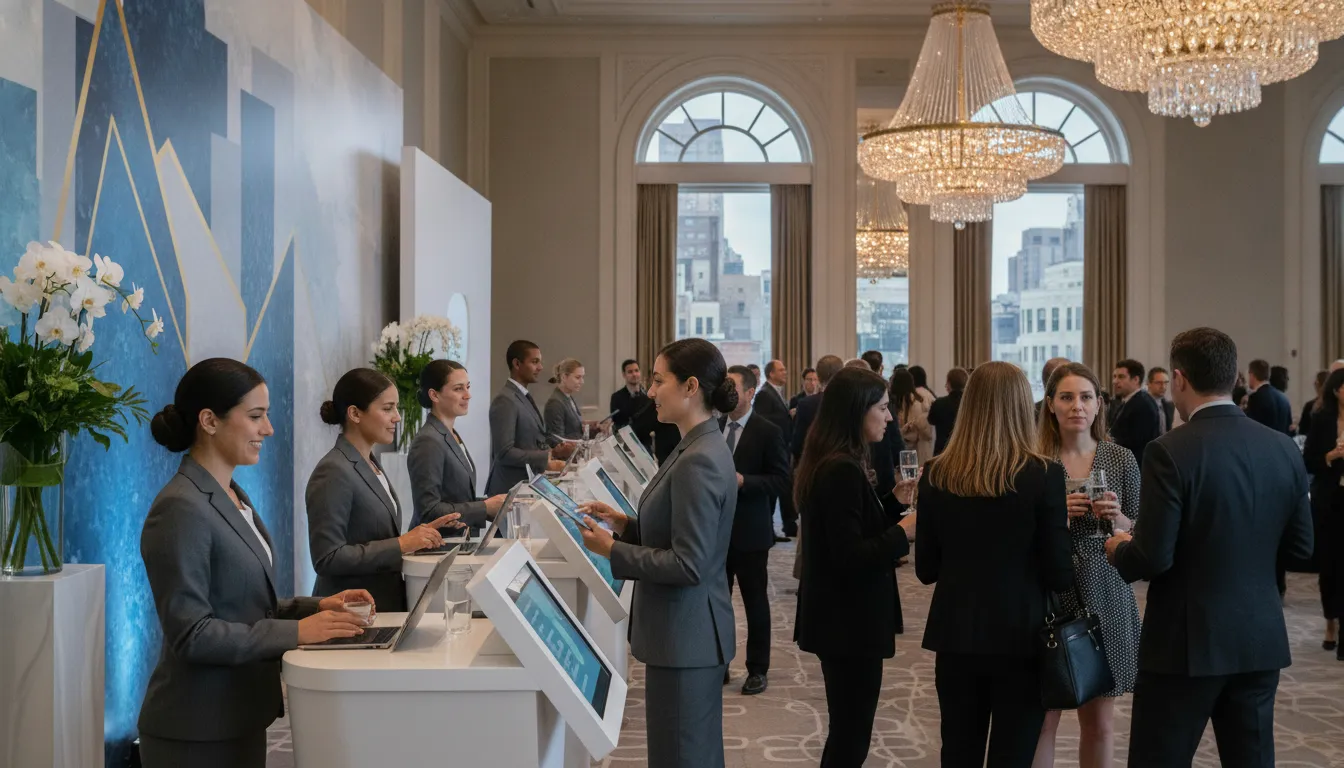
Walk the arrival path from the street to the first meaningful destination. Check whether signs are visible at decision points, staff can answer common questions, and alternate check-in needs have a clear route. If guests must stop and interpret what to do, the team has found a friction point worth fixing.
Design for movement and recovery
Good flow does more than prevent congestion. It helps guests move between high-energy learning and quieter moments for conversation, rest, or planning. Build enough transition time into the agenda. Place help where decisions happen. For more ideas, explore how to master guest flow from curb to curtain call.
Make networking easier to begin
Do not assume that placing people in the same room creates valuable networking. Give guests conversation prompts, visible hosts, or purpose-driven gathering points. Staff can introduce attendees with complementary goals. Spaces can signal whether they support quick introductions, scheduled meetings, or informal conversations.
Give frontline teams a service recovery plan
Even a thoughtful event will face changes. Equip staff to acknowledge the issue, offer the next best option, and communicate patterns to the operations team. A fast, confident response can protect trust when the original plan changes.
Stage 4: Extend value after the event
The post-event stage helps attendees convert inspiration into action while giving planners evidence for the next event. Timely resources, purposeful follow-up, and specific feedback questions keep the relationship useful after the venue closes.
Follow up according to attendee goals
Segment follow-up based on what guests wanted to accomplish. An attendee focused on education may value session resources. A buyer may need a clear way to reconnect with exhibitors. A first-time planner may appreciate a summary of practical next steps. Relevant follow-up feels like a continuation of the event rather than a generic campaign.
Ask questions the team can act on
Replace broad satisfaction questions with prompts tied to key decisions. Ask where attendees found it difficult to choose, navigate, connect, or participate. Invite them to name one moment worth preserving and one transition worth improving. These answers are easier to translate into operational changes.
Close the internal loop
Bring the planning team together while observations are fresh. Compare feedback with onsite notes and stage-specific signals. Assign owners and deadlines to a short list of improvements. Then update the journey map so it becomes a living planning asset rather than a one-time workshop output.
How should planners measure the attendee journey?
Measure the attendee journey with a small set of stage-specific signals that reveal progress and friction. Combine behavioral evidence, such as completed registrations or session participation, with direct feedback and staff observations. The goal is not to collect every possible metric, but to learn where the experience needs attention.
- Discovery and registration: Common questions, registration completion, and reasons for hesitation.
- Pre-event: Schedule engagement, support themes, and readiness questions.
- Onsite: Check-in flow, wayfinding requests, session participation, and networking activity.
- Post-event: Follow-up engagement, survey themes, and stated next actions.
Review the signals by attendee segment. A single overall score can hide a strong experience for returning guests and a confusing one for first-time attendees. Segment-level patterns reveal where targeted improvements will have the greatest value.
Frequently asked questions
What is an event attendee journey?
It is the complete experience a person has with an event, from first discovery and registration through onsite participation and post-event follow-up. A journey map connects these stages and shows where planners can reduce friction or add value.
How do you map an attendee journey?
Choose an attendee segment, list its stages and touchpoints, document the guest’s goal and likely emotion at each point, identify friction, assign an owner, and define a clear success signal. Use real feedback and operational evidence to test assumptions.
Which event touchpoints should planners prioritize?
Prioritize moments with high consequence for the attendee, especially the ticket decision, confirmation, arrival, check-in, transitions between sessions, networking introductions, and follow-up. Improvements at these handoffs often strengthen the whole experience.
How often should a journey map be updated?
Review it during planning, after major program or venue changes, and soon after the event. Update it when new feedback reveals a repeated problem or when the team changes an important touchpoint.
Build an event attendee journey guests remember
An effective journey map connects brand promises with operational details. It helps every team see the experience from the guest’s perspective, focus on the transitions that matter, and assign ownership before friction reaches the attendee. Start with one priority segment and one high-impact stage, then expand the map as the team learns.
Get tickets to The Event Planner Expo to discover ideas, speakers, exhibitors, and connections that can strengthen your next event experience.