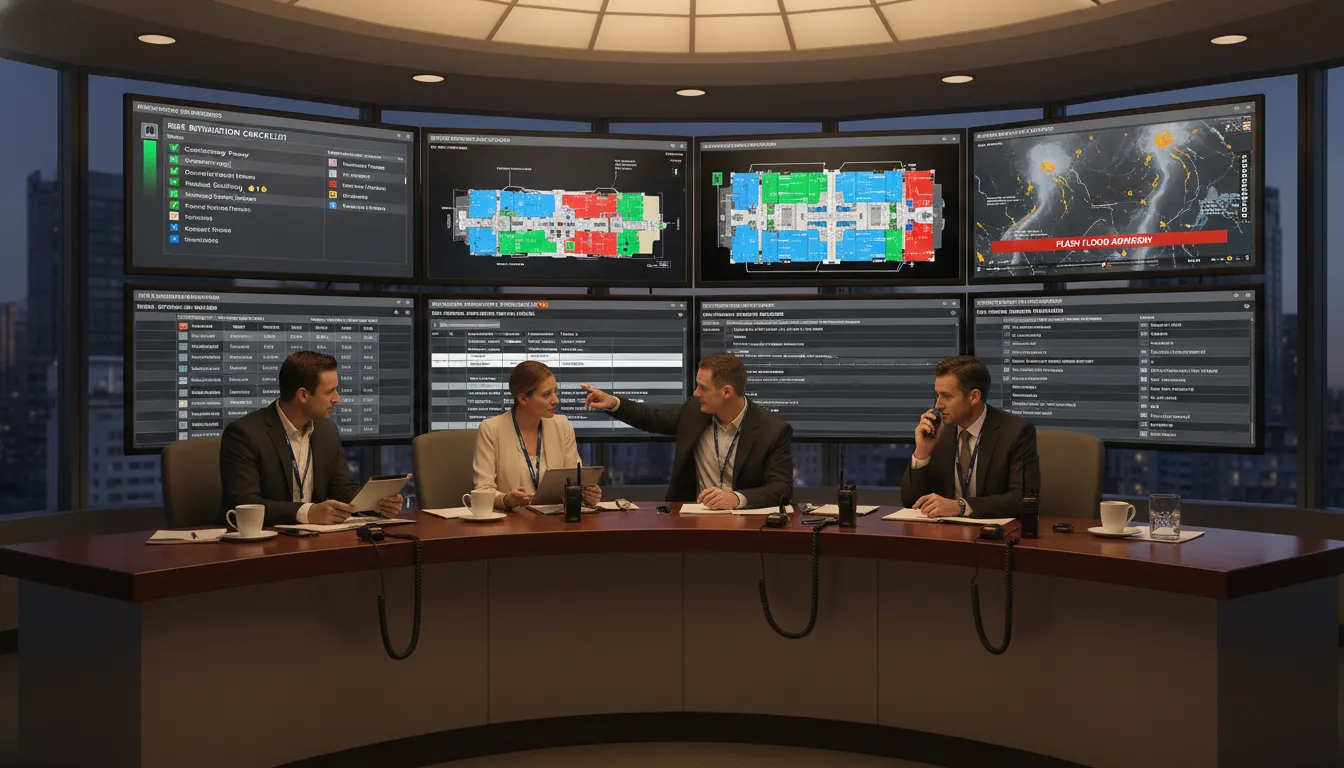
A flawless run of show can unravel in minutes when a storm changes course. A keynote speaker misses a flight, or a critical vendor arrives without the right equipment. The difference between a manageable disruption and an event-wide crisis is preparation. A practical event risk management checklist gives your team a shared system for spotting threats, assigning owners, setting decision thresholds, and acting before a problem reaches attendees.
For corporate event planners, risk management is not about predicting every possible failure. It is about identifying the scenarios most likely to affect safety, operations, reputation, budget, and the attendee experience, then building realistic backup plans. That includes weather and venue contingencies, vendor alternatives, emergency communications, insurance conversations, and a clear day-of escalation path.
Use this guide as a working framework, then adapt it with your venue, vendors, internal stakeholders, and qualified safety, legal, and insurance professionals. As you build your plan, explore more planning insights from The Event Planner Expo, connect with trusted event partners, and consider securing tickets to The Event Planner Expo to expand your professional network.
The strongest plans begin with one source of truth: a risk register that makes every priority, owner, trigger, and response easy to find.
Build your event risk management checklist
A useful event risk management checklist works as a live risk register, not a one-time form. It gives the planning team one clear place to record threats, decisions, owners, and review dates. Start the register early, then keep it open through breakdown.
Identify risks by event area
Walk through the full attendee and staff journey, from arrival to load-out. Record risks tied to the venue, crowd flow, security, weather, food service, medical needs, vendors, data, and production equipment. Describe each risk as a specific event that could disrupt safety or delivery.
Ask venue teams, vendors, security leads, and first responders what could fail in their area. Their answers often reveal gaps that a planner cannot see alone. Use event contingency planning to pair each major risk with a practical backup response.
Score likelihood and impact
Give every risk a likelihood score and an impact score from one to five. Multiply those scores to set a priority level, then apply the same method across the register. This simple scale helps teams compare unrelated issues without relying on instinct alone.
| Risk level | Score | Planning response |
|---|---|---|
| Low | 1-4 | Accept and review |
| Moderate | 5-9 | Add controls and track |
| High | 10-16 | Assign action before launch |
| Critical | 17-25 | Escalate or change the plan |
Define what each score means before the team starts rating risks. For example, impact can reflect harm, delay, cost, or damage to the guest experience. The CISA Mass Gathering Security Planning Tool also supports collaboration among planners, law enforcement, and first responders.
Assign owners and monitor changes
Every high or critical risk needs one named owner, a response, and a due date. Avoid assigning risks to a department because shared ownership can hide missed work. The owner should have enough authority to act or escalate the issue.
Add warning signs that tell the team when a risk is becoming more likely. These triggers may include forecast changes, ticket sales, vendor delays, equipment faults, or crowd counts. Record the next review date and note which decision each trigger should prompt.
Review the register at set planning meetings, after site visits, and when vendors or event details change. Increase the review pace as opening day gets closer. The CDC readiness guidance supports daily or weekly checks to monitor and maintain recommended practices.
Keep the live register available in the event command center. Log new hazards, closed actions, and changes during show hours. This record helps leaders make quick choices while giving the post-event team clear lessons for the next production.
How do you create an event contingency plan?
A strong contingency plan starts before vendors arrive and stays active until the final load-out. It turns likely disruptions into clear actions, named owners, and firm decision points. Use this event risk management checklist to build a plan your team can follow under pressure.
Build the working plan
Start with a venue walk-through, vendor input, and a review of past event issues. The CISA Mass Gathering Security Planning Tool offers a framework for planning with team members, law enforcement, and first responders.
- Assess the event. Review the venue, guest flow, weather exposure, medical needs, security, equipment, and vendor dependencies. Record each risk in one shared register.
- Rank each risk. Score its likelihood and likely effect on safety, schedule, budget, and guest experience. Define which score requires action before opening.
- Assign an owner. Name one person who can track, report, and act on each major risk. Give that owner a backup and direct contact details.
- Set controls and triggers. Reduce each risk with preventive steps, then define when the backup plan starts. For example, set a wind threshold for closing outdoor structures.
- Approve and share the plan. Secure sign-off from event leadership, the venue, and key partners. Share a short action sheet with staff, vendors, and emergency contacts.
- Rehearse and review. Run tabletop drills for the most serious scenarios before event day. Note gaps, revise the plan, and confirm that each owner understands their role.
Scenario triggers and responses
Write each scenario as an if-then instruction, so no one must debate the next move during a disruption. Your event contingency planning should cover both common issues and high-impact emergencies.
For heavy rain, the trigger may move guests indoors and pause outdoor power use. For an AV failure, the response may switch to backup equipment and a revised run-of-show. For a medical issue, staff should know who calls emergency services, who clears access, and who guides guests.
Approval, rehearsal, and live review
Before approval, ask every owner to explain their response without reading the full plan. Ask the venue, security lead, medical team, and production partners to flag conflicts or missing steps. This review checks whether the plan works across teams, not just on paper.
During the event, hold brief check-ins and watch for changes in weather, crowds, equipment, or staffing. The CDC notes that daily or weekly readiness assessments can help teams monitor and maintain recommended practices. After the event, record what happened, what worked, and where response time slowed. Use those findings to improve the next plan.
Plan for weather and venue disruptions
Weather triggers and decision ownership
A useful event risk management checklist turns a vague weather concern into clear choices. Track the forecast before doors open, then keep monitoring conditions through breakdown. Assign one decision owner and a backup. Record who watches each source, when updates happen, and how changes reach staff, vendors, speakers, and guests.
Set practical decision points for rain, wind, heat, travel delays, and other conditions tied to your event. Each trigger should name the next action, decision deadline, and person who can approve it. Before confirming an outdoor plan, pressure-test your event site against the disruption scenarios most likely to affect it.
- List trusted forecast sources and monitoring times.
- Define pause, delay, shelter, relocation, and cancellation triggers.
- Draft messages for guests, teams, vendors, and transport partners.
- Confirm how ticketing, signage, and digital channels will carry updates.
Venue routes, access, and capacity
Walk the venue with its operations lead before the event. Map primary and backup routes for arrival, exit, shelter, loading, and staff movement. Check that each proposed route works for guests with mobility, vision, hearing, or other access needs. Keep entrances, lifts, restrooms, and pickup points in the plan.
Venue details shape the response available to your team. The CISA Mass Gathering Security Planning Tool includes venue characteristics and planning considerations within its broader framework. Use that lens to document shelter spaces, room capacities, exit routes, and the contacts who control each area.
Do not assume a backup room can hold the same crowd or support the same program. Confirm usable capacity, access paths, staffing, furniture, and vendor limits in advance. Note which sessions can move, combine, stream, or pause if space becomes tight.
Relocation, transport, and power scenarios
Build a relocation plan that works on paper and during a live event. Name the alternate site or indoor room, its activation deadline, and the person who confirms availability. Document how guests will get there, including accessible transport, pickup zones, traffic limits, and clear wayfinding.
Power loss can affect check-in, lighting, communications, catering, and presentation systems. List the functions that must continue, then confirm backup options with the venue and vendors. Keep offline guest lists, printed contacts, spare lighting, and manual check-in materials where the team can reach them.
Run a short tabletop review with venue, production, transport, and guest-services leads. Test one weather scenario, one power issue, and one relocation choice. Strong event contingency planning makes each handoff, deadline, and message easier to follow when conditions change.
What vendor backups should planners arrange?
Vendor backups should cover every service that could stop the event, harm guests, or damage the client relationship. Add each critical supplier to the event risk management checklist, then name a tested replacement and the trigger for calling them.
Backup vendors and contract terms
Start with services that have few quick substitutes, such as the venue, caterer, security team, power provider, and audiovisual crew. Vet one backup for each critical role before contracts are signed. Confirm that each backup can meet the venue rules, insurance terms, load-in schedule, and guest count.
Review primary vendor contracts for cancellation rights, refund terms, force majeure language, notice periods, and replacement costs. Check whether the planner or vendor must source a substitute after a failure. This contract review should support broader event contingency planning, not sit in a separate file.
- Record the backup vendor’s lead contact, after-hours number, rates, and minimum notice.
- Ask what stock, crew, permits, and transport they can hold for the event date.
- Set a written approval limit so the event lead can activate help without delay.
Equipment redundancy and confirmation deadlines
Critical equipment needs a spare on-site or a clear path to fast replacement. Prioritize microphones, laptops, presentation files, power supplies, network hardware, radios, lighting controls, and any device tied to guest safety. Test the spare gear under event conditions, label it, and tell the crew where it is stored.
Set confirmation deadlines based on the time needed to switch vendors, not on the event start time. Require written confirmation at each deadline for crew, equipment, delivery windows, and the named on-site lead. If a vendor misses a deadline, escalate at once and prepare the backup.
Readiness checks should continue during the lead-up to an event. The CDC readiness assessment guidance notes that daily or weekly checks can help teams monitor and maintain recommended practices. Use that same rhythm for vendor status, especially during the final week.
Contact trees and a vendor failure scenario
Create a contact tree that shows who calls the primary vendor, who approves the backup, and who updates the venue and client. Include one main contact and one alternate for every supplier. The CISA Mass Gathering Security Planning Tool can also help connect planning stakeholders. Store the tree online and offline so a network outage does not block action.
Run a short vendor failure scenario before the event. For example, assume the audiovisual supplier reports a truck breakdown four hours before doors open. The operations lead verifies the delay, alerts the decision maker, and calls the approved backup while the venue holds the loading dock.
The technical lead then checks spare equipment and adjusts the setup plan. Meanwhile, the client contact receives one clear update with the impact, response, and next checkpoint. This drill exposes missing phone numbers, unclear approval limits, and weak handoffs before they become live problems.
Create an emergency communications plan
Emergency communications belong on every event risk management checklist. The plan defines who shares updates, which audiences receive them, and when a concern becomes an emergency. Build it with venue leaders, security, medical teams, vendors, and local response partners before doors open.
Audience groups and ready-to-use messages
Start by grouping people based on what they need to know and how they can act. Typical groups include attendees, staff, vendors, speakers, sponsors, media, and emergency contacts. Give each group a primary channel and a backup channel.
Write short message templates for evacuation, shelter-in-place orders, severe weather, medical incidents, transit issues, and schedule changes. Each template should state what happened, what people must do, where they should go, and when another update will arrive.
- Attendees: Use text alerts, event apps, email, signs, and clear public announcements.
- Staff and vendors: Use radios, group messaging, and assigned supervisors for direct instructions.
- External contacts: Prepare approved statements for families, media, partners, and public agencies.
Keep wording calm, direct, and easy to scan. Avoid guesses, blame, or details that could confuse the response. Pair this work with broader event contingency planning so every message matches an approved action.
Spokespeople and escalation contacts
Name one lead spokesperson and one backup. They should approve public updates and keep facts consistent across channels. Other team members should route media questions to them instead of giving separate answers.
Create an escalation list with names, roles, phone numbers, and decision authority. Include venue management, security, medical leads, production, legal counsel, local officials, and key vendors. The CISA Mass Gathering Security Planning Tool supports planning with law enforcement and first responders.
Define clear triggers for each contact. A minor delay may stay with production, while a safety threat goes straight to security and emergency services. Set a simple approval path so urgent messages do not wait for a long chain of reviews.
Channels and day-of briefing routines
Test every channel before the event, including radios, app alerts, text systems, email lists, public address systems, and digital signs. Confirm that backup batteries, chargers, contact lists, and printed scripts are ready. Plan for weak service or a power loss.
Hold a short briefing before each shift. Review current risks, message templates, escalation triggers, radio terms, meeting points, and each person’s role. The CDC notes that readiness assessments can help teams monitor and maintain recommended practices.
End the briefing with a quick check. Ask team leads to repeat their first call, backup channel, and next action for the main emergency scenarios. Log any changes, then send the updated plan to every lead.
Review insurance, contracts, and documentation
Insurance and contracts help assign risk, but they do not remove it. Add a formal review point to your event risk management checklist. Bring qualified brokers and legal advisors into the process early. They can explain the terms, limits, and duties that apply to your event.
Questions for your insurance broker
Ask a qualified broker which policies may fit the event, venue, activities, staff, and vendors. Discuss the risks tied to alcohol, weather, rented gear, performers, transport, and other special features. Also ask what coverage the venue requires and when proof is due.
- Which events, people, property, and claims may be covered or excluded?
- What limits, deductibles, notice rules, and claim deadlines apply?
- Does the policy address cancellation, property damage, injury, or liquor-related risk?
- Who needs a certificate of insurance or additional insured status?
Do not treat a certificate as proof that every risk is covered. Ask the broker to explain the policy language and any gaps. This deeper review supports event liability and risk mitigation before deposits, rentals, and production work begin.
Contract review with legal counsel
Have qualified legal counsel review key agreements before anyone signs. The review should cover who handles each task, who bears each risk, and what happens after a disruption. Ask counsel about cancellation terms, refunds, indemnity, insurance duties, damage, delays, force majeure, and dispute steps.
- Confirm that venue and vendor duties match the operating plan.
- Check dates, payment terms, change rules, and approval steps.
- Record required permits, licenses, certificates, and delivery deadlines.
- Flag unclear terms and resolve conflicts between agreements.
Share approved terms with the people responsible for each duty. A contract has limited value if the operations team never sees its requirements. Keep the signed version, related changes, and proof of approvals in one controlled folder.
Documentation and incident records
Create a record that shows what the team reviewed, decided, assigned, and checked. The CISA Mass Gathering Security Planning Tool produces a report that can guide talks among planners, law enforcement, and first responders. Use that approach to keep the event file clear and useful.
- Save signed contracts, policies, certificates, permits, risk reviews, and vendor contacts.
- Log safety briefings, inspections, plan changes, approvals, and open issues.
- During the event, note incidents, times, locations, witnesses, actions, and follow-up owners.
- Protect sensitive records and set access, retention, and disposal rules with qualified advisors.
Use a consistent incident form and train staff on when to complete it. Keep notes factual, prompt, and free from guesses about fault. After the event, review logs with the right advisors and turn useful findings into updates for the next plan.
Run a clear day-of escalation plan
A day-of escalation plan turns the event risk management checklist into a working command system. It tells each person who can decide, when to escalate, and where to report an issue. Build it during event contingency planning, then review it with every lead before doors open.
Authority levels and decision thresholds
Assign authority by role, not by a person’s location or seniority alone. Frontline staff should handle small issues within clear limits. Zone leads should manage problems that affect one room, vendor, or guest flow. The event director should control decisions that affect the full event.
Write objective triggers beside each known risk. Useful triggers include a blocked exit, a lost child, a medical call, severe weather, or crowd pressure. State who must be notified and who can pause programming, close an area, or order an evacuation. These thresholds prevent delay when the team is under stress.
- Level one: Staff resolve a contained issue and notify their zone lead.
- Level two: The zone lead directs resources, limits access, and alerts the command post.
- Level three: The event director contacts emergency services and may stop or evacuate the event.
Share the plan with venue security, medical teams, and public agencies as needed. CISA says mass gathering plans should support ongoing work among planners, law enforcement, and first responders. Its Mass Gathering Security Planning Tool can help teams align before the event.
Command post and communication cadence
Name one command location that remains staffed and easy for team leads to reach. Post its location on staff maps, but keep public access controlled. Store contact lists, radios, floor plans, emergency procedures, and spare supplies there. Set a backup post in case the first location becomes unsafe.
Choose one radio channel for urgent escalations and separate channels for routine operations. Require short status checks at set times, such as before opening and during key program changes. Each report should state the issue, exact location, current impact, action taken, and help needed. Review event security and risk protocols with staff so reports stay clear and useful.
Incident log and post-event debrief
Assign one command-post team member to keep a time-stamped incident log. Record who reported the issue, facts observed, decisions made, people notified, and the final outcome. Do not add guesses or private details that the record does not need. The log should show the event director what is active, stable, or closed.
Hold a short debrief with key leads after guests leave and urgent work ends. Review major incidents, close any open actions, and note which thresholds or messages caused confusion. Assign owners and due dates for follow-up. Use those lessons to improve the next plan, staff briefing, and vendor scope.
Frequently Asked Questions
How do you conduct a risk assessment for a public event?
Start by listing hazards tied to the venue, crowd, vendors, equipment, weather, security, and medical needs. Rate each hazard by likelihood and impact, then assign an owner and practical controls. The CISA Mass Gathering Security Planning Tool can help planners coordinate with law enforcement and first responders. Record backup actions, communication methods, and decision triggers before the event begins.
Is a risk assessment legally required for every event?
Legal requirements depend on the event location, venue, activities, attendance, permits, and applicable workplace or public safety rules. Some venues, insurers, or local authorities may require a written assessment even when no single law covers every event. Confirm requirements with the venue, insurer, and relevant authorities. Keep records of identified hazards, controls, responsible parties, and updates.
How does weather affect event risk management?
Weather can affect crowd safety, temporary structures, power, transportation, and emergency access at outdoor and semi-outdoor events. Monitor reliable forecasts and set clear thresholds for delaying, relocating, pausing, or canceling the event. Prepare shelter or evacuation routes, secure equipment, and assign one person to track conditions. Share changes through several channels so staff, vendors, and attendees receive timely instructions.
Why is venue assessment critical for event safety?
A venue assessment reveals hazards that a general plan may miss, including blocked exits, uneven surfaces, capacity limits, and poor emergency access. Check crowd flow, accessibility, temporary structures, loading areas, utilities, and response routes during a site walk. The CISA planning framework treats venue characteristics as a key part of mass gathering security planning. Document fixes, owners, and deadlines.
Ready to Strengthen Your Event Risk Plan?
Waiting until a disruption occurs can leave your team making rushed choices while guests, vendors, and schedules depend on a clear response. Starting now gives stakeholders time to review responsibilities, test backup plans, and close gaps before the event day adds pressure. A practical risk plan also helps your team move faster when conditions change, protecting the attendee experience and keeping essential operations on track.
Ready to prepare with greater confidence? Learn more about The Event Planner Expo to discover trusted vendors and planning insights. Contact our team today to start building industry relationships that can support your next event and its contingency plans. Request the details you need to plan smarter, compare options, and prepare your team.