Most stages do not lose attention because they are poorly built.
They lose attention because they are poorly considered.
The visuals are there. The lighting is there. The production value is there. And still, ten minutes in, you can feel it shift. Eyes drift. Phones come out. Conversations start quietly on the edges of the room.
It is not dramatic. It is gradual. And once it starts, it is almost impossible to reverse without breaking the flow of the event.
This is not a staging issue. It is an attention issue.
And in New York City, where every room is layered with distractions before you even add your own, attention is not something you earn once. It is something you hold, continuously.
1. Depth Holds Attention
Flat stages are easy to build and easy to ignore.
When everything exists on a single plane, the eye processes it quickly and moves on. There is no reason to stay. No visual tension. No sense of progression.
Depth changes how the brain engages with a space.
Layered backdrops. Elements set forward and back. Lighting that creates separation between those layers instead of flattening them. These are not aesthetic choices. They are cognitive ones.
In NYC venues where width is often limited and sightlines are inconsistent, depth becomes your most reliable tool. It allows you to create a stage that feels active without requiring constant motion.
When the eye has somewhere to travel, attention lasts longer.
2. Removing is More Impactful Than Adding
Don’t get sucked into adding too much to the stage. The room is already working against you. With so many details to look at everywhere else, don’t overload guests with more things to look at on the stage. Actively reduce the noise by removing details from the stage.
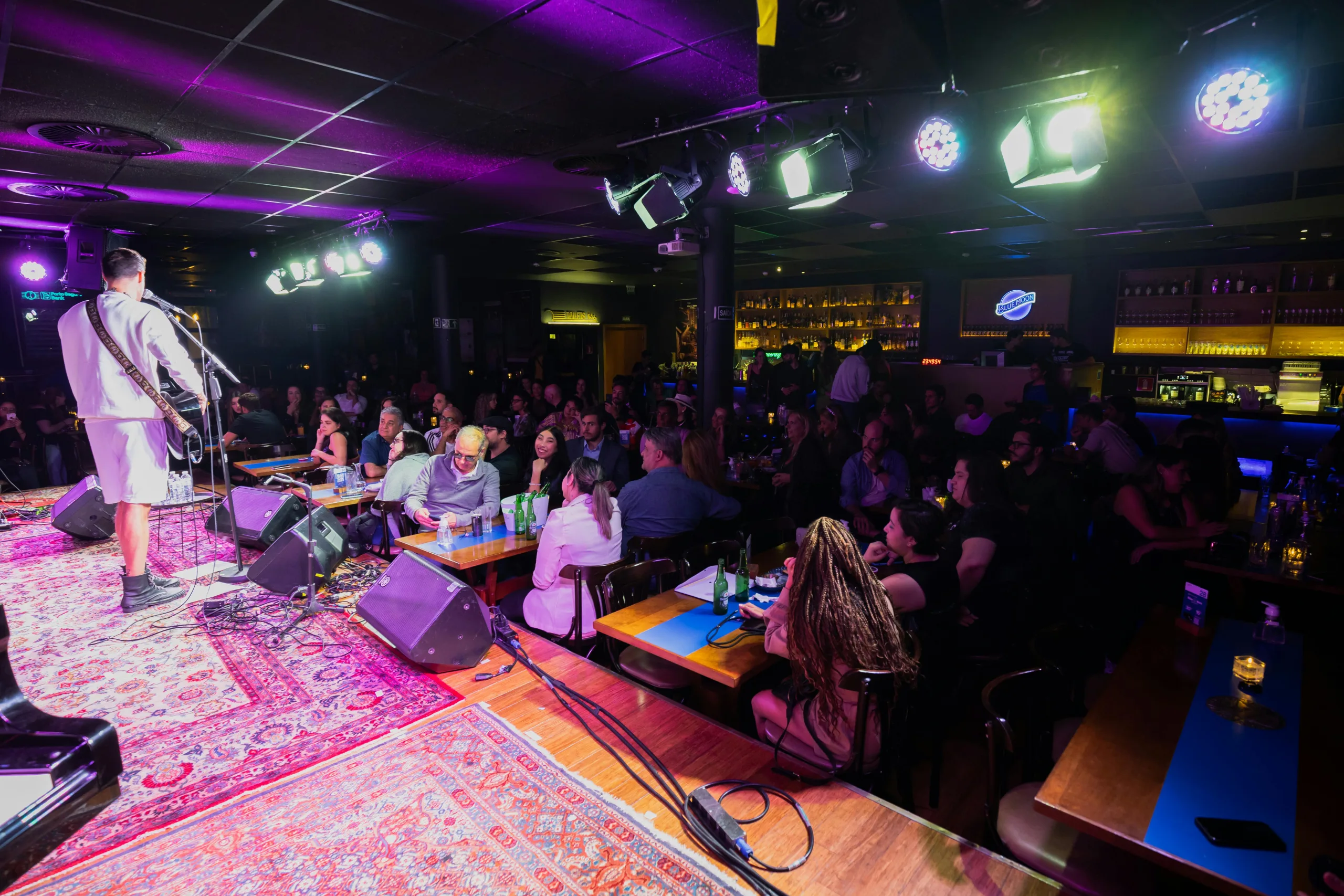
Lighting is your secret weapon. Use it to create a tight focus on the speaker or performer. Create darker areas everywhere else. That draws the sightlines into where you want the most attention.
3. Stages Need Boundaries
When a stage blends too easily into the room, it loses authority.
But over-framing it creates a different problem. It becomes isolated. Separate from the experience instead of integrated into it.
Vertical elements that define the space without enclosing it. Architectural lines that guide the eye inward. Structural cues that signal importance without creating distance.
This is particularly important in NYC venues where layouts are irregular and rarely symmetrical. Columns, alcoves, and uneven walls can either weaken a stage or reinforce it depending on how they are used.
4. Sightlines Are Not a Minor Detail
If part of your audience cannot see clearly, they disengage early.
Not because they are uninterested. Because they are excluded.
This is one of the most common failures in stage design. A visually strong concept that only works from certain angles.
In New York, where obstructions are unavoidable, this becomes even more critical. Columns cut through views. Elevated platforms create uneven sightlines. Depth can either help or hurt, depending on how it is executed.
5. Visual Hierarchy Is What Prevents Cognitive Fatigue
Deciding where to direct your attention is about more than just where you look. It’s also about how hard you have to work to decide where to look. If the stage is competing with multiple other elements in the room, people have to work to decide to look at the stage. Guests are constantly thinking and deciding. That takes away from their enjoyment.
The stage needs to be the dominant focal point in the room. This means giving it a visual hierarchy. People shouldn’t have to work to decide to look at the stage.
6. Contrast Is What Resets Attention Without Breaking It
Attention naturally fades. This is not a failure. It is a pattern.
What matters is how you bring it back.
Contrast is the most effective way to do this without disrupting the experience.
A shift in lighting intensity. A change in color temperature. A subtle adjustment in the visual environment that signals something new without pulling focus away from the stage.
In longer sessions, this becomes critical.
Without contrast, the stage becomes static. With it, attention resets without needing to be forced.
7. The Stage Must Anchor the Room, Not Compete With It
When the stage competes with the rest of the venue’s environment, the stage will always lose. For NYC venues, this creates a unique challenge. The architecture of the city’s buildings can be stunning. It can be challenging to find the perfect place for the stage.
You don’t want to block the oversized windows with views of the city. You don’t want to block the decorative ceiling that adds to the ambiance. You can’t block fire exits or the staff’s entrances.
8. Edges Are Where Attention Is Lost First
The perimeter of a stage is where focus begins to break.
Unfinished transitions. Visual clutter. Inconsistent lighting. These small details create opportunities for the eye to wander.
And once it does, bringing it back becomes harder.
Clean edges matter more than most realize.
Defined boundaries. Smooth transitions between stage and audience. Visual consistency that holds the frame.
Attention does not just live in the center.
It is maintained at the edges.
9. If It Fails on Camera, It Fails Beyond the Room
The reality of event planning in 2026 is that your audience extends far beyond the guests who attend in person. Every event you plan is photographed and recorded. Those pictures and videos are then shared across social media.
If your event fails on camera, it loses its impact. Event planners have to consider angles, depth, and lighting.
10. A Stage That Evolves Holds Attention Longer Than One That Stays Static
The most effective stages are more than a static platform off to the side. They have energy and movement. Of course, the stage itself doesn’t need to move. Instead, lighting can bring movement. IT creates a visual emphasis.
The changes don’t even need to be dramatic. A subtle shift is all you need to change the tone and energy of the room. Guests will clock the change, even if it isn’t conscious.

Learn More About Stage Design at The Event Planner Expo
If you want to maintain the attention of your guests for the entire event, you need to command and direct it. That doesn’t happen just once. It needs to be reinforced and fostered. In New York City, where every environment is already demanding attention before your event begins, this level of precision is what separates strong design from forgettable execution.
The planners shaping 2026 are not designing stages to impress.They are designing them to hold focus from the first second to the last, without asking for it. That is the level of thinking driving conversations inside The Event Planner Expo 2026.
Be part of the experience planners are paying attention to. Reserve your booth now.