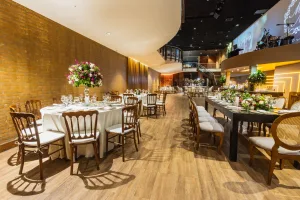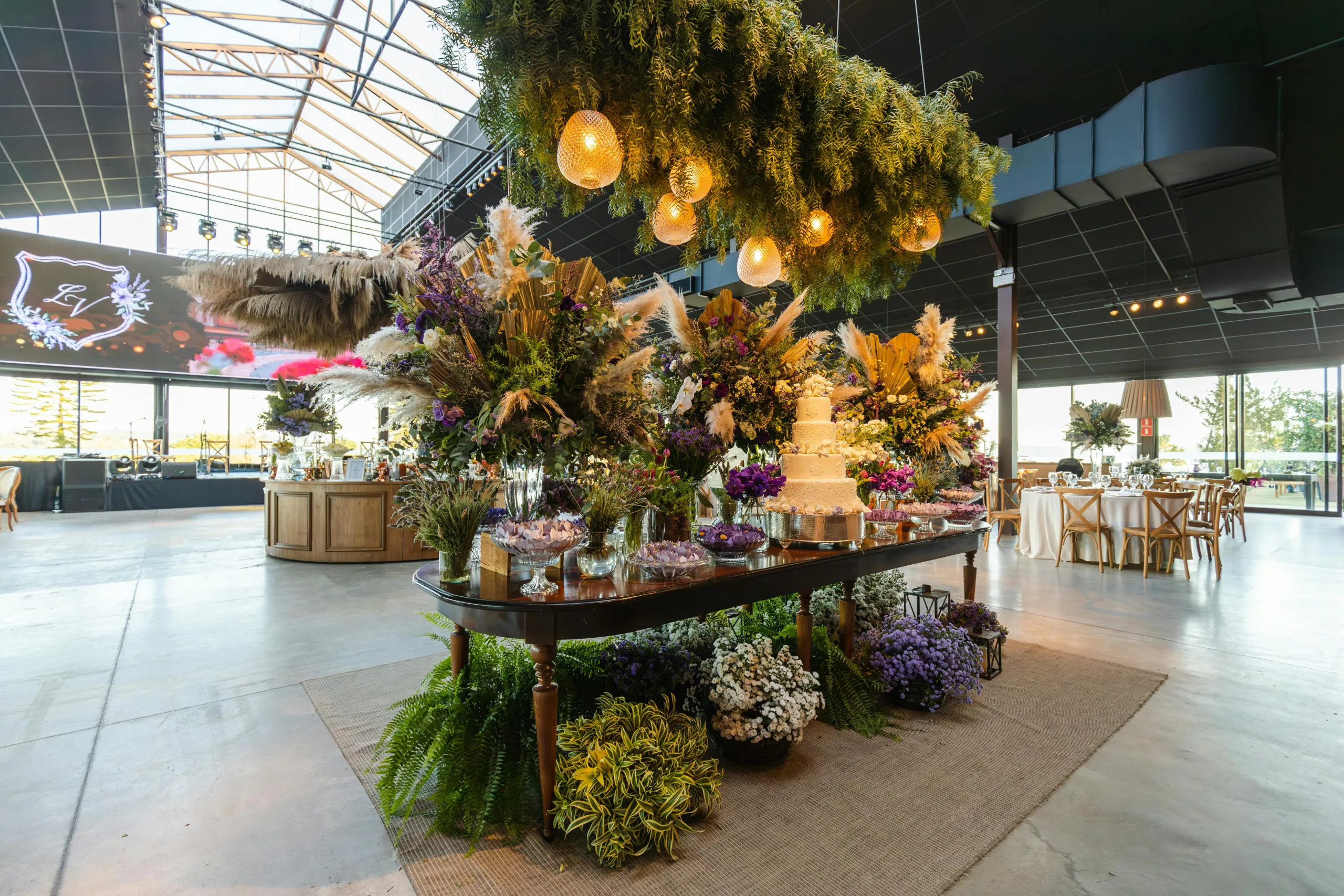
Table decorations spark a love-hate relationship with event planners. They add to the overall look of the room, helping a venue make a stronger impact. They photograph well, adding to any imagery taken of an event. Then the guests sit down. The wrong table design blocks sightlines, hinders conversations, and there’s less room on the table for catering. Top-tier NYC event planners are taking a new approach to table decor.
1. Height Is the First Decision That Determines Everything
Height should be the first issue event planners address. If the centerpiece is too tall, it will block guests’ sightlines. They are forced to lean and shift to see around the centerpiece. This physical movement causes them to disengage in conversations.
If the centerpiece is too low, it will blend in with everything else on the table. It loses its impact as plates and other items are set on the table.
In NYC, height is even more critical. Limited space means everything is placed closer together. Centerpieces at the wrong height impact more than just the table it’s set on. It can disrupt the floor of the entire room.
2. Layering Works When It Has Restraint
Texture layering is one of the most overused concepts in table design.
Linens, runners, chargers, folded napkins, menus, place cards, florals. Every surface is filled.
It reads well in a styled photo. It performs poorly in reality.
Guests need space. Physical space to interact. Visual space to process what they are seeing.
The strongest tables use fewer layers, but more intentional ones. Materials that contrast without competing. Elements that feel considered rather than accumulated.
In NYC, where lighting conditions vary and tables are often viewed from multiple angles, restraint becomes a strategic advantage.
The table should feel complete, not crowded.
3. Color Only Works When It Is Controlled
When color is used incorrectly, it creates a lot of visual noise. That doesn’t have a positive impact on the event’s design. Too many colors in the centerpiece means there are competing tones, over-saturated palettes, and mismatched design themes. Guests will notice all of these immediately.
Top-tier event planners practice restraint when choosing centerpiece floral colors. There’s a dominant tone with subtle variations. It creates depth without being overwhelming. They work with top NYC florists to design elegant yet restrained centerpieces.
4. Lighting at the Table Level Is What Guests Actually Experience
Overhead lighting sets the room.
Table lighting defines the experience.
This is one of the most overlooked elements in event design.
Guests do not spend most of their time looking at the ceiling. They are looking at each other, at the table, at what is directly in front of them.
If that space is poorly lit, everything feels flat.
Soft, controlled lighting at table level changes everything. It creates warmth. It highlights detail. It makes the table feel like its own environment within the larger room.
In NYC venues where overhead lighting is often fixed or limited, table-level lighting becomes even more important.
Guests notice how a table feels before they notice how it looks.
5. Personalization Only Works When It Feels Integrated
Personalized elements are everywhere.
Custom menus. Name cards. Branded details.
Most of them feel added, not integrated.
Guests see them, acknowledge them, and move on.
The difference is in how they are incorporated.
When personalization feels like part of the table design instead of an attachment to it, it becomes something guests engage with instead of something they glance at.
In corporate NYC events, where branding is often expected, this becomes a defining factor.
Subtle integration always outperforms obvious placement.
Guests photograph what feels intentional, not what feels promotional.
6. Movement at the Table Keeps Attention From Dropping
Static tables are easy to ignore.
Once guests have taken in the details, there is nothing left to engage with.
Movement changes that.
Not in an obvious or distracting way, but in subtle shifts. Candlelight that flickers. materials that catch light differently as guests move. small elements that change perspective depending on where you sit.
In NYC, where guests are constantly exposed to high-stimulation environments, these subtle movements create a quieter form of engagement.
They give the eye something to return to without pulling attention away from conversation.
That balance is what keeps the table from becoming invisible.
7. Scale Creates Presence Without Overcrowding
There is a tendency to fill tables with multiple smaller elements.
Florals, decor pieces, layered accessories.
It creates complexity, but not impact.
Scale, used correctly, does the opposite.
A single, well-proportioned element can define a table more effectively than several smaller ones competing for attention.
In NYC venues where space is limited and tables are often close together, this becomes even more important.
Large, simple elements create clarity. They give the eye a place to land.
Guests photograph what stands out, not what blends together.
8. The Negative Space Is What Makes the Table Work
The most overlooked element in table design is what is not there.
Negative space is what allows everything else to be seen clearly.
When a table is fully covered, there is no contrast. No breathing room. No visual hierarchy.
Guests feel it immediately, even if they cannot explain why.
The strongest tables are designed with intentional gaps. Space for plates, glasses, hands, and movement.
In NYC, where service is fast and tables are actively used, this becomes a functional necessity as well as a design choice.
A table that works physically will always outperform one that only works visually.
9. Materials Matter More Than Quantity
High-impact tables are not built with more elements.
They are built with better ones.
Materials that feel intentional. Textures that respond to light. Surfaces that create contrast without needing additional layers.
In NYC, where guests are often exposed to high-end environments, this level of material awareness stands out immediately.
Plastic gloss versus matte ceramic. Thin linens versus heavier fabrics. Subtle differences that change how the table feels.
Guests may not articulate it.
They will notice it.
10. The Table Should Feel Like Its Own Environment
The strongest tables do not disappear into the room.
They feel like distinct environments within it.
A shift in lighting. A defined color palette. A sense of cohesion that separates the table from everything around it without isolating it.
In NYC venues, where large spaces can feel overwhelming, this creates intimacy.
Guests feel grounded. Conversations feel more contained. The experience feels more personal.
That is what keeps guests engaged longer.
What Guests Actually Notice
Guests do not notice everything.
They notice what affects them directly.
Can they see the person across from them?
Do they feel comfortable sitting there?
Is there something that draws their attention without distracting them?
And when something feels right, they capture it.
Not because it was designed to be photographed, but because it felt worth remembering.
That is the difference.

Learn More About Table Design at The Event Planner Expo
Tablescapes today aren’t the antiquated flower bouquets of the Victorian Era. You don’t need these elaborate and over-the-top designs. You don’t even need to dedicate a huge budget to them. Instead, keep the sightlines, balance the color, and use spacing to your advantage.
In New York City, where expectations are high and attention is limited, this level of precision is what defines strong design. Because the table is not just where guests sit. They notice there is what they remember. That is the level of thinking shaping conversations inside The Event Planner Expo 2026. Table design is about creating an environment guests want to stay in, engage with, and capture before they leave. Reserve your booth at The Event Planner Expo 2026 and position your brand in front of top decision-makers.