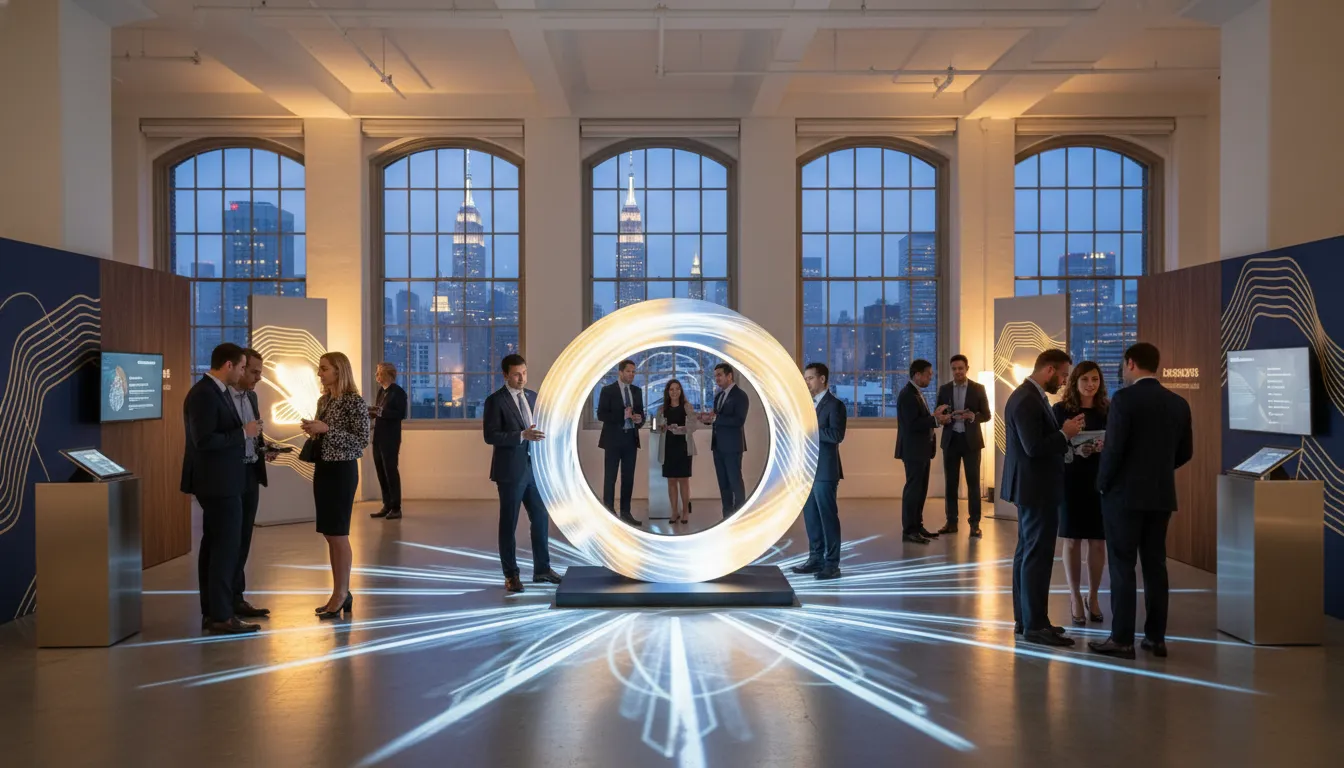
New Yorkers scroll past spectacle fast; a branded moment must earn its crowd and coverage. For marketers planning 2026 activations, the winning format is participatory, measurable, and built for the block.
Get tickets for The Event Planner Expo to discover NYC activation ideas and event partners.
The experiential marketing trends NYC teams should plan for in 2026 favor intimate, highly shareable moments across Manhattan and Brooklyn venues over empty spectacle. Brand managers are building pop-ups, launches, and conference experiences around active participation, customized journeys, creator-ready content, and clear measurement from registration through conversion. In a city where every block competes for notice, the activation needs a location story, smooth guest flow, and a reason to post after guests leave. That strategy follows consumer demand: 78 percent prefer investing in an experience rather than a product, according to FIT’s Brand Experience white paper. Plan for measurable encounters that move from on-site energy to content, leads, sales conversations, and stronger brand recall well after doors close.
Your team still has to decide which trends support the creative brief, venue plan, target audience, and measurable proof of return before selecting any activation format. Start with the planning signals ahead in Experiential marketing trends NYC teams should plan for now; here’s how.
Experiential marketing trends NYC teams should plan for now
For brand managers, experiential marketing trends NYC planning in 2026 begins with a sharper question: what deserves in-person time? New York audiences have many live options, and a crowded activation can still feel forgettable. This section is not a basic guide to immersion. It focuses on current planning choices for teams managing access, quality, and proof.
A Fashion Institute of Technology paper discusses brand experience and relevance. It notes that these points can set brands apart from price, speed, or convenience. That point matters in Manhattan. A strong idea must earn attention in a busy day, then offer a clear reason to take part.
Human-centered participation
Participation now needs more than a photo wall or branded giveaway. Plan a role for each guest: shape a demo, make a choice, share input, or meet an expert. The brand gains a richer conversation. The guest leaves with an action they helped create, not only a visual they viewed.
This is where a trend-focused plan differs from a broad immersive brand experiences guide. Immersion explains how to build a world around a brand. Current NYC planning asks which forms of participation fit the audience, venue, schedule, and next business step.
Smaller premium moments
Scale is no longer the only sign of ambition. A brand can choose a smaller room, tighter guest list, and higher level of access. Think private product previews, hosted tastings, expert roundtables, or guided studio sessions. Each format gives guests more time to ask questions and form useful connections.
In New York, the value of a smaller format is control. Teams can match guests by role or interest and brief hosts well. They can reduce empty traffic around the experience. They can also plan several focused moments for distinct audiences. One large event does not need to meet every goal.
Live engagement with proof
A memorable room is not a measurement plan. Before venue selection, define the behavior that signals progress: a qualified meeting request, product trial, survey response, content opt-in, or follow-up booking. Then design check-in, QR prompts, host notes, and post-event outreach around that behavior.
- Set one main business outcome and a few supporting signals.
- Capture consent clearly when collecting guest details or feedback.
- Compare invited guests, attendance, participation, and follow-up actions.
- Give sales or partnership teams timely notes for relevant outreach.
Measurement should support hospitality, not interrupt it. A short prompt after a hands-on moment often feels natural. A long form at the door does not. Teams comparing corporate event planning trends can use this test: every live feature should serve the guest experience or the stated outcome.
The timely NYC shift is practical: fewer passive impressions, more designed participation, premium access, and usable signals. Brand managers who plan these elements together can judge a concept before production begins. They can also brief partners with clear standards for audience fit, service, and reporting.
Why do NYC brand activations create outsized opportunity?
Place as part of the message
In New York City, location is part of an activation’s meaning. A street corner, storefront, rooftop, or gallery shapes the pace of an encounter. It also sets expectations before a guest reaches the first product touchpoint.
That is why site choice should start with audience purpose, not a famous address. A public reveal needs sightlines and simple entry. An invited preview may need calm conversation, hospitality, and space for buyers or press.
Within experiential marketing trends NYC planners watch, place remains a practical advantage: it can put the right encounter in the right context. Creative use of a city site can focus attention when the idea and setting fit.
In an NYU Stern profile, one street-theater activation stopped traffic while matching the artist and product. The lesson is not to chase disruption. It is to make the location support a message guests grasp at once.
Attention that travels past the room
NYC offers brands an audience beyond the guest list. A live moment may also give media, creators, and attendees a visual story they can retell. That extra path for attention begins with an experience worth recording, not a request to post.
Participation gives a moment shape. A guest might test a feature, choose a route, or enter a staged scene. Teams can use this guide to immersive brand experiences as a base, then make the concept specific to its New York neighborhood.
A flexible layout also helps teams adjust the experience by audience. Press may need a clear interview point. Clients may need a guided product demonstration. Guests may need an easy activity with a quick reward.
Sharing also needs a plan. Define the core image, short description, and press-ready reveal before the event starts. A plan may include press outreach and creator content, if each element serves the same idea.
Premium expectations and practical discipline
Dense attention also brings high expectations. Guests notice friction: a slow entrance, vague directions, hard selling, or a product moment without purpose. Premium execution means removing those gaps, so the experience feels intentional from arrival through follow-up.
Premium does not require a large footprint. It may mean thoughtful access, good service, or more time with the right audience. Fashion Institute of Technology research states that points of difference now center on relevancy and experience, rather than price, speed, or convenience.
For brand managers, this changes the brief. The question is not only how many people can pass a display. It is whether the setting, guest action, and story all reinforce the product in a way people can explain.
That is the NYC opportunity. Brands can design for direct contact in the room and lasting attention outside it. When the site, audience role, and message align, the activation has a clearer reason to be remembered.
Activation formats gaining momentum in New York
Format fit before flash
In a crowded market, the right format starts with the task, not the prop. FIT research on brand experience says the key difference is now relevancy and experience, rather than price, speed, or convenience. For planners tracking experiential marketing trends NYC, the test is clear: choose a moment guests can use, share, or remember.
A New York activation also needs a site-aware plan. An NYU Stern profile describes an activation whose street theater stopped traffic. Visibility can draw notice, but it also raises issues with access, queues, permits, staff, noise, and weather cover.
Five useful activation formats
Each format gives a brand a different kind of contact with guests. Start with the action people should take: try, learn, talk, scan, or create. The choice should also reflect message depth, product handling, venue rules, and the content needed after the event.
| Format. | Use case. | Planning focus. | Signal. |
|---|---|---|---|
| Pop-up. | Product trial. | Plan traffic and stock. | Track visits. |
| Launch. | Offer reveal. | Plan demos. | Track demos. |
| VIP event. | Relationships. | Host discussions. | Track meetings. |
| Conference. | Attendee contact. | Keep reset quick. | Track scans. |
| Installation. | Content capture. | Plan consent. | Track assets. |
A pop-up suits a product that guests can sample, handle, or buy in a short visit. A launch suits a focused reveal where staff can guide a live demo. Both need a clear queue plan, storage space, and a way to capture interest without slowing entry.
VIP micro-events serve a different task. They give a small guest group time for direct conversation and careful hosting. At a conference, an interactive moment needs the opposite rhythm: fast entry, simple instructions, quick reset, and a next step guests can take later.
Execution choices that protect the experience
Content-friendly installations need more than an appealing set. Plan camera paths, consent steps, light checks, and a reset plan for heavy use. Brand teams can pair this work with guidance on immersive brand experiences before selecting vendors or venues.
Before signing a New York venue, walk through arrival, access, power, load-in, staffing, and weather needs. Ask whether the format still works at peak traffic. A polished concept loses value if guests wait too long, cannot take part, or cannot hear the host.
Finally, set a short scorecard tied to the format. Use visits and samples for pop-ups, demos for launches, meetings for VIP gatherings, scans for conference moments, and approved assets for installations. This keeps format selection grounded in the brand’s purpose, not a trend label alone.
How can brands build shareable moments without losing human connection?
Participation before performance
A shareable brand moment starts with a useful role for the guest, not a camera angle. Let people choose, make, taste, vote, learn, or add their story to the setting. They should leave with a memory that works even if they never post it.
This matters in a crowded city, where a flashy installation can draw attention but still feel empty. Research from FIT notes that difference now comes from relevance and experience, rather than price, speed, or convenience. For brands tracking experiential marketing trends NYC, the practical question is simple: what can a guest do here that feels worth sharing?
Build the activity around small, human exchanges. A product trial can include a short conversation with a maker. A creative station can invite guests to shape the next display. For more planning context, the Expo’s guide to immersive brand experiences explores intentional participation in brand events.
Digital extensions that serve the room
Digital tools should help a live moment travel, without turning attendees into content props. Offer a clear photo point, a simple event tag, or an optional prompt for a short video. Then keep staff focused on welcoming guests and guiding the activity.
A social extension can carry a guest’s idea beyond the venue. For example, a public idea wall can have an online version after the event. A custom object can include an opt-in link to its making story. Each step should add meaning, not only impressions. Use this short test before approving a shareable feature:
- Would a guest enjoy this without holding a phone?
- Does sharing celebrate the guest’s action, instead of just the logo?
- Can people take part without giving personal details?
- Is there a quiet or low-sensory way to join?
Access, consent, and lasting value
Access is part of connection. Provide step-free routes, seating, readable signs, captions for video, and staff who can explain other ways to take part. Avoid making a loud crowd, bright screen, or rapid sign-up the only path into the experience.
Data capture also needs a human standard. Tell guests what a QR code opens before they scan it. Make photo consent clear, especially when faces may appear in brand posts. Ask only for details tied to a follow-up that the guest chose.
Finally, measure more than public posts. Watch whether guests stay, take part, ask questions, return with colleagues, or choose a follow-up. A spectacle may be easy to photograph. A thoughtful experience gives people a reason to remember the brand, and a natural reason to share it.
How should marketers measure experiential activation ROI?
Measurement should begin before the guest list, venue plan, or press pitch is final. For teams tracking experiential marketing trends NYC, start with one question: which business result should the activation support?
A plan built around the objective
A Fashion Institute of Technology white paper says that relevancy and experience are key points of difference in retail. That view supports a sharper measurement plan, built around outcomes rather than crowd size.
Set one primary objective, such as qualified meetings, product trials, media stories, or partner leads. Give each supporting measure a job: explain quality, flag a follow-up need, or test a creative choice.
- Define the business objective. Name the result the activation must support. Agree on that result with marketing, sales, and PR before creative work is approved.
- Design the capture method. Use registration, QR forms, badge scans, or meeting bookings that match the goal. Request only the contact details and consent needed for follow-up.
- Grade engagement quality. Track actions that show interest, such as demos completed, questions asked, samples requested, or press interviews held. Tag each lead or contact for a clear next action.
- Assign follow-up ownership. Name the person handling each qualified lead, partner inquiry, or media request. Set a due date, then log the outcome in one shared system.
- Report results against cost. Pair direct outcomes with spend, staffing, and reach. State what worked, what fell short, and what the next activation should test.
Signals that show engagement quality
Attendance alone cannot show whether an activation supported its goal. A brand manager may value qualified meetings and demo completion. A PR team may track interviews, journalist interest, and usable coverage.
Build capture points into the guest journey, not as an afterthought. A product trial form or press check-in can connect an interaction to later action. This keeps data collection practical for guests and staff.
This method lets teams refine immersive brand experiences around actions that matter. It also separates busy activity from business impact.
A report for the next activation
A useful report pairs a primary result with clear context. Include objective, cost, capture method, contact quality, follow-up status, and tied outcomes. Separate confirmed results from signals that still need follow-up.
Include earned reach, social response, and attendee feedback when they support the objective. Brand managers can then defend budget choices and sharpen the next brief. PR partners get a clear record of what moved forward.
What should teams look for in NYC activation partners?
A venue that serves the idea
Experiential marketing trends in NYC matter only when they shape real choices. Start with the moment the audience should remember, then test each venue against it. A product trial may need easy flow and power access. A private client dinner may need sound control, hospitality space, and a calmer arrival.
Location is not a backdrop in New York. It affects foot traffic, guest travel, noise, permits, load-in windows, and weather plans. Ask venues how an activation reaches the street, lobby, rooftop, or ballroom without slowing guest care. A Stern School of Business profile describes a high-visibility activation whose street theater stopped traffic. That kind of visibility needs careful planning, not just a bold concept.
Production and technology fit
A strong production partner turns an idea into a workable site plan. Request examples of rigging, lighting, scenic builds, audio zones, staffing, access, and backup plans in similar NYC spaces. The right team should explain limits early. That helps brand managers protect the guest experience before layouts, signs, or content become costly to change.
Technology partners should support participation, not create a hurdle. Review check-in, lead capture, interactive displays, content sharing, privacy handling, Wi-Fi needs, and post-event reports. Ask what guests see, what staff manage, and what data the brand receives. Clear answers help match technology with a useful action, such as a demo request or saved session.
A partner network worth exploring
Experience partners add the details guests can touch, taste, hear, or share. Look for caterers, entertainment teams, fabrication shops, gifting partners, and content crews that understand pace in NYC. They should work well with the venue and production lead. A creative vendor that cannot meet access rules or tight schedules can weaken a strong idea.
Research is faster when teams can compare related specialists in one setting. Reviewing the Expo’s 2026 exhibitor lineup can help planners map possible venue, production, technology, and experience partners. It is a discovery step, not a guarantee of fit. Teams still need to check references, capacity, budgets, access needs, and backup plans.
Partners considering how to present their services can also review exhibitor opportunities. For brand managers, the selection test stays simple: choose partners who understand the goal. Explain tradeoffs, and show how the idea will work in a real New York space.
Turn trend awareness into a stronger NYC activation plan
Trend awareness is useful only when it changes a live event brief. Brand managers, PR teams, and corporate marketers should convert each signal into a goal, an audience choice, and a field test. That step turns experiential marketing trends NYC teams are watching into decisions they can fund and measure.
A brief built around audience action
Start with the action guests should take during or after the activation. It may be a product trial, a qualified meeting, a shareable response, or a return visit. Then choose the event idea, venue zone, and content moment that make that action easy.
This approach keeps a new format from becoming the goal by itself. The Fashion Institute of Technology says relevance and experience are now points of difference in its brand experience research. Price, speed, and convenience alone no longer set brands apart. For NYC planning, a bold setting must still fit the audience and the brand promise.
Use a simple one-page brief for every idea: audience, desired action, message, capture method, budget range, and operational risk. A pop-up may earn attention, while a hosted roundtable may support deeper sales talks. The right choice follows the purpose, not the buzz around a trend.
A joined plan for PR, marketing, and events
Set roles before creative work gets expensive. The brand manager owns the message and success target. The PR team maps the news angle, media access, and response plan. Corporate marketing links the live moment to follow-up content, sales routing, and reporting.
Plan the on-site experience and its content path together. NYU Stern describes agency work that pairs activations with PR campaigns and social influencer content. A practical plan identifies what guests may film, what the team will publish, and where consent or review is needed.
Measurement should begin before the venue search ends. Select one primary outcome, such as qualified meetings or product trials, plus a few supporting measures. Use trackable registration sources, badge scans, QR destinations, or post-event survey prompts that match the guest journey.
An NYC scouting agenda
NYC gives teams many formats to assess, from compact executive gatherings to visible public-facing brand moments. Review the customer journey before selecting scale. The Event Planner Expo lets teams compare concepts, production partners, technology tools, and guest-flow ideas within one planning cycle.
Before attending, review current corporate event planning trends and mark three ideas worth testing. Bring a short scorecard for audience fit, content potential, staffing need, data capture, and risk. During vendor conversations, ask how each concept works in a real NYC footprint and schedule.
After scouting, narrow the field to one lead concept and one lower-risk alternative. Assign an owner for budget, permissions, creative, measurement, and follow-up. That process turns new ideas into an activation plan that is specific enough to brief, price, and improve.
Frequently Asked Questions
What are the latest experiential marketing trends in NYC for 2026?
In NYC, current activation planning favors tailored guest journeys, smaller high-value gatherings, unexpected neighborhood settings, and content that extends the live experience online. Technology works best when it improves access, personalization, or measurement without replacing human interaction. This focus reflects the FIT brand experience research finding that relevance and experience now distinguish brands more than price, speed, or convenience.
Why is experiential marketing in NYC essential for brand activations?
NYC places brands near dense audiences, media activity, cultural venues, and business decision-makers, but attention is highly contested. A purposeful activation gives guests something to join, share, and remember, rather than another message to pass by. FIT research reports that 78 percent of consumers prefer spending on an experience rather than a product. This preference makes a thoughtfully planned live interaction relevant to brand investment decisions.
How do pop-up activations fit into current NYC experiential marketing strategies?
Pop-ups let a brand test an idea, neighborhood, audience, or product story within a defined window. In NYC, they can suit launches, sampling, executive hospitality, creator moments, or public participation. A strong pop-up has one clear guest action, planned staffing and flow, capture permissions, and a follow-up path. Select a location for audience fit and operations, not just foot traffic or a recognizable address.
How should brand managers measure the ROI of experiential marketing events in NYC?
Set the event objective before selecting the format or venue. For pipeline activity, track qualified meetings, consented leads, sales opportunities, and eventual revenue against full program cost. For awareness or loyalty, track attendance quality, participation, content shares, sentiment, repeat engagement, and follow-up response. Use registration, QR links, CRM campaign codes, and post-event surveys consistently, so event results can be compared with other marketing investments.
What is the future of experiential marketing and brand events in New York City?
NYC brand events are likely to pair human connection with practical technology: personalized schedules, smoother entry, accessible participation, and measurable digital follow-up. Marketers should expect greater demand for flexible formats, from focused executive dinners to public pop-ups and connected hybrid content. The durable strategy is not adding technology for novelty. It is designing a relevant guest experience, then choosing tools, venues, and partners that make that experience easier to deliver and evaluate.
Ready to plan your next NYC brand activation?
Waiting to explore new activation directions can leave your upcoming launch tied to familiar formats while competing programs earn attention. Starting now gives your team time to compare partners, shape an immersive concept, confirm budgets, and align decision makers before key dates fill. Early planning helps turn trend awareness into a workable experience brief, rather than a rushed set of production choices.
Ready to shape an NYC activation with stronger options and a clearer path to execution? Get tickets for The Event Planner Expo to connect with NYC event industry ideas and partners. Book your Expo admission now to bring useful contacts and planning directions into your next program before critical timelines narrow.