
The Ultimate Guide to Scaling, Landing Bigger Clients, and Elevating Production
It’s not one thing. Talent alone won’t get you there. Tools and tech alone won’t get you there. Referrals alone won’t get you there. BUT, if you have the strategy to build the foundation that pulls all those levers for you, the sky’s the limit.
This is the ultimate guide, rooted in 20+ years of event planning experience in NYC, solving event-day challenges, landing global brands, and supporting event producers throughout the city, that will show you how to really grow your business. We’ll cover production, positioning, marketing, pipeline, and scaling in a real-world, do-this-first, do-this-second kind of way.
The Reality of Growing an Event Planning Business in NYC Right Now
Running an event planning business in New York City (especially right now) means you’re operating inside a market that never runs out of options. Clients can find planners in five minutes. They can compare event themes and styles in ten. They can get a “proposal” in a day. And if you’re not careful, that reality can quietly shove your business into a grind where you’re working nonstop but not actually moving up.
That’s the NYC trap. The work is there, the calendar fills, and growth still feels out of reach. And it’s not because you aren’t good at what you do. It’s because in the Big Apple, being good is the same as being mediocre. Wow factor here sets the standard, and that matters in corporate events, social events, and fundraising galas alike.
Busy Isn’t the Same as Profitable
This is the first mindset shift that separates a booked planner from a growing business.
You can be slammed and still be stuck.
You can be doing corporate events, NYC clients are thrilled with, and still feel like you’re sprinting from one deadline to the next. You can be coordinating social events NYC families rave about and still watch your margins disappear once you factor in revisions, production changes, last-minute problem-solving, and the emotional labor you carry on every project.
Growth isn’t necessarily going to be “more events” on your calendar, either. What really leads to growth is better math.
It looks like:
-
- Higher average contract value, without doubling your workload
-
- Better margins, because you’re pricing for the real scope
-
- A pipeline you can predict, not one you pray for
-
- Clearer positioning, so you’re not constantly proving you’re credible
-
- More repeatable systems, so you’re not rebuilding from scratch every time
If you want to scale in event planning NYC, you can’t just stack projects. That sets you on a path for burnout and overbooking. Instead, you’ve got to improve the quality of the projects you say yes to and the way you get paid for delivering them.
NYC Isn’t Short on Event Clients. It’s Short on Trust.
New York City has money moving through events all year. Corporate gatherings. Internal brand moments. Galas. Fundraisers. Upscale celebrations. Private dinners with high expectations and zero tolerance for chaos or same-old, same-old event experiences.
The opportunity is real. But the real currency isn’t inspiration. It’s trust.
When someone searches “event planner NYC” or “event planning NYC,” they aren’t looking for a creative soulmate with flower connections. They’re looking for someone who can walk into complexity and stay calm. Someone who can make decisions quickly, communicate clearly, and keep the room under control when something changes two minutes before doors.
Your growth hinges on whether your brand communicates that kind of confidence.
A NYC buyer is always evaluating a few unspoken questions:
-
- Can you handle pressure without getting messy?
-
- Can you manage vendors without being managed by them?
-
- Can you run the show, not just plan the show?
-
- Can you protect my reputation if something goes sideways?
If your marketing doesn’t answer those questions, you’ll keep getting inquiries. You just won’t keep getting the bigger ones.
Clients Aren’t Buying “Planning.” They’re Buying Outcomes.
The expectations have shifted. Not in a trendy, buzzy way. In a practical way that affects what people will pay for.
Corporate brands, marketers, and CEOs?
Corporate events NYC buyers want the event to do something. They want engagement that feels intentional and on brand. They want a guest experience that supports a message. They want their impactful leadership moments to land. They want their teams to look sharp and on point. They want fewer event-related surprises and more control.
Affluent families, friends, and individuals?
Social events NYC clients want more than a pretty space. They want a story. A flow that celebrates them or their people. They want moments that feel personal, not copied. They want “wow,” but they also want ease. If they’re spending serious money, they don’t want to feel like they’re managing their own planner.
Nonprofits, organizations, and cause representatives?
Fundraising galas and nonprofit events raise the bar in a totally different way. Those rooms require pacing, emotional build, and a run-of-show that doesn’t drag. They need momentum before the ask, clarity during it, and a guest experience that doesn’t feel like a transaction.
This is why growing your event business is so closely tied to how you sell value. The more you can talk about outcomes and control, the less you’ll get dragged into pricing conversations that treat you like a commodity.
Referrals Are Powerful. They’re Also a Ceiling.
If your event business is built mostly on referrals, that’s a good sign. It means people trust you. It means you deliver. It means your reputation is doing some heavy lifting.
But referrals are inconsistent by nature.
They surge. They slow down. They cluster at weird times. They depend on other people remembering to mention your name. And in a city like New York, where vendor networks overlap and client circles move fast, referrals alone can keep you in a reactive cycle.
If you want real growth, you need visibility that doesn’t require someone else to introduce you.
That means building multiple lead sources that work together:
-
- Search visibility for high-intent queries (event planner NYC, event production, corporate events NYC)
-
- Content that signals authority, not just inspiration
-
- Networking that turns into actual conversations with decision-makers
-
- Paid visibility where it makes sense, especially when you’re targeting specific types of clients
This is also where The Event Planner Expo becomes more than a “fun industry day.” It’s a strategic growth lever. Being in the room consistently, staying visible, and building relationships with the right vendors and partners can shorten your path to bigger opportunities.
Production Sophistication Is a Growth Accelerator
Here’s another common NYC reality. There are plenty of planners out there who can organize a get-together. Fewer can actually produce a dazzling event.
That gap matters because it’s your opportunity to move ahead of the pack. And look, you don’t have to own equipment. You don’t have to become a technical director. But you do need enough production fluency to lead the room with confidence.
Because when you understand the production layer, your role changes:
-
- You stop sounding like a coordinator.
-
- You start sounding like the person who controls the experience.
-
- You can justify higher fees without over-explaining.
-
- You can manage AV, lighting, staging, and show flow strategically instead of reactively.
That’s where New York City event production becomes a differentiator. It’s a credibility signal. Clients feel safer when they believe you can oversee the entire ecosystem, not just the wedding or mitzvah checklist. And safety is what people pay for.
Scaling in NYC Doesn’t Happen by Accident
There are talented planners in NYC who stay flat for years. Stagnancy in your event business isn’t a signal that you’re not talented. It usually means you’re relying on hustle instead of structure.
Growth comes from repeatable strategy and solid foundation behind:
-
- How you position your services.
-
- How you price and protect margins.
-
- How you follow up and close.
-
- How you build a pipeline you can predict.
-
- How you level up production without taking on chaos.
You can’t “vibe” your way into scale in New York City. You’ve got to build it on purpose.

How to Attract Higher-Paying Event Clients in NYC
If you’ve been in this industry for a while, you’ve probably felt the ceiling.
Your events are solid. Clients are satisfied. Referrals still come in. Yet the conversations often land in the same budget range. The proposals start to look familiar. The projects require the same level of effort, but the numbers don’t seem to climb with your experience.
That’s usually the point where planners start asking a better question. Not how to get more inquiries, but how to shift the type of client walking through the door.
Higher-paying event clients in NYC don’t operate differently because they enjoy spending more. They operate differently because they’re buying something different. They’re buying security, authority, and control in a city where expectations are unforgiving, and visibility is high.
If you want to consistently land corporate events in NYC with larger budgets or social events in NYC with more production depth, the shift starts with how you position your event business before a single proposal is sent.
Bring in More Corporate Event Clients
Corporate event growth isn’t driven by aesthetics alone. It’s driven by confidence. When someone is responsible for a corporate gathering, whether it’s internal leadership, a brand-facing experience, or a large-scale conference, their reputation is tied to the outcome.
They’re thinking through optics, budget scrutiny, internal pressure, and post-event feedback before you even step into the room.
That’s why the evaluation process is different at higher budget levels. The creative concept matters, but it sits behind a more immediate concern: can this planner protect me from risk?
What Corporate Events NYC Buyers Actually Look For
When someone is responsible for a corporate event in New York City, they’re not shopping for creativity first. They’re assessing exposure.
Risk reduction sits at the top of the decision stack. Buyers want to feel that you anticipate issues before they surface, that your timelines are realistic, and that you won’t unravel under pressure. In a city where production windows are tight and expectations are high, steadiness carries weight.
Production control is next. Lighting, AV, stage flow, show pacing, and transitions aren’t decorative layers. They shape how leadership appears and how messaging lands. Higher-paying corporate events, NYC clients want a single strategic lead overseeing that ecosystem. If you position yourself as someone who “coordinates vendors,” you sound replaceable. If you position yourself as someone who directs the production environment, you become central to the outcome.
Vendor depth matters for similar reasons. Clients aren’t impressed by long lists. They’re reassured by cohesion. They want to know your team functions smoothly under pressure and understands professional standards without constant oversight.
Process builds credibility early. Corporate buyers want clarity around how you move from strategy to execution. How you manage timelines. How you communicate. How you handle budget shifts. A defined process signals maturity, and maturity supports higher fees.
Financial transparency reinforces that trust. Larger budgets demand composure. Organized, defensible numbers reduce friction and prevent unnecessary negotiation.
And increasingly, corporate events in NYC serve broader objectives. Engagement, participation, brand alignment, and post-event impact all matter. When you speak about events as strategic platforms rather than isolated gatherings, the conversation shifts from cost to value.
That shift changes the type of client who leans in.
Positioning Yourself for Corporate Event Production
Landing stronger corporate events NYC contracts isn’t about saying you “offer production.” It’s about demonstrating that production is embedded in how you think.
Most planners show finished photos. Fewer show command.
Showcasing scale
Scale doesn’t mean bragging about guest counts. It means signaling capacity.
When you present your work, highlight complexity. Talk about layered timelines, multi-speaker flow, production integration, vendor orchestration, and contingency planning. Corporate buyers want evidence that you’ve managed moving parts without losing control. If your portfolio only shows aesthetics, you look decorative. If it reflects command over complexity, you look strategic.
Case study framing
A premium case study walks through decisions, not just outcomes.
Instead of focusing on how beautiful the event was, show how you navigated constraints. What shifted mid-process? How did you protect timing? How did you maintain message clarity? What production choices strengthened the experience?
Corporate clients pay attention to how you think under pressure. Your case studies should read like leadership stories, not highlight reels.
Proposal psychology
High-level proposals don’t read like menus.
They move with structure. They establish context. They explain why certain production elements matter. They anticipate objections before they surface. They guide the client through a plan instead of waiting to be evaluated line by line.
When your proposal feels like a roadmap, you’re seen as a partner. When it feels like a price sheet, you’re compared like a vendor.
Language that signals authority
Small shifts in wording influence perception more than most planners realize.
If your messaging leans toward “we’ll help coordinate,” you shrink your role. If it leans toward “we oversee,” “we direct,” and “we manage full production flow,” you expand it.
Authority isn’t loud. It’s steady. It sounds like someone who has done this before and expects to be trusted.
De-risking language
Corporate buyers are constantly assessing exposure.
Your website copy, proposals, and sales conversations should reinforce stability. Defined timelines. Clear checkpoints. On-site command structure. Backup planning. Production oversight.
When clients feel protected, they loosen their grip on the budget conversation. Confidence reduces friction.
Positioning yourself for corporate event production isn’t about inflating your services. It’s about communicating your capacity clearly and consistently across every touchpoint.
Moving Up the Budget Ladder
There’s a distinct difference between being capable of handling a $150K event and consistently booking one.
That jump doesn’t happen because you hope for bigger inquiries. It happens because your business is structured to support them.
From $50K to $150K+ budgets
Mid-range budgets often focus on visible elements. Larger budgets shift toward experience architecture.
At higher levels, clients expect layered production, refined pacing, and seamless execution across multiple environments. They assume you can manage complexity. If your positioning still emphasizes décor and coordination, you’ll attract projects aligned with that scope.
To move up, your messaging must reflect strategic leadership, not logistical support.
Production sophistication
Higher budgets bring higher expectations around technical detail.
Lighting becomes intentional. Audio clarity becomes non-negotiable. Stage transitions are timed precisely. Guest flow is engineered. Energy shifts are managed intentionally.
When you speak confidently about how production influences experience, you justify the investment. Clients don’t question the cost of lighting design when they understand how it shapes visibility and mood. They don’t hesitate over stage management when they see how it protects timing and message delivery.
Production literacy supports pricing power.
Strategic upselling
Upselling at this level isn’t about adding features. It’s about strengthening performance.
You’re not offering extras. You’re reinforcing outcomes.
When you introduce enhancements, frame them around protection and impact. Additional lighting supports brand tone. Enhanced staging improves visibility and presence. Extended rehearsal time protects leadership delivery.
Clients rarely push back on investments that feel essential to performance.
Moving up the budget ladder requires clarity in how you speak about value. The stronger your articulation of impact and control, the less you’ll find yourself defending line items.
That’s where growth accelerates.
Elevating Social Events NYC Clients Will Pay Premium For
Some of the most profitable and creatively fulfilling opportunities in this city come from social events for NYC clients who are willing to invest deeply in experience.
Affluent families and individuals aren’t hiring you just to “throw a party.” They’re hiring you to protect a moment that carries emotional weight. A milestone birthday that marks a new chapter. A mitzvah that honors tradition and family pride. A wedding weekend that becomes part of a family’s story for decades. A reunion that brings generations back into the same room.
At this level, the expectation isn’t decoration. It’s orchestration.
If you want to consistently attract premium social clients, your positioning has to reflect discretion, command, and the ability to create environments that feel personal and elevated without feeling chaotic.
Upscale Social Events That Command Higher Fees
Higher fees in social events in NYC don’t come from raising your rate sheet. They come from expanding the perceived scope of what you’re delivering.
Luxury milestone birthdays
Milestone celebrations often carry layered guest lists, complex family dynamics, and high expectations around experience. Premium clients in this space aren’t looking for a themed room. They want flow. They want thoughtful pacing. They want entertainment, dining, and atmosphere to feel cohesive from arrival to final toast.
When you present yourself as someone who designs the full experience arc, rather than simply coordinating vendors, you increase your value. You’re not selling a party. You’re directing a moment that reflects identity and status.
High-end mitzvahs and cultural celebrations
These events require balance and control.
They hold cultural meaning, family pride, and often significant guest counts. They also demand high energy, tight timing, and production fluency to keep transitions smooth and the room engaged.
Affluent families aren’t evaluating you only on décor. They’re assessing whether you can lead the room with confidence, manage entertainment seamlessly, and maintain structure without overshadowing tradition. When your messaging speaks to that responsibility, you elevate yourself beyond planners who focus only on aesthetics.
Multi-day wedding experiences
Premium wedding clients increasingly think beyond a single event. They envision curated welcome gatherings, main celebrations, after-parties, and guest experiences that feel layered and intentional.
When you position yourself as someone who can manage multi-day production flow, maintain brand consistency across events, and coordinate guest experience holistically, you shift into a higher fee bracket. Multi-day oversight requires stamina, planning depth, and production coordination that justifies larger contracts.
Fundraising galas
Gala events sit at the intersection of social celebration and strategic production.
The emotional build of the evening matters. The pacing of speeches matters. The timing of the ask matters. Production quality directly impacts donor perception.
When you can articulate how you structure momentum, protect the flow of the room, and support financial outcomes, you strengthen your authority in this space. Clients see you as someone who understands both atmosphere and impact.
Premium social events NYC clients pay for composure, command, and the ability to manage layered expectations without visible strain.
Turning Design Into Revenue
Design attracts attention. Strategic design generates revenue.
In the social market, the planners who command higher fees don’t simply decorate spaces. They transform them.
Custom fabrication
Custom elements introduce originality that can’t be price-compared easily.
When you guide clients toward bespoke installations, statement structures, or branded environments, you move the conversation away from standard rentals and into experience creation. Custom fabrication signals exclusivity, and exclusivity supports premium pricing.
Transformational spaces
Affluent clients respond to transformation. They want guests to walk into a space and feel that it’s been reimagined specifically for them.
That might mean rethinking layout, layering lighting intentionally, integrating texture and movement, or redesigning how guests flow through the environment. When you speak about spatial transformation rather than decoration, your role expands.
You become the architect of atmosphere.
Immersive environments
Immersion extends engagement. It keeps guests present and invested.
Sound, lighting, staging, and layout work together to influence energy in the room. When you understand how those elements intersect, you can articulate why production layers matter. Immersion supports memory, and memory supports perceived value. And clients rarely question investments that elevate the emotional impact of the night.
Elevating social events in NYC, clients will pay a premium for this. You’re not selling décor packages. You’re delivering controlled, meaningful, high-impact experiences for moments that matter deeply to the people hosting them.
When your brand communicates leadership, discretion, and production fluency across both corporate and social spaces, you stop attracting transactional inquiries. You start attracting clients who are willing to invest in expertise. And that’s where real growth takes hold.

Event Production: The Fastest Way to Increase Revenue Per Client
If you want to increase revenue without doubling your client load, event production is where the leverage lives.
Most planners focus on booking more events. The planners who scale focus on expanding the scope of each event. Production is what allows you to do that without feeling like you’re stacking more chaos onto your calendar.
When you move from coordinating logistics to directing the full production environment, your value increases. So does your pricing power.
The Difference Between Planning and Producing
Planning organizes. Producing directs. Planning handles timelines, vendor coordination, and execution details. Producing shapes the environment in which everything happens. That distinction matters more than most planners realize.
AV strategy
Audio and visual elements aren’t background utilities. They determine whether a message lands clearly or falls flat. Strong AV strategy ensures that speakers are heard, content is visible, transitions are seamless, and technical hiccups don’t derail the experience.
When you speak confidently about AV as part of the event architecture, clients begin to see you as someone managing performance, not just logistics.
Stage design
Stage design influences perception. The height of the platform, the backdrop depth, the sightlines, and the layout all shape how leadership or hosts appear in the room. You’re not just placing furniture. You’re framing authority. When clients understand that, they stop viewing staging as an optional upgrade.
Lighting layers
Lighting controls tone, energy, and focus. A well-lit room feels intentional. A poorly lit room feels amateur. Layered lighting supports mood shifts, highlights key moments, and keeps guests engaged visually. When you integrate lighting strategy into early conversations instead of treating it as a late addition, you reinforce your production fluency.
Run-of-show direction
The run-of-show is your pacing tool. Production-level oversight ensures that speakers don’t drag, transitions don’t stall, and key moments build momentum instead of fading. When you direct a run-of-show with precision, the room feels controlled and confident.
Technical oversight
Technical oversight protects the event from avoidable disruption. That includes rehearsal planning, equipment coordination, cue timing, and having contingency plans in place. Clients may never see the details, but they feel the steadiness.
When you demonstrate that level of command, you step firmly into New York City event production territory. And that shift changes how clients evaluate your fees.
Why Clients Pay More for Production Control
Higher fees aren’t justified by décor alone. They’re justified by outcomes and stability.
Reduced risk
When production is centralized under your leadership, clients feel protected. They’re not juggling conversations between multiple vendors. They’re not wondering who owns a technical failure. They know someone is steering the entire environment.
Risk reduction increases comfort. Comfort supports investment.
Elevated experience
Production layers elevate the guest journey. Sound clarity keeps attention sharp. Lighting shifts create emotional movement. Stage transitions maintain energy. Seamless cues prevent awkward pauses.
Guests may not analyze those details, but they respond to them. Elevated experience increases perceived value.
Smoother execution
A well-produced event feels effortless from the outside. When timing is tight, transitions are clean, and flow feels natural, clients notice. They attribute that smoothness to leadership. That leadership becomes part of your brand.
Brand impact
In corporate events NYC especially, brand perception is on display. Production influences how polished an organization appears. It affects how leadership is received and how messaging resonates. When you articulate that connection clearly, clients understand why production matters beyond aesthetics. Production control supports reputation. Reputation supports larger budgets.
Expanding Revenue Through Production Strategy
Once production becomes central to your offering, revenue opportunities expand naturally. You’re no longer limited to coordination fees. You’re shaping the experience architecture, and that opens additional layers of value.
Tiered and VIP experiences
Premium access models increase revenue per attendee without increasing headcount. Backstage meet-and-greets, private lounges, enhanced workshops, early access sessions, or exclusive networking environments can be integrated into the production design. When those experiences feel curated and intentional, higher ticket tiers feel justified rather than inflated.
High-value sponsorship integration
Sponsors want visibility, but premium events require subtlety. Instead of defaulting to standard booth placements, production strategy allows you to weave sponsor presence into stage moments, digital platforms, immersive activations, or branded content experiences. When sponsor integration feels intentional rather than intrusive, both client and sponsor see value. That approach increases overall event budgets while preserving design integrity.
Monetizing hybrid and on-demand content
Events no longer end when guests leave the room. Recording sessions, offering post-event access, or building digital extensions creates additional revenue streams. Hybrid elements also expand audience reach without requiring physical expansion.
When production planning includes digital capture and content strategy from the beginning, monetization feels seamless rather than reactive.
Bundled experience packages
Simplifying buying decisions increases spend. Bundled packages that combine registration, curated experiences, premium access, or enhanced hospitality reduce friction. Clients often spend more when the offering feels cohesive instead of fragmented. Production oversight ensures those bundles feel intentional rather than pieced together.
On-site upgrades and real-time upsells
Technology enables flexible revenue expansion. Event apps, real-time notifications, and digital upgrades allow guests to opt into additional experiences during the event itself. Pop-up activations, upgraded dining options, or limited-access sessions can be offered without disrupting flow.
When these upgrades are embedded into production planning, they feel like enhancements rather than distractions.
Data-driven personalization
Understanding attendee behavior strengthens revenue opportunities. Engagement data, CRM insights, and feedback patterns can inform which experiences command higher interest. That intelligence supports smarter pricing and targeted offers in future events.
Production planning that integrates data tracking from the beginning makes those insights usable.
Rapid follow-up strategy
Revenue growth doesn’t stop at closing night. Post-event follow-up within 48 hours maintains momentum. That might mean offering access to recorded content, inviting guests to future experiences, or presenting sponsors with performance summaries.
When follow-up is structured and immediate, you extend the revenue cycle beyond the single event date.
Treating the event like a launch
High-performing events are marketed like releases. Building anticipation across channels, creating narrative buildup, and aligning marketing with production creates stronger demand. When your event is positioned as an experience worth talking about, pricing flexibility increases.
Event production, at its highest level, isn’t about equipment or staging. It’s about designing a controlled environment that supports revenue growth from multiple angles.
When you step fully into that role, you increase revenue per client without increasing the number of clients you need. And that’s how sustainable growth starts to take shape.
Event Marketing Strategies That Actually Generate Leads in NYC
Now we get serious about growth. And it really just boils down to your marketing strategies. But there’s a difference between marketing your events and marketing your events business. The good news is that you don’t have to be a demand-gen specialist or a partner-marketing expert to wrangle a great marketing plan. And you certainly don’t need all the event marketing and ad tools either. What you do need, though, is a tactical approach to ranking (SEO, AEO, and GEO) and event storytelling.
Ranking for “Event Planner NYC” and “Event Planning NYC”
Your event planning business has to show up when corporate decision-makers and affluent NYC individuals start searching for event production options. But it’s a crowded space, and you likely don’t have the budget to throw a bunch of money at paid ads and geofencing. So, you’re just going to have to get really good at:
Search engine optimization: SEO is how you win the click. It’s the discipline of structuring your website so that when someone types “event planner NYC” or “corporate event production New York City,” your business shows up near the top. It’s about keywords, site structure, internal linking, and authority signals that tell Google you’re credible enough to rank.
Answer engine optimization: AEO is how you win the answer. Instead of just ranking in search results, AEO positions your content to be pulled into direct answers, AI overviews, and voice responses. It focuses on clear question-and-answer formatting, structured data, and content that solves specific queries quickly.
Generative engine optimization: GEO is how you win the mention. It’s the layer that makes sure your brand becomes part of the information ecosystem that AI models draw from. It relies on your ability to build topical authority (NYC event planning), trustworthiness, and deep, comprehensive content so that large language models recognize your business as a credible source.
Paid Advertising for Event Planners
So, while you don’t have the expansive budgets to sustain year-round paid ads, you can still make the most of them with a more precise approach to when and where you run them. Don’t use paid ads for “branding” or to get your name out there more. Instead, use witty, scroll-stopping FOMO ads to promote your NYC events. Sell more tickets, get more opt-ins for fundraisers, and invite more conference guests with a winning pay-per-click campaign.
Google search ads
Google is where intent shows up first. When someone types “corporate events NYC” or “event production New York City,” they’re not browsing for fun. They’re evaluating options. That’s high-intent traffic, and it’s worth capturing.
But here’s where planners lose money. They send that click to a generic homepage.
If someone searches for a specific type of event and lands on a broad overview of your business, they bounce. Your landing page has to match the search. Clear message. Clear outcome. Clear next step.
Performance Max campaigns have expanded how Google distributes ads across Search, YouTube, and Display. They can work well if you monitor them closely. They don’t run on autopilot. You still need to watch cost per acquisition and move the budget quickly toward what’s converting.
For larger events, you can start building visibility a few months out. But the real push happens in the final stretch. The last four weeks are where urgency kicks in. That’s where more of your budget should live.
Impressions don’t matter. Registrations do.
Retargeting
Retargeting is where most planners leave money on the table. Someone visits your event page. They scroll. They leave. That doesn’t mean they’re not interested. It usually just means they’re thinking. Retargeting keeps you visible while they decide. Short highlight videos. Speaker clips. Countdown reminders. Not spam. Just presence. If they’ve seen your event three or four times in the weeks leading up to registration closing, you’re the event they’ve been considering.
LinkedIn for corporate
If you’re targeting corporate events in NYC, LinkedIn is a surgical move. You can narrow by job title, company size, industry, and seniority. That means you’re not wasting spend on people who can’t sign a contract.
LinkedIn ads perform best when you focus on outcomes. What will they gain by attending? What will their team gain? What’s the strategic benefit?
Because LinkedIn clicks cost more, you can’t run sloppy campaigns. Watch performance daily. If cost per registration climbs too high, adjust fast. Paid ads aren’t “set it and forget it.” They’re active levers.
Meta for social events
Meta still works for social events in NYC when you use it intentionally. Interest targeting helps you reach people planning milestone celebrations, weddings, and large gatherings. Lookalike audiences based on past inquiries can also perform well. Video wins here. Show atmosphere. Show transformation. Show energy. Static images don’t carry the same emotional weight.
Don’t forget the FOMO factor on Meta. Early-bird incentives work well in the early window. Countdown urgency works best in the final weeks. Paid ads amplify momentum. They don’t create it from nothing.
Timing and Budget Discipline
Don’t spread your high-value ad budgets too thin across too many weeks. If registration opens, you don’t need to spend heavily immediately. Let organic traffic and email do their job first. Then scale spend as intent rises.
For many events, concentrating a larger portion of your total budget in the final four weeks improves conversion efficiency. That’s when hesitation drops, and decisions get made. Track what actually drives action. Cost per registration. Cost per inquiry. Return on ad spend. Everything else is noise.
Paid advertising should feel controlled. When you treat it like a precision tool instead of a megaphone, it becomes one of the most effective levers in your event marketing strategy.
The Social Play: Why Instagram Alone Won’t Scale Your Event Business
If you’re serious about growing your event planning business in NYC, you can’t treat Instagram like a portfolio and call it a strategy. It’s a visibility tool. Not a revenue engine. That doesn’t mean it’s useless. It just means you need to understand what it actually does well and what it doesn’t.
Instagram builds perception fast. It shows aesthetics. It reinforces that you’re active. It creates social proof from your past event clients that can really close deals. But it won’t, on its own, anyway, create a predictable pipeline of corporate events in NYC or high-end social events for NYC clients. Get strategic and start wringing every juicy, affluent NYC client on autopilot.
Awareness vs Pipeline
Instagram is top-of-funnel. That’s it. It gets you seen. It does not automatically get you hired. The mistake most planners make is confusing engagement with momentum. A reel gets shared. A post gets saved. Great. But if there’s no next step engineered behind that attention, it evaporates.
Pipeline requires movement. Meaning, your content should subtly push people somewhere. Take them to your event portfolio landing page. Send them over to a specific event registration link or booking form. Ask them to opt-in to your email list or newsletter. Just don’t post for the sake of posting… you’ll run out of gas and content quickly without much to show for it. If your Instagram strategy doesn’t connect to something measurable, you’re building visibility without leverage.
Funnel Gaps
Look at your own behavior. When you’re researching something expensive, you don’t hire from one post. You click first. You scan around and compare. You evaluate. Your prospects are doing the very same. So if someone finds you through social, your funnel has to support their curiosity about your event planning business or specific event. That means you need to build out:
-
- A website that reinforces authority
-
- Clear service positioning
-
- Case studies that show depth
-
- A simple inquiry process
If your social content is polished but your backend is weak, you lose deals you never even knew were in play. That’s the gap you can close with a little strategy.
What Actually Makes Event Content Perform
Forget chasing trends. Nobody has time for that, especially you. Focus on content that reinforces your unique authority in your event niche. Before-and-after posts work because they demonstrate impact. Not just décor changes, but experience shifts. Show how the room evolved. Show the production layers coming together. Show rehearsal. Show the moment before doors open.
And the “how we produce A-list events” peeks behind the curtain are huge trust builders. When you show run-of-show prep, stage setup decisions, or production walkthroughs, you position yourself as someone who leads, not someone who decorates.
Emotional moments matter too, but they shouldn’t be your entire feed 100% of the time. If every post is a slow-motion dance floor clip, you look like everyone else. And honestly, no one cares after the first few.
The most effective event marketing content shows three things consistently:
-
- Control
-
- Complexity
-
- Confidence
When your content communicates those, higher-paying clients start to pay attention.
Conversion Strategy
For the love of things important, don’t generate event interest and then leave people languishing without converting them. Social media becomes super-charged when it’s connected to retargeting and paid amplification.
If someone watches 75% of your video, for example, that’s signal. If someone clicks your bio link, that’s signal. If someone engages with multiple posts over time, that’s signal. You should be capturing and retargeting that behavior. They’re interested in you for something – you need to convert them.
Organic content warms the audience. Paid retargeting closes the loop. Without that integration, you’re relying on people to remember you when they’re ready to hire. Instagram alone won’t scale your event business because it was never built to close high-value contracts.
But when you treat it as the visibility arm of a larger event marketing system, one that’s supported by SEO, retargeting, and clear conversion pathways, it becomes a consistent top-of-funnel asset.

Building a Predictable Pipeline Beyond Event Referrals
Referrals are strong. They’re also unstable. If you want real growth in event planning NYC, you can’t depend on memory and goodwill alone. You need structure behind your pipeline.
Systematizing Referrals
Past client nurturing: Stay visible after the event ends. Share insights, production upgrades, or recent wins that reinforce your authority. The goal isn’t constant promotion. It’s consistent presence.
Post-event follow-up: Go beyond a thank-you. Schedule a recap. Share performance summaries. Discuss what scaled well and what could expand next time. That simple conversation often unlocks repeat work.
Corporate retention strategy: Companies don’t host one event. They host many. Think beyond the single contract. Ask about upcoming quarters, campaign cycles, internal summits. When you start thinking in annual arcs, you move from vendor to partner.
Authority Positioning
Thought leadership: Teach, don’t just showcase. Break down production decisions. Explain pacing strategy. Share what most planners overlook. Insight builds authority faster than aesthetics.
Media coverage and awards: Third-party validation compresses trust. Features and recognitions signal credibility immediately, especially in a saturated “event planner NYC” market.
Podcast features and speaking: Being invited to speak shifts how prospects view you. You’re no longer competing. You’re being consulted. That shortens sales cycles.
Outbound Corporate Prospecting
Target account strategy: Define the types of companies you want. Industry, scale, event frequency. When you narrow your focus, your messaging sharpens.
Warm introductions: Leverage venues, vendors, past clients, and industry events to open doors intentionally. A strategic introduction beats a generic cold email every time.
Strategic outreach: Start conversations around value, not availability. Share insight about corporate events NYC challenges. Demonstrate understanding before pitching services.

Networking That Converts Into Contracts
NYC is relationship-driven. Full-stop. It’s a who-you-know landscape, and networking is your key to the kingdom. You’re an event planner, so your face IS your business. Get out there and network like the juggernaut influencer you are. Your business growth depends on it.
But let’s shift the mindset slightly.
Stop looking at other event planners as competition. In New York City, no single planner can dominate every niche, every budget tier, every borough, and every type of client. When you treat other planners like threats, you shrink your reach. When you treat them like strategic allies, you expand it.
Collaboration elevates the entire industry. And it often elevates your contracts along with it.
Find what you’re exceptional at. Corporate conferences with layered production? Intimate luxury social events? Large-scale fundraising galas? Once you’re clear on your strength, align yourself with planners who complement it. Someone who thrives in a different segment isn’t your rival. They’re your overflow partner. Your referral source. Your collaboration opportunity.
Strategic Venue Partnerships
Venues are gatekeepers. If you’re not intentionally building relationships with them, you’re missing leverage.
Preferred vendor lists: Being on a preferred list doesn’t happen by accident. It’s built through reliability, production fluency, and professionalism. When venues trust that you won’t create chaos in their space, they recommend you. And those referrals often come pre-qualified.
Cross-promotion: Strong venue relationships open doors for shared marketing. Joint content. Co-hosted events. Mutual client referrals. When a venue markets an event, and your name is attached strategically, credibility transfers automatically.
Private showcases: Hosting or participating in private showcases strengthens visibility. Invite corporate prospects. Bring past clients. Introduce sponsors. These curated environments position you as active and connected, not just available.
Industry Visibility Opportunities
You can’t network only when you need something. You need to be visible consistently.
Expos and industry events: High-quality networking events accelerate growth because they concentrate decision-makers, vendors, and planners in one room. But you don’t attend casually. You attend strategically. Who do you want to meet? What conversations are you initiating? What partnerships are you exploring?
Speaker panels and education sessions: If you have insight, share it. Speaking positions you as a leader, not a participant. It shifts how peers and prospects perceive you. Authority compounds in rooms where expertise is visible.
Vendor collaborations: Strong vendor relationships often lead to stronger bids. When AV teams, designers, caterers, and fabricators know how you operate, proposals become cohesive. Collaboration improves execution, and improved execution strengthens your reputation.
Sponsorship participation: Participating as a sponsor at the right industry events positions your brand alongside other serious players. It signals investment and stability. When done strategically, sponsorship creates visibility that extends beyond the event itself.
When you consistently show up in the right rooms, with the right posture, conversations turn into introductions. Introductions turn into proposals. Proposals turn into contracts.
Why The Right Networking Room Matters
There’s a difference between attending events and attending the right events. If you’re serious about scaling your event planning business in NYC, you need to be in rooms where planners, vendors, corporate decision-makers, and sponsors are all moving at a higher level. You need conversations that push your thinking, partnerships that elevate your production, and exposure that strengthens your authority.
This is where strategic industry gatherings shift from “nice to attend” to growth accelerators.
The Event Planner Expo is a concentrated ecosystem of planners, vendors, sponsors, and corporate decision-makers who are actively investing in growth. When you exhibit, you’re not just walking the floor. You’re positioning your brand at the center of industry visibility.
If you want stronger partnerships, bigger contracts, and a more predictable pipeline, reserve your booth. Put your brand in the room where growth conversations are already happening. And that’s how networking turns into contracts.

Scaling Your Event Planning Business Without Burning Out
Delegating Production Tasks
You’re the ringleader. And your talent is best served when you’re running the show. Freelancers, experienced production managers, and skilled show callers are growth accelerators. When you build a reliable bench that can manage execution tasks, oversee vendor coordination, and protect technical flow on-site, you free yourself to focus on strategy, client relationships, and higher-level revenue opportunities instead of micromanaging every cue and timeline detail.
Automating Proposals and Follow-Ups
The right event planning CRM, structured proposal templates, and AI-assisted workflows eliminate bottlenecks that quietly drain momentum. When proposals go out faster, follow-ups happen automatically, and communication stays organized, you close more consistently and protect your energy for high-value conversations instead of chasing paperwork.
Hiring for Growth Instead of Survival
Hiring reactively because you’re overwhelmed keeps you in scramble mode; hiring intentionally for where you’re headed builds capacity before you need it. When you bring on team members who support expansion — whether that’s client services, production oversight, or business development — you create space to pursue larger contracts and more strategic opportunities instead of constantly patching operational gaps.

Pricing for Growth in NYC
Charging for Expertise, Not Time and One-Offs
If you’re pricing every event as a standalone project, you’re limiting your growth ceiling. Retainers for ongoing corporate partnerships, clear production markups that reflect oversight and responsibility, and value-based pricing tied to outcomes instead of hours all create stability and margin protection. When your pricing reflects the full scope of leadership you provide, not just coordination time, revenue scales without doubling your workload.
Making Packages and Sponsorship Opportunities Work for You
Smart packaging increases contract value without feeling aggressive. Bundling production layers, experiential upgrades, or multi-event agreements simplifies buying decisions and elevates perceived value. Sponsorship integration, when structured strategically, adds another revenue stream that strengthens budgets while supporting brand alignment. When pricing is built around experience architecture instead of line items, growth becomes intentional instead of incremental.

2026 Growth Trends for NYC Event Planning Businesses
If you want to grow in NYC, you can’t operate like it’s five years ago. Buyers are sharper. Budgets are scrutinized. Attention spans are shorter. Expectations are higher. The planners who scale are the ones who adapt early and build these trends directly into how they design, price, and produce events.
Here’s what’s shaping real growth right now.
-
- AI as a Strategic Co-Pilot: AI is now embedded in daily operations, streamlining planning workflows, personalizing attendee journeys, managing data, and accelerating content creation so you can operate faster without sacrificing quality.
-
- Experiential and Gamified Events: Passive programming is out; interactive activations, immersive tech layers, and gamified on-site engagement are driving deeper participation and stronger post-event impact.
-
- Hyper-Personalization and Data-Driven Design: Attendee data is being used to tailor agendas, content tracks, and on-site experiences so even large-scale events feel curated and intentional.
-
- Sustainable and Purposeful Production: Environmental responsibility is no longer optional, influencing venue selection, vendor partnerships, material sourcing, and overall production strategy.
-
- Dynamic, Small-Format Experiences: Shorter, high-impact formats such as focused off-sites and concentrated intensives are outperforming drawn-out multi-day agendas that dilute attention and energy.
-
- Seamless Hybrid and Digital Integration: Events are fully “phygital,” blending in-person production with digital layers that expand reach, extend content lifespan, and create unified experiences across platforms.
-
- Impact-Focused Metrics: Success is measured by engagement, participation, sponsor performance, and ROI, not just headcount or ticket sales.
-
- Experiential Production as Differentiator: Lighting, staging, sound, and environmental design are being treated as strategic tools that shape memory and brand perception, not decorative afterthoughts.
-
- Data-Driven Personalization at Scale: Real-time analytics and CRM insights are influencing everything from session flow to sponsor placement to post-event follow-up strategy.
-
- Hybrid Sophistication: Digital capture, content repurposing, and extended on-demand access are being built into production planning from day one.
-
- Sponsor Integration Done Intentionally: Sponsorships are moving beyond logo placement into embedded brand moments that feel aligned with the guest experience instead of interrupting it.
-
- High-Touch VIP Design: Premium tiers, private access moments, curated networking spaces, and layered hospitality are increasing revenue per attendee while strengthening exclusivity.
Event Planning Business Growth at The Event Planner Expo
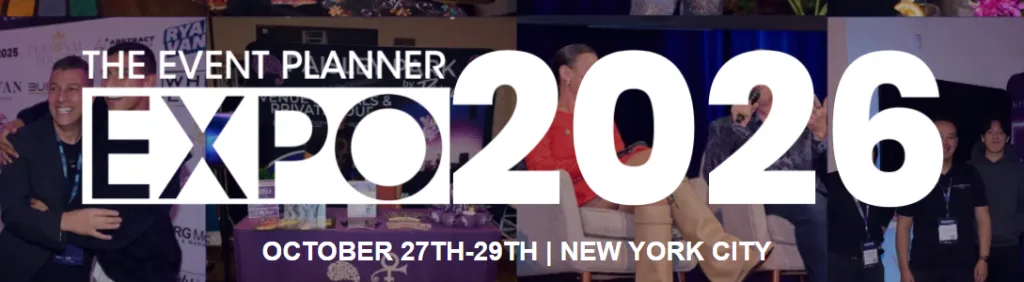
Growing your event planning business in NYC doesn’t happen by accident. It happens when you tighten your positioning, elevate your production, control your pipeline, price with intention, and put yourself in the right rooms consistently. And if you’re serious about accelerating that growth, you need visibility where real decision-makers are already paying attention. The Event Planner Expo 2026 is that room.
This is where event planners, corporate decision-makers, meeting professionals, marketers, and CEOs from influential brands gather to connect, source, and make moves. Exhibiting puts your business front and center, not just as another vendor, but as a serious industry player. It’s your opportunity to showcase your expertise, build instant credibility, generate qualified leads, form high-level partnerships, and create momentum that carries long after the show floor closes.
Booths sell out every year because the businesses that understand growth know where to position themselves. If you want your brand in front of the buyers who are actively looking for partners, reserve your booth and secure your place at The Event Planner Expo 2026.
FAQs for Event Planners Looking to Grow in NYC
1. How do I grow my event planning business in NYC?
Growing an event planning business in NYC requires more than booking more events. You need stronger positioning around event production, higher-value contracts, predictable lead generation through event marketing, strategic networking, and pricing structures that protect margin. When you combine authority positioning with consistent visibility for terms like “event planner NYC” and “event planning NYC,” growth becomes intentional instead of reactive.
2. What’s the best way to attract corporate events and NYC clients?
Corporate events NYC buyers look for risk reduction, production control, and a clear process before they evaluate creativity. To attract higher-paying contracts, position yourself as a production leader, not just a coordinator. Demonstrate experience with New York City event production, communicate authority in proposals, and build relationships in rooms where corporate decision-makers are already sourcing partners.
3. How can an event coordinator in New York City increase revenue without taking on more clients?
Revenue growth often comes from increasing revenue per client, not increasing volume. Expanding into production oversight, integrating sponsorship strategy, offering premium experiences, and structuring retainers or bundled packages can significantly increase contract value. Event production sophistication and value-based pricing create leverage without increasing burnout.
4. What marketing strategies work best for event planners in NYC?
Effective event marketing for NYC planners combines SEO, AEO, and GEO to rank for high-intent searches like “event planner NYC,” targeted paid advertising for corporate events NYC and social events NYC, retargeting campaigns, and consistent authority-building content. Organic social supports awareness, but structured funnels and follow-up systems convert interest into contracts.
5. Is exhibiting at industry expos worth it for event planning business growth?
Exhibiting at high-level industry events can significantly accelerate visibility, partnerships, and lead generation when approached strategically. The right expo places your brand in front of corporate buyers, sponsors, vendors, and decision-makers actively seeking event production partners. When executed well, exhibiting becomes a pipeline multiplier rather than a branding exercise.