
Venue Selection and Booking
in New York —
Done Right, Every Time
The Event Planner Expo delivers professional venue selection and event venue booking NYC clients trust — covering all five boroughs, every event type, and every contract detail from first conversation to executed agreement. We do not send you a list of names. We solve the problem.
What Is Venue Selection and Booking in New York — and Why It Takes an Expert?
New York has more event venues than any other American city — and that sounds like an advantage. It is not. Volume creates its own set of problems. The real challenge in venue selection in New York is not a search problem.
The New York Venue Market: Why It Is Unlike Any Other City
The Event Planner Expo operates across a venue market that spans five boroughs, dozens of sub-neighborhoods, and hundreds of distinct event spaces — from intimate private dining rooms in Tribeca to landmark ballrooms in Midtown Manhattan. What makes this market structurally different from any other U.S. city is not just the volume of options. It is how those options behave.
Top-tier venues in Manhattan operate with multi-month and sometimes multi-year booking queues. Sought-after spaces for spring and fall Saturday dates book 12 to 18 months in advance. Most venues do not publish their pricing — quotes arrive only in response to an RFP or a direct inquiry. Many rely on in-house venue sales teams whose incentives align with the venue’s revenue targets, not the event organizer’s budget goals.
Food and beverage minimums at major hotel ballrooms can exceed five figures before a single guest arrives. Venue holds are not confirmed bookings. And the weight that existing industry relationships carry — in securing preferred dates, faster responses, and real contract flexibility — is impossible to replicate through a directory search. This is the market we work in every day.
What a Professional Venue Selection Service Actually Does
Our team at The Event Planner Expo handles the full scope of a venue sourcing engagement — from first conversation to executed contract. This is not a concierge referral service that emails you a list of venue names and steps back.
We start with a needs assessment and brief development, where we build a precise set of criteria: guest count, event type, preferred boroughs, budget framework, catering requirements, AV needs, and timeline. From there, we identify venues against those specific criteria — using relationships built across Manhattan, Brooklyn, Queens, the Bronx, and Staten Island. We reach out directly, using existing venue contacts to surface availability and pricing that does not always reach unrepresented inquiries.
We schedule and conduct site visits, evaluate proposals against a standardized framework, identify contract red flags — from indemnification clauses to exclusivity terms — and manage the negotiation through to a signed venue rental agreement. The engagement spans the entire process, not just the search phase.
How this service is structured in terms of who pays and how the engagement works is something we discuss directly during an initial consultation. Call us at 212-254-3700 to start that conversation.
DIY Venue Research vs Working With a Specialist: The Real Comparison
This is an honest comparison — not a sales pitch dressed up as one. There are situations where DIY venue research makes sense: a small, low-stakes event with a flexible timeline and an organizer who already knows the market. For everything else, here is what the two paths actually look like.
- Booking Lead Time: Top Manhattan venue spaces for Saturday dates book 12–18 months in advance. Starting late eliminates your best options entirely.
- Venue Research Hours (DIY): Contacting 15–20 venues, scheduling site visits, and reviewing contracts typically consumes 40–80 hours for a first-time organizer.
- F&B Minimums: Hotel ballroom food and beverage minimums in Manhattan can exceed five figures before production costs are added.
- Directory Limitations: Public venue directories list only venues that pay for placement — a significant portion of New York’s best spaces are not publicly listed.
- Contract Risk: Standard venue agreements are drafted in the venue’s favor, with unfavorable cancellation, indemnification, and force majeure terms as defaults.
- Relationship Premium: Existing venue sourcing relationships produce access to pricing flexibility, unlisted availability, and contract concessions that direct inquiries cannot replicate.
What happens when an organizer commits to a New York venue without professional representation?
What Types of Venues and NYC Neighborhoods Should You Consider for Your Event?
New York’s venue landscape is genuinely vast — and that is a feature, not a problem, once you have a working map of it. Our team at The Event Planner Expo provides that map before any venue evaluation begins. Here is how the market breaks down by venue type and geography.
Rooftop, Loft, Waterfront, and Landmark: What Does the Venue Type Map Actually Look Like?
We cover every major venue typology in New York — and each one carries distinct operational characteristics that affect your planning approach, your vendor strategy, and your total cost.
How Do You Choose the Right New York Neighborhood for Your Event Venue?
Manhattan covers the widest range of venue types and price points, but the neighborhood you choose shapes everything from cost to aesthetic to guest logistics.
Midtown Manhattan is corporate and hotel-heavy, with high transit access and peak pricing. It suits conferences, product launches, and award ceremonies where infrastructure matters most.
Lower Manhattan and the Financial District offer waterfront access, historic buildings, and a strong corporate and gala supply. Cost basis is slightly lower than Midtown.
Meatpacking District runs boutique and design-forward, with nightlife adjacency that makes it well-suited to brand events and launch parties.
Chelsea and Hudson Yards carry contemporary art spaces, large-format venues, and newer construction with strong AV infrastructure. Ideal for produced events.
SoHo and Tribeca are gallery-heavy with cast-iron architecture and premium pricing. The aesthetic payoff is real — so is the cost.
Upper East Side hosts private clubs and refined social event settings. Best for intimate corporate dinners and high-end social gatherings.
Harlem offers cultural institution venues, emerging hospitality options, and more competitive pricing relative to Downtown and Midtown equivalents.
What Are the Emerging and Exclusive New York Venues That Most Directories Never Show?
Our venue sourcing work at The Event Planner Expo covers two categories that public directories simply cannot surface. First: newly opened venues. A recently converted Brooklyn waterfront property or a new venue in Hudson Yards can offer competitive introductory pricing and strong design quality. The tradeoff is operational risk from an untested event management team — we address this by requesting references and, where possible, conducting a site visit during a live event before recommending the space.
Second: private and members-only venues. Some of New York City’s most visually compelling event spaces sit inside private clubs, cultural foundations, and media company headquarters. They do not appear in any public listing.
Access to this category depends entirely on professional industry relationships — not a Google search, not a directory subscription. This is one of the clearest cases where professional venue sourcing relationships translate directly into access that a self-directed search cannot replicate.
- Rooftop Venues: Weather contingency planning required. Noise curfews often apply. Strong visual impact but capacity-limited. Common in Midtown and Brooklyn.
- Loft & Industrial (Dry-Hire): Outside caterers and rental furniture required. 30–50% lower base rate than hotel equivalents. Concentrated in Brooklyn and Queens.
- Waterfront & Pier: Permits required for use of NYC Parks Department waterfront areas. Weather exposure is an operational variable that must be planned for.
- Hotel Ballrooms: In-house catering, AV, and event staff included. Highest baseline cost but lowest logistical complexity. F&B minimums can exceed five figures before production.
- Historic Landmark Venues: Preservation restrictions on décor, adhesives, and load-bearing modifications. Managed by cultural institutions with specific approval processes.
- Private Members Clubs: Not publicly listed. Accessible only through professional sourcing relationships. Some of New York’s most distinctive event spaces are in this category.
The result? Clients who work with our team gain access to the full New York venue market — not just the publicly visible portion. The Event Planner Expo builds its venue recommendations on direct sourcing relationships, not directory searches. That difference shows up in the quality and exclusivity of the options we bring to every client brief.
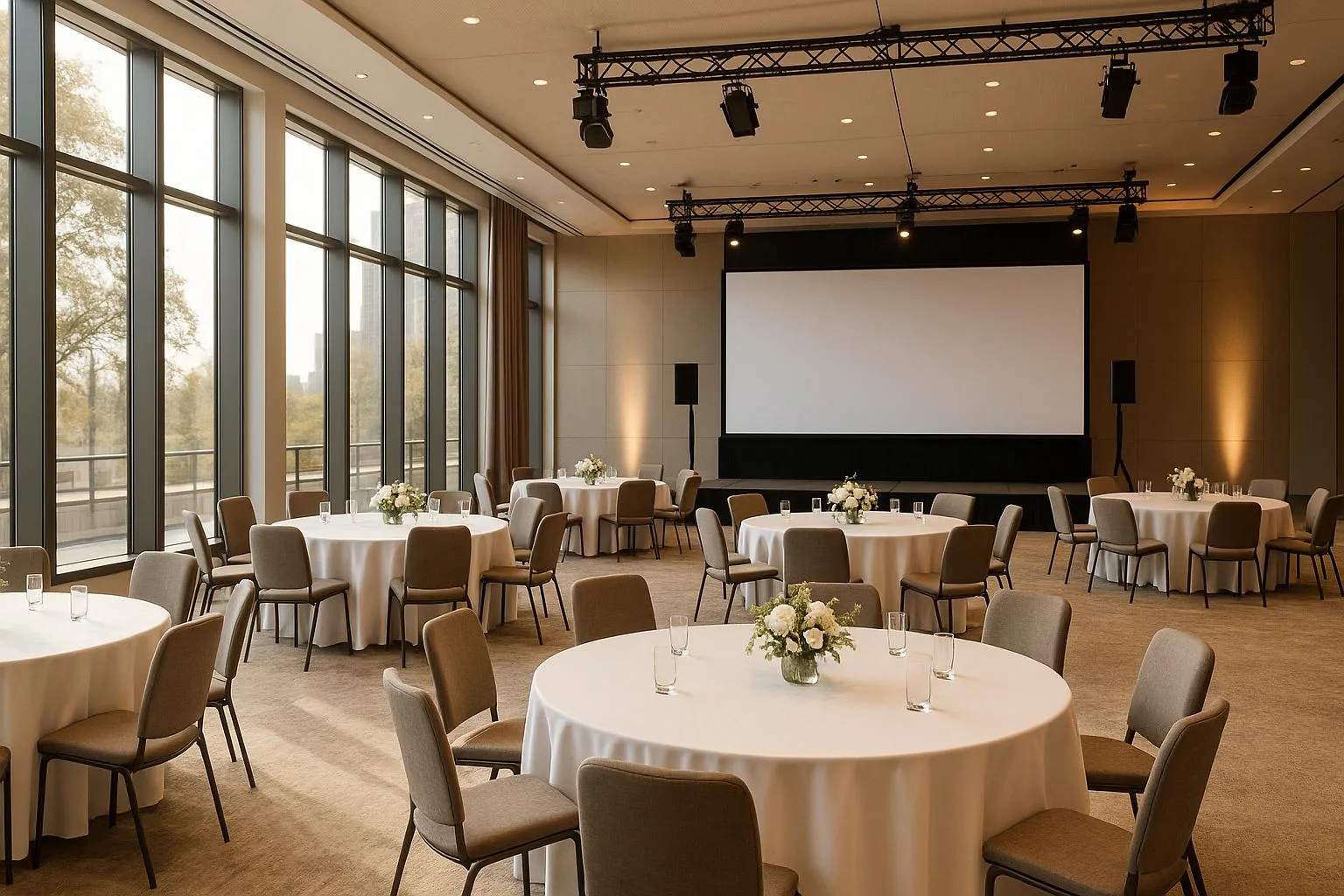
How Does The Event Planner Expo Match Your Event to the Right New York Venue?
We handle events from a 20-person executive dinner to a 1,000-person gala — and the venue selection criteria, booking timeline, and negotiation approach are meaningfully different for each. Here is how our venue sourcing process applies across event categories.
What Venue Requirements Do Corporate Events in New York Actually Need?
Our team covers corporate events at four distinct scales, and the venue requirements shift materially at each level. For meeting rooms and executive offsites serving 10–40 people, we prioritize privacy, AV quality, and proximity to client offices or partner hotels. At this scale, a poorly chosen venue creates the wrong tone for the entire engagement.
For conferences and multi-session events serving 100–500 people, the checklist expands significantly: breakout room availability, dedicated registration space, reliable high-bandwidth Wi-Fi — not shared hotel building Wi-Fi — and loading dock access for production equipment. These requirements eliminate a large portion of visually impressive venues that simply cannot support the operational demands of a multi-session conference.
Product launches serving 50–300 people require flexible floor plans, strong lighting infrastructure, and media access. We focus on contemporary galleries and loft spaces in Chelsea, Hudson Yards, and select Brooklyn locations for this event type. For corporate dinners and award ceremonies serving 50–400 people, we prioritize catering quality, table configuration flexibility, and sound quality for speaking programs.
Multi-venue corporate events — where a conference spans a full hotel block with breakout rooms across multiple floors — scale the coordination complexity significantly. This is a core reason corporate clients engage The Event Planner Expo rather than handling venue sourcing internally. Weekday availability is higher, but many premium venues impose minimum spends calibrated for weekend social events. We address this as a standard negotiation point on every corporate inquiry.
How Does The Event Planner Expo Handle Wedding Venue Booking Across New York’s Five Boroughs?
We approach wedding venue booking in New York with borough-level specificity — because the experience, logistics, and cost structure are genuinely different depending on where you book.
In Manhattan, hotel ballrooms, rooftop venues, and private clubs concentrate the highest-demand options. Top venues require 18–24 months of lead time for Saturday dates. Minimum spend requirements at Midtown hotel ballrooms can make intimate Manhattan weddings cost-prohibitive without a specialist who knows how to negotiate the right concessions for a smaller guest count.
Brooklyn — particularly DUMBO and Williamsburg — offers loft and waterfront spaces at lower base rates than Manhattan equivalents. The aesthetic payoff is strong, but these venues require more logistical assembly: outside caterers, rental furniture, and permits for outdoor ceremony spaces. We handle that coordination as part of the engagement.
Long Island City in Queens provides waterfront and industrial-loft options accessible from Midtown in under 20 minutes — a practical consideration for couples with guests concentrated in the city’s center. The Bronx and Staten Island have historic and park-adjacent options that suit specific aesthetic and community preferences.
Two pain points we address directly: venues that bundle in-house catering with no substitution option — a critical issue for couples requiring certified kosher, halal, or allergen-controlled menus — and the confusion between a venue hold and a confirmed booking. A first right of refusal hold is not a secured date. We walk every wedding client through exactly what steps convert a hold to a firm booking. The venue is the first and most consequential booking in a wedding because every other vendor depends on it.
How Do We Handle Social Celebrations, Galas, and Nonprofit Fundraisers in New York?
The Event Planner Expo covers social celebrations, nonprofit galas, and charity auctions — three distinct event categories that share a common venue challenge in New York: finding a space that fits the guest count and the budget without forcing a compromise on either.
For social celebrations — birthday milestones, anniversary dinners, graduation parties, holiday parties, and sweet sixteens — the core tension is scale mismatch. Most mid-tier New York venues carry minimum guest counts or minimum spend requirements designed for 100+ person events. Finding an appropriately scaled venue for 30–60 guests is genuinely difficult without market knowledge. We focus on private dining rooms, gallery buyouts, boutique hotel event spaces, and rooftop bar buyouts for events in this size range.
For nonprofit galas and fundraisers, we address the specific budget dynamics directly. Venues sometimes offer discounted rates for registered 501(c)(3) organizations — but this is not standard, and it requires active negotiation, not a polite ask. Food and beverage minimums at gala-appropriate venues — typically 300–500 guests with a seated dinner format — can reach $50,000 or more before production costs are added.
Some cultural institutions and public spaces offer sponsored or subsidized rates for qualifying nonprofits. We know which properties offer this and how to access it.
For charity auctions, we confirm that the venue layout can accommodate both a seated component and a display or walk-around component within a single space. Not all New York venues can flex between the two setups — we verify this as part of the site visit evaluation.
- Executive Offsites (10–40 guests): Private dining rooms, boutique hotel suites, private club boardrooms. Privacy and AV quality are the primary criteria.
- Large Conferences (100–500 guests): Conference hotels and dedicated event centers with breakout rooms, dedicated Wi-Fi, and loading dock access.
- Product Launches (50–300 guests): Contemporary galleries, loft spaces, and new-construction event venues in Chelsea and Hudson Yards.
- Manhattan Weddings: 18–24 month lead time required for top Saturday dates. Hotel ballrooms, rooftop venues, and private clubs are the primary categories.
- Brooklyn Weddings: DUMBO and Williamsburg loft and waterfront spaces. Outside caterers and rental furniture assembly required. 20–35% lower base rate than Manhattan.
- Nonprofit Galas (300–500 guests): Cultural institutions and hotel ballrooms. F&B minimums can reach $50,000+ before production. Subsidized rates require active negotiation.
For clients who need venue selection and event venue booking NYC professionals handle with precision, The Event Planner Expo covers the full event type spectrum — from a 20-person executive dinner to a 500-person gala — applying the same structured sourcing and contract review process to every engagement, regardless of scale.
Venue Costs, Negotiation, and Timing in New York: What Do You Need to Know Before You Commit?
New York venue pricing is genuinely complex — not because venues are deliberately opaque, but because pricing has many components that interact in non-obvious ways. Understanding cost structure, hidden fees, and timing before entering negotiation is the difference between a workable budget and a significant overrun. Here is the specific, practical breakdown.
What Does New York Venue Pricing Actually Look Like — and What Drives the Cost?
Our team at The Event Planner Expo works with venue pricing across every category and borough. The key variables that drive New York venue cost are: venue type, day of week, season, guest count relative to minimum spend, and exclusivity of the booking.
Hotel ballrooms and landmark spaces command the highest base rates. Loft and industrial spaces in Brooklyn and Queens often run 30–50% lower for equivalent capacity — but dry-hire logistics, outside caterers, and rental furniture assembly add cost back in ways that are not immediately visible in the venue quote.
Saturday evenings carry the highest premiums across all venue types. Sunday and weekday events unlock meaningful savings. September through November and April through June are peak demand periods. January, February, July, and August offer the most pricing flexibility at most New York venues.
Guest count relative to minimum spend is often the most misunderstood cost driver. A venue with a $25,000 food and beverage minimum works for 200 guests but is unworkable for 40 — the math does not change because the guest count changes. Most New York venues do not publish pricing. Quotes arrive only in response to an RFP or a direct inquiry, which is why market knowledge matters before you enter that conversation.
One critical distinction: the rental fee and the food and beverage minimum are not the same thing. The rental fee is the charge for occupying the space. The F&B minimum is the floor spend on food and beverage, typically a guarantee — meaning you pay the full amount whether your guests reach it or not. Many organizers underestimate total cost by confusing the two.
What Are the Hidden Fees and Surprise Costs in New York Venue Contracts?
We review the full fee schedule — not just the headline rate — on every venue engagement. The line items that routinely appear in New York venue invoices but are not visible in the initial quote include the following.
Service charge and administrative fee: Typically 20–24% added to all food and beverage spend. Often mistaken for the gratuity, which is a separate line item on the final invoice. This distinction alone has shocked more than a few organizers reviewing their final bill.
Security staff requirement: Many New York venues require licensed security personnel at a per-hour rate set by the venue, not the organizer. This applies most commonly to events serving alcohol and to venues in residential neighborhoods.
Coat check: Mandatory at many venues from October through April, staffed by the venue at a fixed fee per guest. At a 300-person event, this is a material line item.
Loading dock and freight elevator fees: Charged per vendor, per load, or per hour. Common at hotel and landmark venues. These fees affect every production vendor on your event — AV company, florist, rental furniture, and caterer all move through the same access points.
Venue-required event coordinator fee: Some venues charge for their internal coordinator as a mandatory line item, separate from the event planner the organizer brings. This is a non-negotiable cost at certain properties and should be identified before signing.
Cleaning or damage deposit: Refundable but often withheld pending post-event inspection. Understand the inspection timeline and conditions before you agree to the deposit terms.
A complete cost projection requires reviewing the venue’s full fee schedule in detail — not just the headline rental rate and F&B minimum. This is standard practice for every venue engagement we manage.
How Do You Negotiate a New York Venue Contract — and Why Does Timing Affect Your Budget?
We approach every venue negotiation with four principles that consistently produce better outcomes for clients than an unrepresented inquiry produces on its own.
-
1Timing Affects Price More Than Most Organizers RealizeBooking during shoulder season — January through February or July through August for most event types — can reduce venue fees by 20–40% at properties that otherwise command full-rate pricing in peak season. That is a real, material saving at the scale of New York venue costs. We factor seasonal timing into every client brief as a budget variable, not an afterthought.
-
2Competing Proposals Are Legitimate Negotiation UseWhen an organizer — or their representative — can demonstrate that two or three comparable venues are actively quoting for the same event, venue sales managers have documented authorization to extend concessions they would not offer to an uncontested inquiry. This applies to rental fee reductions, F&B minimum adjustments, and overtime rates. This is standard professional practice, not pressure tactics.
-
3Know What Is Actually Negotiable in a New York Venue AgreementCommon concession categories include: rental fee reduction, F&B minimum reduction or elimination for specific event types, complimentary suite or green room, reduced overtime rate, extended load-in window, and audio-visual package inclusions. The base food and beverage per-person rate at hotel venues is almost never negotiable. Everything else is a potential concession with the right approach and the right relationships.
-
4The Booking Timeline Is a Budget Variable, Not Just a ScheduleLast-minute bookings — less than 60 days out — occasionally produce genuine discounts when venues have unsold dates. But the selection is dramatically reduced and the negotiating position is weak. Booking 9–12 months out for peak-season events, or 4–6 months for off-peak, provides the best combination of venue selection and negotiating use. We build the timeline into the strategy from the first consultation.
- Peak Season (Sept–Nov, Apr–Jun): Highest demand periods for all event types. Top Manhattan venues fully committed 9–18 months in advance for Saturdays.
- Off-Peak Season (Jan–Feb, Jul–Aug): 20–40% pricing flexibility at most New York venue categories. Best combination of availability and negotiating use.
- Service Charge + Admin Fee: Typically 20–24% on all F&B spend, separate from gratuity. Often the single largest unexpected cost in a New York venue invoice.
- Brooklyn/Queens Pricing Differential: Loft and industrial spaces run 30–50% lower than Manhattan equivalents for equivalent capacity.
- Competing Proposal Use: Venue sales managers can extend concessions on rental fee, F&B minimum, and overtime rates when competing proposals exist.
- Damage Deposit: Refundable but subject to post-event inspection. Confirm inspection timeline and return conditions before signing.
Unlike venue directories that stop at the listing, The Event Planner Expo covers every cost variable — from F&B minimums to service charges to loading dock fees — as part of our standard venue evaluation process. We bring market-rate benchmarks, negotiation protocols, and seasonal timing strategy to every client engagement so that the number on the venue contract reflects genuine market use, not a first-offer acceptance.
What Infrastructure, Vendor, Compliance, and Sustainability Requirements Should Every New York Venue Meet?
Before evaluating any venue, an event organizer needs a clear picture of their non-negotiable requirements. We cover the three categories where overlooked requirements most frequently cause post-booking problems: technical infrastructure, vendor and catering policy, and permits and compliance.
- Dedicated Fiber Broadband: Required for hybrid events and live streaming. Shared hotel Wi-Fi cannot guarantee stream stability for broadcast-ready venue use.
- NY State Liquor Authority License: Must be active and current. Verify status before booking any open-bar event. An expired license creates an unrecoverable problem.
- Certificate of Occupancy: Venue responsibility, but confirm it covers the planned event use and capacity before signing.
- ADA Compliance: Historic loft and landmark buildings frequently lack accessible entry, elevator access, and accessible restrooms. Non-negotiable for events with diverse guest populations.
- Parks Department Permits: Required for any event using New York City parkland. Application timelines vary — confirm well in advance of the event date.
- ESG / LEED Credentials: Corporate clients with sustainability requires must confirm certification status in writing, not accept general environmental marketing claims from the venue.
The outcome? A venue that passes our requirements evaluation is a venue that your production team, your vendors, your guests, and your legal counsel will not encounter surprises at. The Event Planner Expo builds this checklist into every site visit and proposal review — because the cost of discovering a venue inadequacy during setup is exponentially higher than discovering it during evaluation.
What Do You Need to Know About Venue Contracts and Risk Management in New York Before You Sign?
New York venues operate with sophisticated legal teams and standard agreements drafted in the venue’s favor. This section is not a substitute for legal counsel — it is a working map of the clauses and insurance requirements that most frequently create problems for event organizers, before and after the event.
Which Clauses Matter Most in a New York Venue Agreement?
We review every venue contract against these specific provisions as standard practice. Each clause below has a direct financial or operational consequence if accepted as drafted.
- Rental Fee and Payment Schedule. Deposits are typically due at signing (commonly 25–50% of total contracted value), with the balance due 30–60 days before the event. Confirm the percentage, the timeline, and the refund eligibility at each stage before signing.
- Food and Beverage Minimum. Confirm whether the minimum is a guarantee — meaning the organizer pays the full amount regardless of actual consumption — or a spending floor with adjustment provisions. Most New York venue agreements treat this as a guarantee.
- Exclusive Use Clause. Confirm in writing whether the organizer has exclusive use of the entire venue or only a designated portion. Determine what the venue’s policy is if another event books simultaneously in an adjacent space.
- Guest Count Adjustment Window. The last date the organizer can adjust the contracted guest count without penalty is typically 14–30 days before the event. Understand exactly what financial adjustment this triggers and what the floor count is.
- Indemnification Clause. Standard language puts liability for property damage, personal injury, and third-party vendor actions on the organizer. Push for mutual indemnification language — each party bears liability for their own actions and those of their staff.
- Venue-Provided Services Clause. This clause defines exactly what staffing, equipment, and services the venue includes in the quoted rate. Anything not listed here will appear as a separate charge. Read this clause as a billing document, not a service description.
- Noise and Curfew Clause. The contractual music end time and the overtime penalty rate. Critical for events with live entertainment. Overtime rates at New York venues can run $500–$1,500 per half-hour — confirm before the band books a 4-hour set.
- Insurance Requirements. The certificate of insurance the organizer must provide, the additional insured language required, and the submission deadline. This is often 30 days before the event and is non-negotiable at most New York venues.
- Dispute Resolution. New York venue contracts almost universally specify New York County as the jurisdiction for any legal action. Confirm whether disputes go to arbitration through the American Arbitration Association or to litigation — each has different cost and timeline implications.
What Happens If You Need to Cancel — or If the Venue Cancels on You?
We cover three distinct contract exit scenarios with clients before any agreement is signed. Each one has a different financial consequence and a different set of contractual protections worth negotiating.
What Event Insurance Requirements Do New York Venues Require — and How Do You Meet Them?
Our process at The Event Planner Expo includes walking every client through their certificate of insurance requirements well before the venue’s submission deadline. Most New York venues require the organizer to provide a certificate of insurance naming the venue as an additional insured before the event can proceed.
The process works as follows. The organizer or their planning company purchases a short-term event liability insurance policy. The insurer issues a certificate of insurance.
The certificate is submitted to the venue by a specified deadline — often 30 days before the event, sometimes earlier at landmark and institutional venues. Missing this deadline can void the booking.
Specific coverage types New York venues typically require: general liability coverage at a minimum of $1,000,000 per occurrence and $2,000,000 aggregate; liquor liability coverage required at events serving alcohol, often available as an endorsement on the general liability policy; and property damage coverage for venue fixtures and contents. Umbrella policies can satisfy higher limits required by landmark or institutional venues that run $5 million or more in required coverage.
One important distinction: the venue’s own insurance covers the venue’s property and operations, not the event organizer’s liability. These are separate policies. The organizer’s certificate covers the organizer’s obligations, not the venue’s.
Cancellation insurance is a separate product that reimburses the organizer for non-recoverable expenses if the event is cancelled due to a covered reason. It is not a venue requirement, but it provides meaningful financial protection for events with large non-refundable deposits — particularly for events booked 12 months or more in advance. Reach out to our team to discuss how we handle insurance coordination on your specific engagement: call 212-254-3700.
- Deposit Forfeiture (Standard): 12+ months: first deposit only. 6 months: 50–75% of contract. 90 days or less: 100%. Negotiate these thresholds before signing.
- Indemnification (Standard): Drafted to place all liability on the organizer. Push for mutual indemnification as a baseline contract modification.
- General Liability Insurance: Most NYC venues require $1M per occurrence / $2M aggregate minimum. Landmark venues often require $5M+ via umbrella policy.
- Force Majeure (Post-2020 Standard): Government-mandated shutdowns now commonly named. Request mutual termination right with full deposit refund for declared emergencies.
- Noise Curfew Overtime Rate: Can reach $500–$1,500 per half-hour at major Manhattan venues. Confirm before finalizing entertainment booking.
- COI Submission Deadline: Typically 30 days before the event. Missing this deadline at many venues voids the right to hold the event on the contracted date.
In contrast to venue directories that stop at listing the space, The Event Planner Expo reviews every material clause before a client signs — applying a consistent contract review standard to indemnification terms, force majeure provisions, insurance requirements, and cancellation schedules. The goal is a signed agreement that protects you as thoroughly as the venue’s own legal team protects them.
How Do You Research, Evaluate, and Verify a New York Venue Before You Book?
Due diligence is the stage between finding a venue and committing to it. This is where most self-directed venue searches produce the worst outcomes — organizers are swayed by venue photography and sales presentations without independent verification. Here are the tools, methods, and signals that professional evaluators use to form a complete picture.
What Venue Research Tools and Directories Are Available — and Where Do They Fall Short?
We use every research tool available — and we understand exactly what each one can and cannot tell you about a venue. Starting from least to most reliable:
Online venue directories and aggregator platforms — The Vendry, Cvent Supplier Network, VenueBook, and Peerspace among them — are useful for building an initial longlist. Their structural limitation is significant: listings are paid or opt-in, meaning many excellent venues never appear. Availability data is often not real-time.
Pricing shown is typically a range that does not reflect your event-specific quote. Search engine results for venue queries skew heavily toward paid listings and SEO-optimized venue websites rather than independent quality assessments.
Review platforms — The Knot and WeddingWire for the wedding vertical, Google Reviews and Yelp for general venues — provide useful signal but require careful interpretation. More on that in the next section.
The most reliable research source is an experienced venue sourcing specialist who has worked events at the venue in question. That sourcing specialist knows things no directory captures: actual staff quality on event day, kitchen capacity during peak service, sound bleed between rooms, loading dock reliability, and venue manager responsiveness after the contract is signed. These are the details that determine whether an event runs smoothly — and they are invisible in any public listing.
The most reliable research method for any given venue is a site visit conducted at the right time — during a live event at a comparable scale to the one you are planning. We coordinate this as part of our venue evaluation process whenever the timeline allows.
How Do You Read Venue Reviews and Spot Red Flags Before Signing?
Our evaluation framework at The Event Planner Expo treats negative reviews as more informative than positive ones — patterns in negative reviews surface operational realities that a venue’s curated testimonial page never will. Venues control what appears on their own websites, which makes independent platforms the only useful review source.
Here are the specific red flag signals we look for when reviewing venue track records. Each bolded term represents a meaningful operational warning:
Staffing Inconsistency. Reviews that praise the venue in general but describe event-day staff as disorganized or unhelpful. This pattern indicates that the venue’s sales and account management quality exceeds its operational execution quality — a meaningful gap.
Communication Deterioration. Multiple reviews noting that responsiveness declined sharply after the contract was signed. A reliable venue maintains the same communication quality before and after you are financially committed.
Venue-as-Backdrop Complaints. Reviews where the venue looked great in photography but operational execution — service timing, room temperature, AV failure — was poor. The venue served as a backdrop to a badly managed event day.
Mandatory Upgrade Pressure. Reviews noting that the organizer was pushed into more expensive service tiers after booking. Post-contract upselling of required services is a known pattern at certain venue categories in New York.
Maintenance Pattern Complaints. Any recurring pattern of complaints about the physical condition of bathrooms, kitchens, or loading areas. A single complaint may be an outlier. Three complaints over six months is an operational signal.
We also ask each shortlisted venue for references from two or three recent events of similar type and scale. A venue that declines this request without a clear reason warrants additional scrutiny before any contract discussion proceeds.
How Do Out-of-State Clients Research New York Venues Remotely — and What Should Post-Event Evaluation Capture?
Our team at The Event Planner Expo specifically supports out-of-state corporate clients and destination event planners who are booking New York venues without the ability to conduct in-person site visits. This is one of the highest-risk scenarios in venue selection — and one where professional local representation produces the clearest outcome difference.
Practical mitigation strategies for remote venue research: request a live-video walkthrough, not a pre-recorded tour. A live walkthrough conducted during business hours lets you ask real-time questions about the space — sightlines, acoustics, loading access, and neighborhood context. Ask the venue for a vendor reference list and contact at least one catering or AV company that has worked there recently for an independent assessment.
Virtual walkthroughs have improved significantly in quality — but a camera flattens the sensory information that matters most: sound, temperature, loading dock logistics, street noise, and the physical distance between key spaces. A local venue sourcing specialist who conducts an in-person inspection on your behalf replaces what the camera cannot capture.
We build a structured venue assessment record immediately after every event engagement. This record becomes the foundation of a preferred venue list for repeat organizers — and it captures the operational reality of a venue in a way that no pre-booking research can.
What a post-event assessment should capture: staff performance against contractual obligations, actual versus quoted costs (including all line items), load-in and load-out execution quality, catering performance, AV reliability throughout the program, and direct guest experience observations from event-day feedback.
For corporate event planners and nonprofit organizations that run annual events in New York City, this assessment record is a meaningful asset. It eliminates the full re-research cycle for a proven venue and gives the organizer documented use for year-over-year pricing negotiations. Some professional sourcing engagements include this post-event assessment as a formal deliverable.
Ready to build a preferred New York venue list for your organization? Call our team at 212-254-3700 to discuss how we structure repeat-client venue programs.
- Online Directories (The Vendry, Cvent, VenueBook, Peerspace): Useful for initial longlisting. Structurally limited by paid placement — many excellent NYC venues do not appear.
- Wedding Review Platforms (The Knot, WeddingWire): Useful signal for wedding venues. Review patterns in negative reviews, not single data points.
- General Review Platforms (Google, Yelp): Independent signal that venues cannot curate. Focus on patterns — staffing, communication, maintenance — not volume.
- Live Video Walkthrough: Request from venue during business hours. Lets you evaluate sightlines, acoustics, and loading logistics in real time.
- Vendor References: Contact one catering and one AV company that worked a comparable event at the venue recently. Most reliable independent assessment available.
- Post-Event Assessment Record: Captures actual versus quoted costs, staff performance, and operational execution. Essential for organizations that book New York events annually.
For event planners booking venue selection new york engagements, the difference between a good outcome and a poor one often comes down to what was verified before the contract was signed. The Event Planner Expo builds independent venue verification — site visits, vendor references, review analysis, and direct relationship assessment — into every sourcing engagement as a standard deliverable, not an optional add-on.
From First Search to Event Day: What Does the New York Venue Selection and Booking Timeline Look Like?
The venue booking anchors every other vendor decision in New York — caterer, entertainment, production, and transportation all depend on knowing the venue. Starting the venue search late is the single most common reason event organizers end up with a suboptimal venue. The timeline is not just a schedule. It is a strategy.
What Are the 12-Month, 6-Month, and 90-Day Planning Timelines for New York Venue Booking?
The 12-Month Track applies to large corporate conferences, galas with 300+ guests, Saturday weddings at top-tier Manhattan venues, and annual award ceremonies. At 12 months, the venue search and brief development begins. By 10–11 months, site visits and RFPs are complete.
By 9–10 months, the contract is signed and the first deposit submitted. For the most sought-after Manhattan venues — certain hotel ballrooms, landmark spaces, and popular rooftop venues — even a 12-month lead is not always sufficient for peak-season Saturday dates.
The 6-Month Track applies to mid-size corporate events, social celebrations, nonprofit fundraisers with flexible date windows, and off-peak weddings. At 6 months, the venue search begins. By 4–5 months, site visits and negotiation are complete.
At 4 months, the contract runs. At 6 months, preferred options for September, October, and November events may already be unavailable — the window is real.
The 90-Day Track is the most constrained scenario. Available venues at 90 days are those with cancellations or less in-demand dates. A specialist can accelerate this timeline by using direct venue relationships to surface availability that is not publicly listed and by fast-tracking the RFP process. The selection is reduced — but a well-connected specialist still produces better options than a cold directory search can at 90 days.
What Gets Finalized in Venue Layout and Setup After the Contract Is Signed?
Signing the venue contract is not the end of the venue process. It opens a second phase focused on spatial and logistical coordination with the venue team.
Capacity Verification by Setup Style. A room that holds 300 guests in cocktail reception format holds only 180 in banquet rounds. Confirm the effective capacity for your specific setup before contracting — not after. Venue maximum occupancy figures are based on standing-room conditions that rarely reflect actual event use.
Decor and Branding Restriction Review. Landmark buildings, museum spaces, and hotel ballrooms all carry restrictions on adhesive applications, open flames, smoke effects, glitter, and permanent fixture alterations. Obtain the full restriction list in writing during the site visit, as part of the evaluation — not as a post-signing discovery.
Floor Plan Template Review. Most New York venues have a base floor plan template. Review it against your program before contracting to confirm that your specific configuration — theater layout, banquet rounds, cocktail flow, classroom rows — is operationally achievable in the space.
Custom Floor Plan Development. The event organizer (or their planner) works with the venue to create a custom setup accommodating the specific event configuration. This is a collaborative document process, not a one-time submission. Changes to the floor plan mid-planning are common and should be factored into the planning timeline.
Staging and Production Coordination. Venues with dedicated loading docks and freight elevator access require vendors to book access windows in advance. The production crew schedule depends on load-in window confirmation. Confirm load-in start time and freight elevator booking procedures immediately after contract execution — not the week before the event.
Certificate of Insurance Submission. Submit the COI by the venue’s deadline — typically 30 days before the event. Put this on the planning calendar the day the contract is signed. Missing this deadline at certain venues voids the event booking.
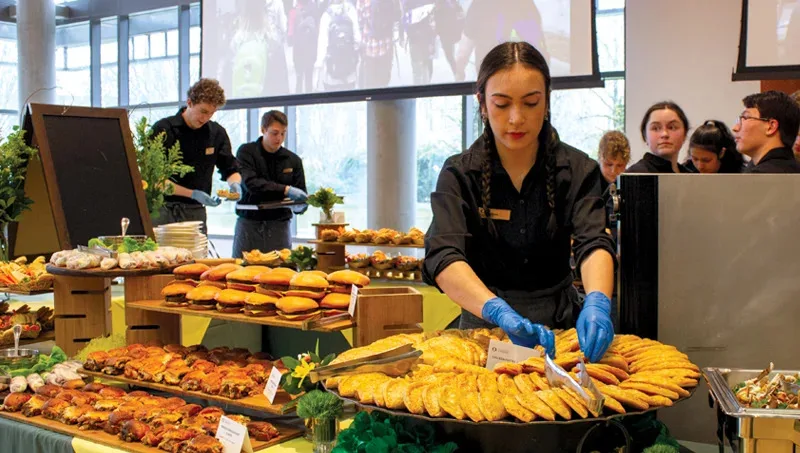
Event planning team coordinating catering and venue logistics.
Real behind-the-scenes collaboration between event planners, venue staff, and catering professionals during the planning process. Authentic project imagery helps demonstrate experience and builds trust with prospective clients.
- 12 Months Out: Begin venue search, develop event brief. Mandatory for top Manhattan venues on Saturday dates in September–November.
- 10–11 Months Out: Complete RFP process, conduct site visits, evaluate competing proposals. Negotiate contract terms.
- 9–10 Months Out: Run contract, submit first deposit. Venue is secured. Begin vendor booking on confirmed date and location.
- 4–6 Months Out: Standard timeline for off-peak events and mid-size corporate bookings. Note: September and October options may already be limited at this stage.
- 90 Days Out: Constrained but actionable with specialist support. Cancellation inventory and less in-demand venues provide viable options with professional sourcing.
- 30 Days Before Event: Certificate of insurance submission deadline at most New York venues. Missing this date can void the booking at certain properties.
The Event Planner Expo built its venue selection process on one principle: the timeline is a budget and quality lever, not just a schedule. That means every client engagement starts with a timeline assessment that determines which venues are realistically available, which negotiation positions are viable, and what the cost of waiting actually looks like in the specific New York market context.
Frequently Asked Questions About Venue Selection and Booking in New York
These are the questions our team fields most often from event organizers planning their first New York event — and from experienced planners evaluating a professional sourcing engagement for the first time.
-
How Much Does It Cost to Rent an Event Venue in New York City?NYC venue rental costs vary widely by location, size, and space type. Hourly rates range from around $55 per hour for smaller event spaces to $1,600 or more per hour for premium venues — while some spaces operate on a minimum spend model starting from $2,000 or more. The posted rental fee is only one part of the true cost. Budget separately for catering, AV, staffing, permits, and event insurance when calculating your total event spend.
-
What Types of Event Venues Are Available in New York City?New York City offers one of the most diverse selections of event spaces in the world — rooftop terraces, industrial lofts, historic landmarks, contemporary art galleries, hotel ballrooms, conference centers, private dining rooms, waterfront piers, and restaurant private spaces. The sheer variety means there is a venue suited to virtually every event format, guest count, and brand aesthetic. Neighborhoods like Manhattan’s Flatiron District, Chelsea, SoHo, and Brooklyn’s Williamsburg each carry distinct character that shapes the feel of your event.
-
How Do I Choose the Right Venue Size for My Event in NYC?Experienced planners recommend targeting 70 to 85 percent of a venue’s stated maximum occupancy to allow comfortable guest flow — not the full posted capacity. True usable capacity must account for staging, registration desks, coat check, food and beverage stations, sponsor activations, lounge seating, and production equipment. Always ask each venue to provide capacity figures broken down by setup style — theater seating, banquet rounds, cocktail reception, and trade show layout — and match those numbers to your actual program requirements before signing.
-
What Should I Evaluate Beyond Price When Selecting a Venue in New York?Key factors include capacity and layout flexibility, location and transportation access for guests and vendors, AV and production infrastructure, ambiance and brand fit, and the venue’s operational support around load-in windows, staffing, catering policies, and permits. In NYC specifically, freight elevator access, union labor rules, curb access for deliveries, nearby hotel availability, street noise restrictions, and ADA entry can significantly affect how smoothly an event runs. A venue that looks impressive on a site visit can still create serious operational friction if these logistics are not evaluated upfront.
-
How Far in Advance Should I Book a Venue in New York City?For large corporate events, weddings, or high-profile gatherings, securing your venue six to twelve months in advance is strongly advisable. New York City’s most sought-after venues — particularly rooftops, historic spaces, and premium lofts in Manhattan — fill quickly for weekend dates, holiday periods, and peak event seasons (September–November and April–June). Starting the search early protects your preferred date and provides stronger negotiating use on price, concessions, and contract terms.
-
How Does Location and Accessibility Affect Venue Selection in NYC?In New York City, arrival logistics shape the guest experience before anyone reaches the event itself. Evaluate every venue for proximity to subway lines, rideshare drop-off points, parking availability, ADA-compliant entry, and nearby hotel accommodations for out-of-town attendees. Venues that are difficult to reach or lack accessible entry create friction that affects attendance and overall event perception — regardless of how impressive the interior looks. Outer borough venues can offer 20–40% lower pricing but require a transit and vendor logistics assessment as part of the total cost evaluation.
-
What Is the Difference Between Renting a Venue by the Hour vs. a Minimum Spend Model?Hourly rental means you pay a set rate for the time you occupy the space — straightforward for events with predictable production and breakdown schedules. A minimum spend model requires you to spend a specified amount on food, beverage, and sometimes services rather than paying a flat rental fee. This model is common at restaurants, bars, and lounges offering private or semi-private spaces. Understanding which model a venue uses — and precisely what is included in each — is essential for accurate budgeting before you sign any venue agreement.
-
Can I Use an Outside Caterer or Bring My Own AV Equipment to a New York Venue?Many New York City venues have exclusive or preferred vendor agreements for catering, AV, and production that limit your flexibility and affect your budget. Independent lofts and raw event spaces tend to offer more freedom with outside vendors. Hotel ballrooms and managed venues often require use of their in-house services at marked-up rates. Always clarify vendor policies, exclusivity clauses, and fees associated with outside suppliers before signing — discovering these restrictions after contract execution leaves you with limited options.
-
What Are the Best Neighborhoods in New York City to Find Event Venues?Manhattan neighborhoods like the Flatiron District, Chelsea, SoHo, and Midtown offer high concentrations of versatile event spaces from polished corporate venues to creative lofts and rooftop terraces. Brooklyn — particularly Williamsburg — has become a strong alternative with industrial-chic spaces, often-lower price points, and creative energy suited to brand activations, social events, and cultural gatherings. The right neighborhood depends on your guest base, brand tone, transportation logistics, and the overall atmosphere you want to create for attendees.
-
How Do I Define My Event Goals Before Starting a New York Venue Search?Before touring any spaces, write your event objective in a single clear sentence — capturing the audience, purpose, and desired experience. That sentence acts as a filter for every venue option, helping you quickly rule out spaces that look impressive but do not practically support the program. NYC has enough venue variety that planners rarely need to force an event into a room that works against the strategy — making upfront clarity a significant time-saver that also strengthens your position in any professional sourcing engagement.
Ready to Find the Right New York Venue for Your Event?
Tell us your event type, guest count, and timeline — and our team at The Event Planner Expo will handle the venue selection, negotiation, and contract review from first search to signed agreement.
Call 212-254-3700